The 20 Foot TS185 Restoration Part 4!

Mission Main Street Grants

Hello everyone & welcome back! It’s time for just a few more pictures of this little project TS185 I’ve been working on but first let me talk to you a little about the banner ad above. I have applied for one of these grants and I only have until June the 19th 2015 to reach the required number of votes. If you have a couple of minutes of time & a Facebook account could you please go vote for me? It would be greatly appreciated.


<bmx platform pedals on a motorcycle>

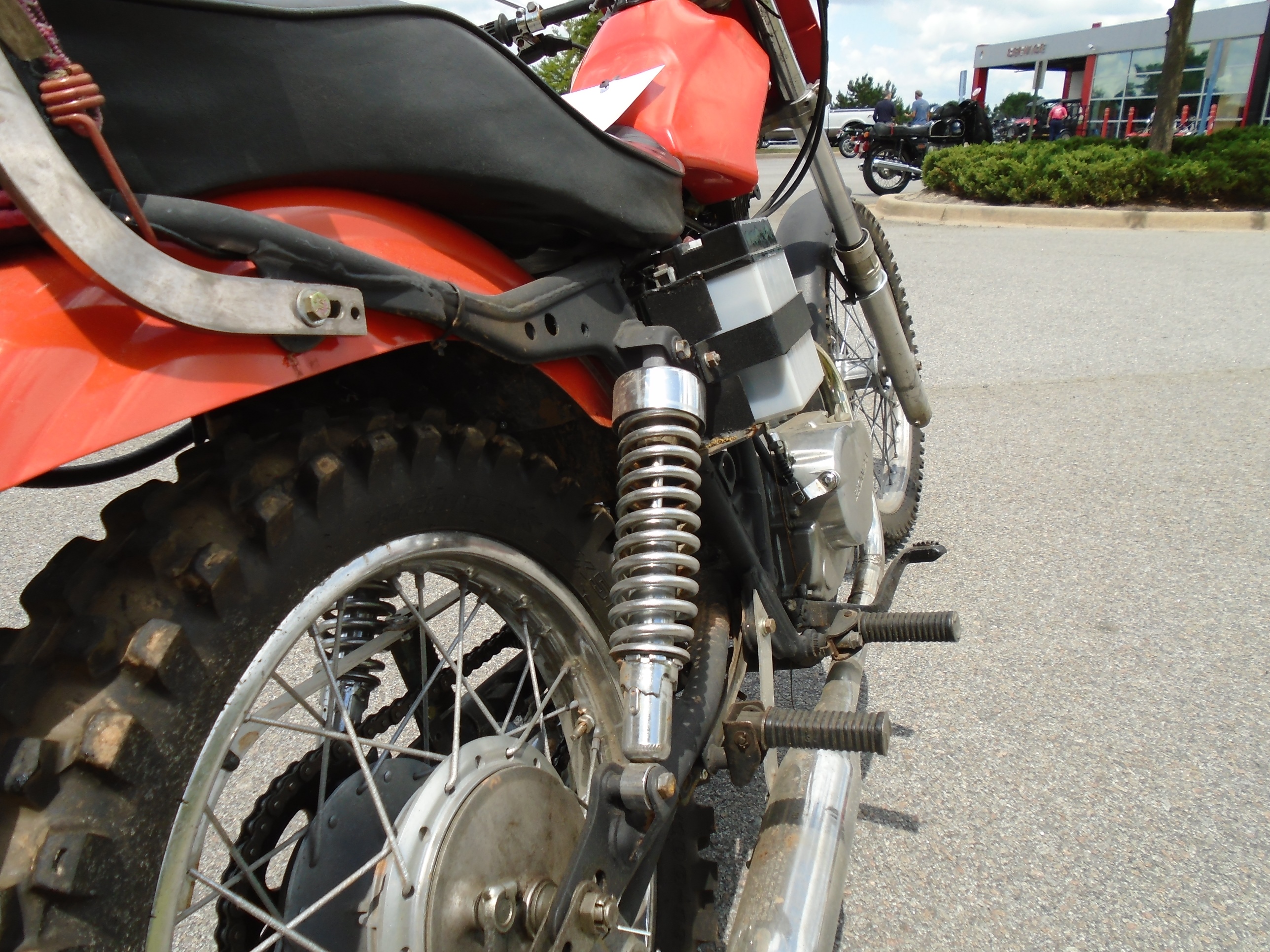
As mentioned last time this motorcycle is more of a restomod than a proper TS185 restoration and one of the things that I have always wanted to try out was putting a set of BMX bicycle platform pedals on a motorcycle. So out came the reciprocating saw some scrap metal & the welder.

As I mentioned the last time I was changing the color so here it is just a plain old machinery gray from a Duplicolor spray can.

<suzuki TS185 headlight & fender>

Added the shop logo to the number plates

<motopsyco.com>
Of course there were some new parts installed, missing bolts replaced & a few leaks stopped while I was at it.

<ts185 restoration>

Some hard lessons were learned such as don’t install the clutch release arm upside down and that cheap enamel clear really doesn’t spray well in 100 degree temperatures. There are still a few odds & ends that need doing but it is mostly done. Now I just need the upholstery shop to have my seat ready this week!  I also think the new pedals are fantastic looking but I do have to be careful when using the kick starter.

<motorcycle with bmx pedals>

One advantage to doing all of this was having time to sort out the various electrical bodges that previous owners had inflicted on this poor machine. It now has a fully functional key switch, brake & taillights, a battery, fuse etc. Of course it still starts easily & runs like a top!

<1981 TS185 restomod>

Peace Y’all


The 20 Foot Restoration Part 3

Mission Main Street Grants
<1981 Suzuki TS185 roller>

This old motorcycle is finally making it’s way back into one piece. It has new tires, wheel bearings, brake shoes, tapered roller steering head bearings, and anything else it needed to make it safe & reliable. Surprisingly enough even after 34 years of being beaten like a government mule, the engine & transmission are still in very good functional condition. This makes my life a lot easier.

Lets start with a quick look at the rear wheel & brake linkage before I started.

<TS185 rear wheel before>

<ts185 brake pedal before>

Yes I know I need my head examined for riding it for so long in this condition, but it was still a lot of fun!

<TS185 rear wheel after>

I had to replace the brake rod, adjuster and the lever. The rod & its hardware are new old stock parts, & the lever was simply adapted from a junked motorcycle.

<TS185 brake lever after>

This is the exact same brake pedal that is shown in the picture above. I straightened it with a torch, hammer & anvil, before cutting the end off of an old dirtbike footpeg and welding it to the brake lever.

<1981 ts185 carburetor>

I had to buy an entire extra used carburetor to get a couple of parts that are no longer available separately, and I’m still waiting on my throttle cable to arrive from England so for now the carb is just sitting here until I receive the cable.

While waiting on some other parts it was time to start some body work.

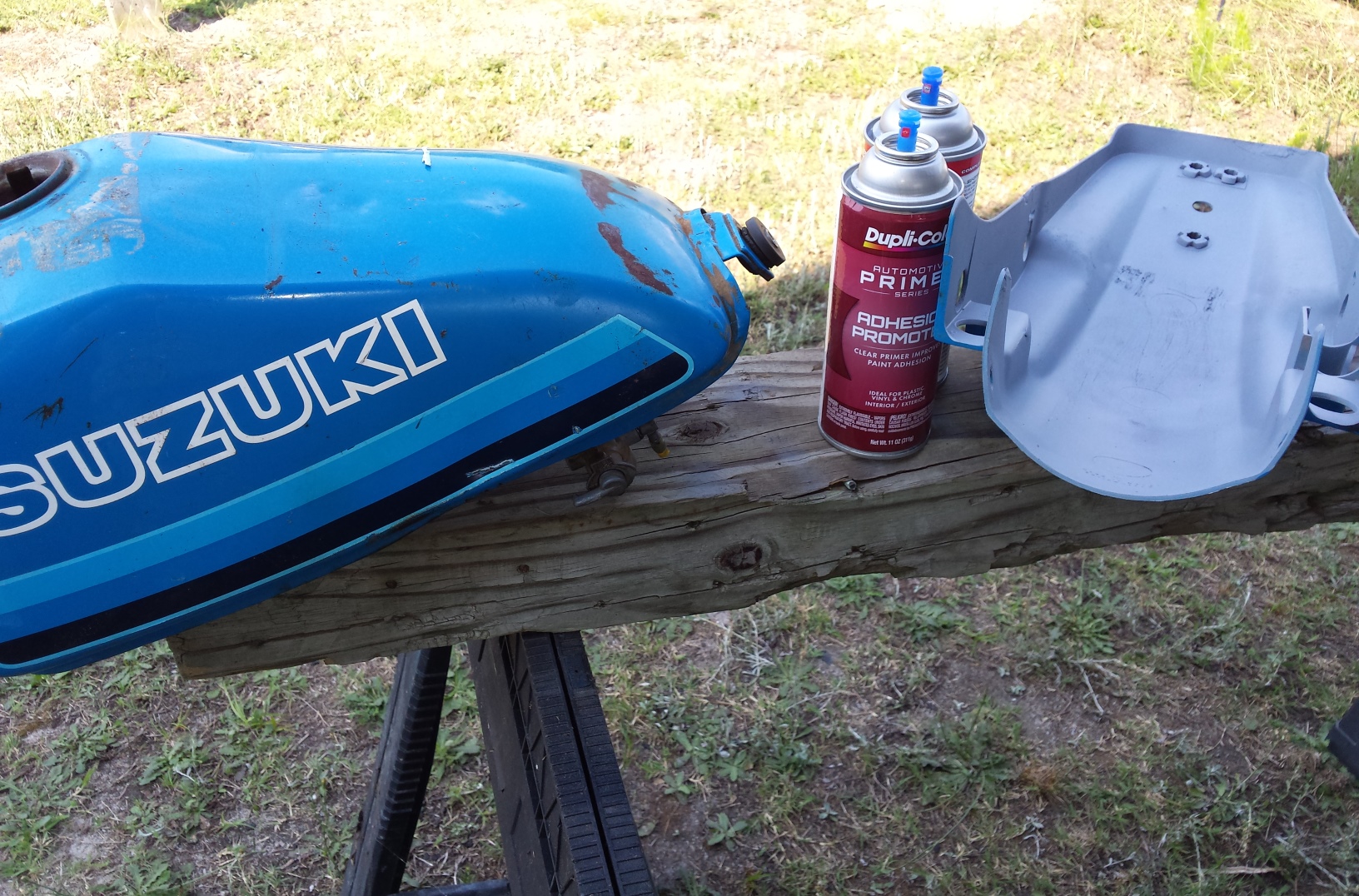
<motorcycle repainting>

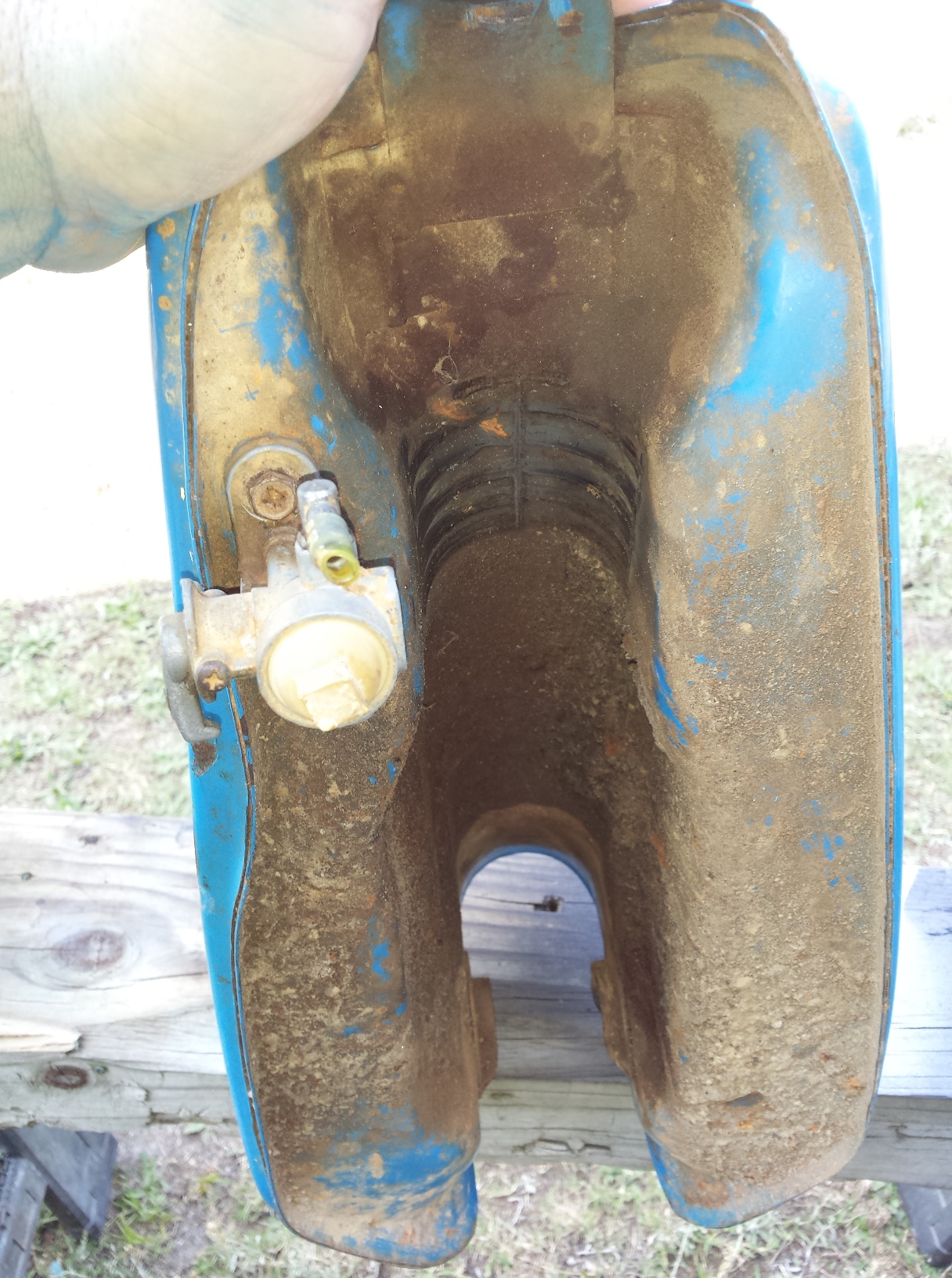
Have I mentioned anywhere in this series just how incredibly nasty this thing was? Check out the red clay mud dried to the bottom of this tank.

<bottom of ts185 tank>

The side covers are decent used parts that only required minor work to repair, but the tank itself is actually requiring a fair amount of body work to make look good.

<20 foot restoration TS185>

It’s so tempting just to throw money at a project like this, and to a certain extent I have done that with the mechanical & safety bits. Since this is the 2o Foot Restoration the appearance of the machine will be handled in the most economical way possible, with a few cans of Duplicolor spray enamel. So many of the parts needed for this bike are either unavailable or priced beyond what I feel like spending on it, this is actually going to be a resto-mod more than a restoration. Plus the blue has to go, I want a tougher more subdued look for my trail bike so the color will be changed. No I’m not going to tell you yet, keep checking back (or just scroll down & subscribe) o see what it winds up looking like!

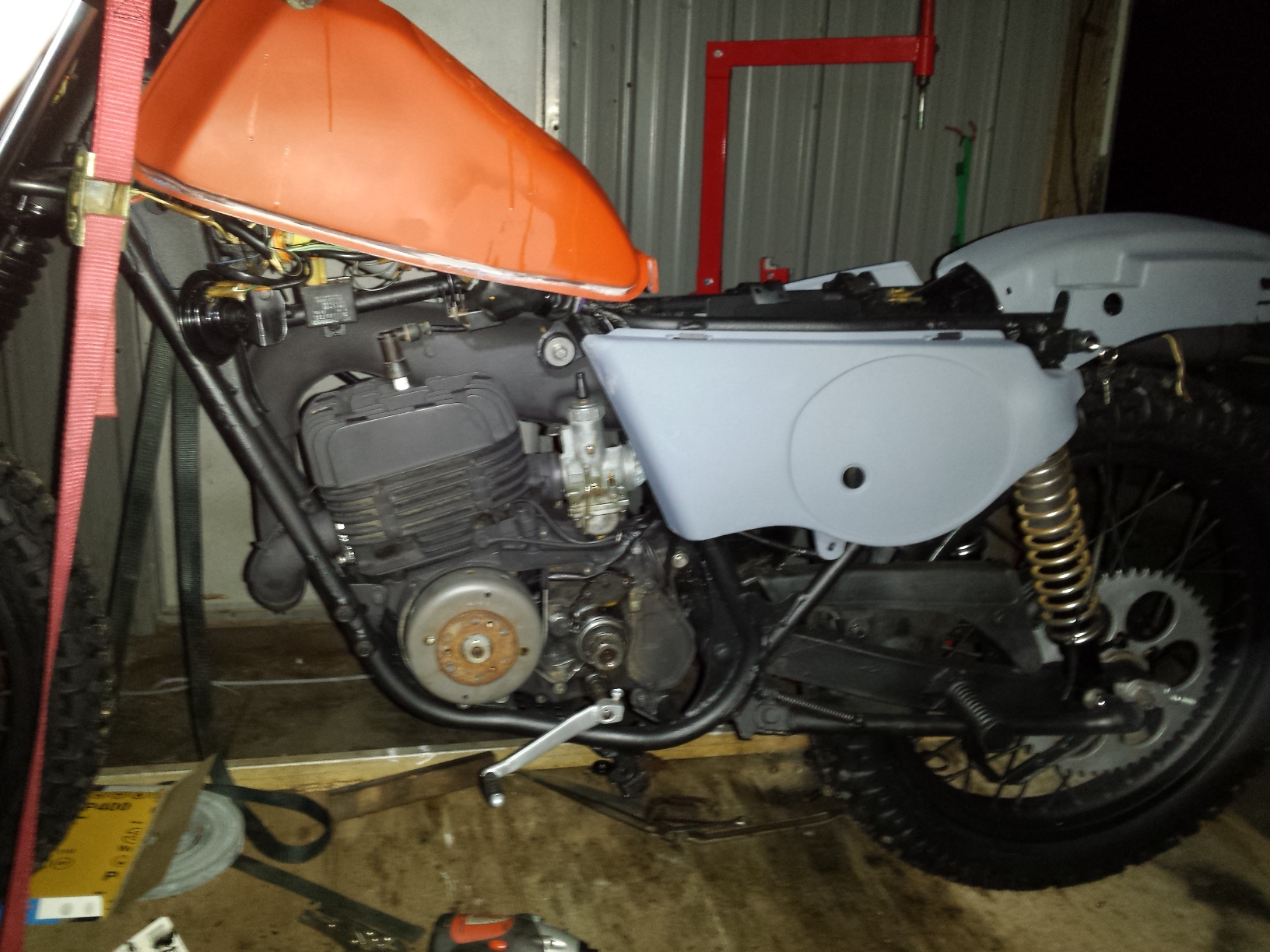
<ts185 right side primer bondo>

Peace Y’all


A Truly Unique Dirty Chopper

Mission Main Street Grants
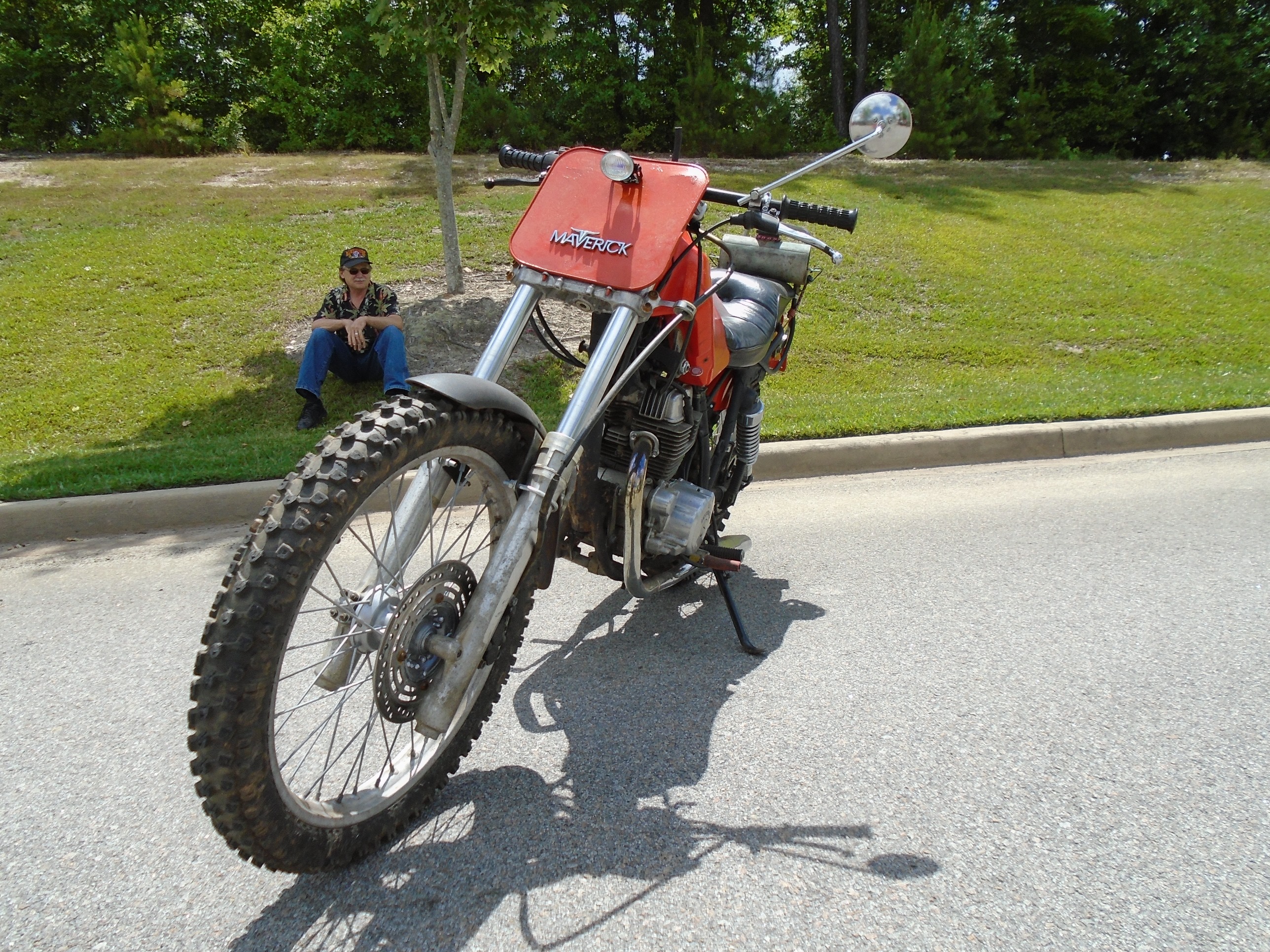
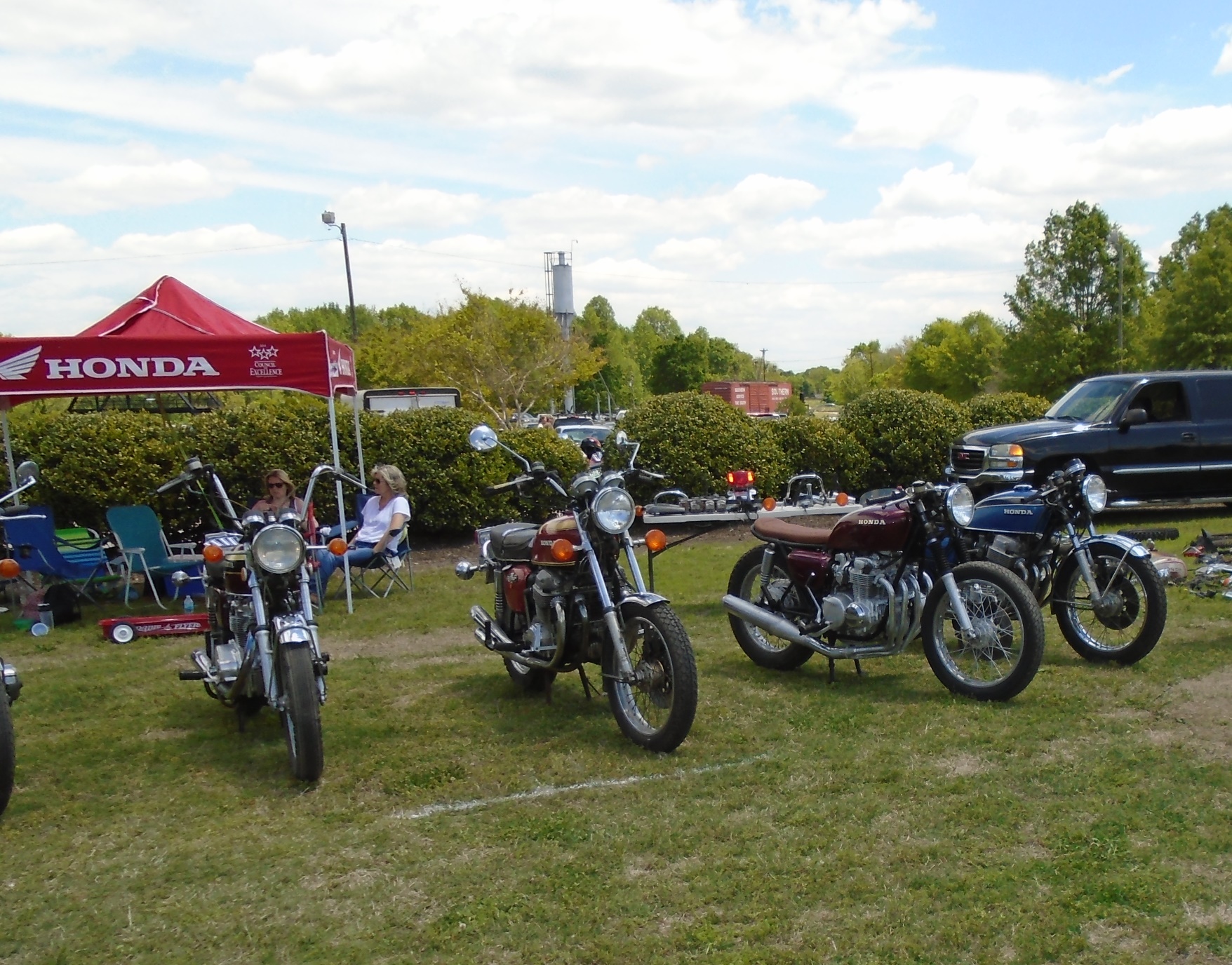
Carolina Honda Powerhouse, hosted a really nice vintage motorcycle rally today (Saturday May 30th, 2015). While I plan to post a few pictures from that at a later time right now I am overwhelmed with the desire to share this fantastic custom. The owner shall remain nameless here, but he was willing to pose for a couple of pictures with his creation. First just let me give you the list of parts that make up this unique dirty chopper custom bitsa. (You know a few bits of this and a few bits of that, none of it matching but it all works together.)

<Maverick Dirt Chopper>

1978 Yamaha XT500; frame

2000 something Honda Rebel; engine

1969 Yamaha DT-1; rear wheel, brake, sprocket & sidestand

1984 Honda CR125; gas tank, forks, front wheel & brakes

1980 something Harley Sportster; shocks, seat, front & rear fenders

1972 Honda CB500-4; footpegs

1960 something Triumph clutch lever,

It also had a utility trailer tailight, cheap driving lamp headlight, a bicycle handlebar and a bunch of homemade small parts!

Yes I would ride it, would you?

<a dirty bitsa chopper>

<extended shifter>

<auxillary gas tank dirty chopper>

I forgot to mention this awesome auxiliary fuel tank sourced from some unknown ancient lawnmower.


<home built chain guard>

<cheap ass air filter>

<Honda Rebel Voltage Regulator on chopper>

<unique dirty chopper>

How about a view from the cockpit?

<mountain bike handlebars on motorcycle>

Amazingly enough despite it’s ratty origins & seemingly haphazard design when you view it from the side the proportions are nearly perfect.

< a Unique Dirty Chopper>

a Unique Dirty Chopper

<a Maverick Chopper builder>

The final flourish to set off this masterpiece of junkyard art is this emblem added to the numberplate!

<not a ford maverick>

Peace Y’all!

The 20 Foot Restoration Part Two

When I posted this morning this was the picture of my stopping point last night.

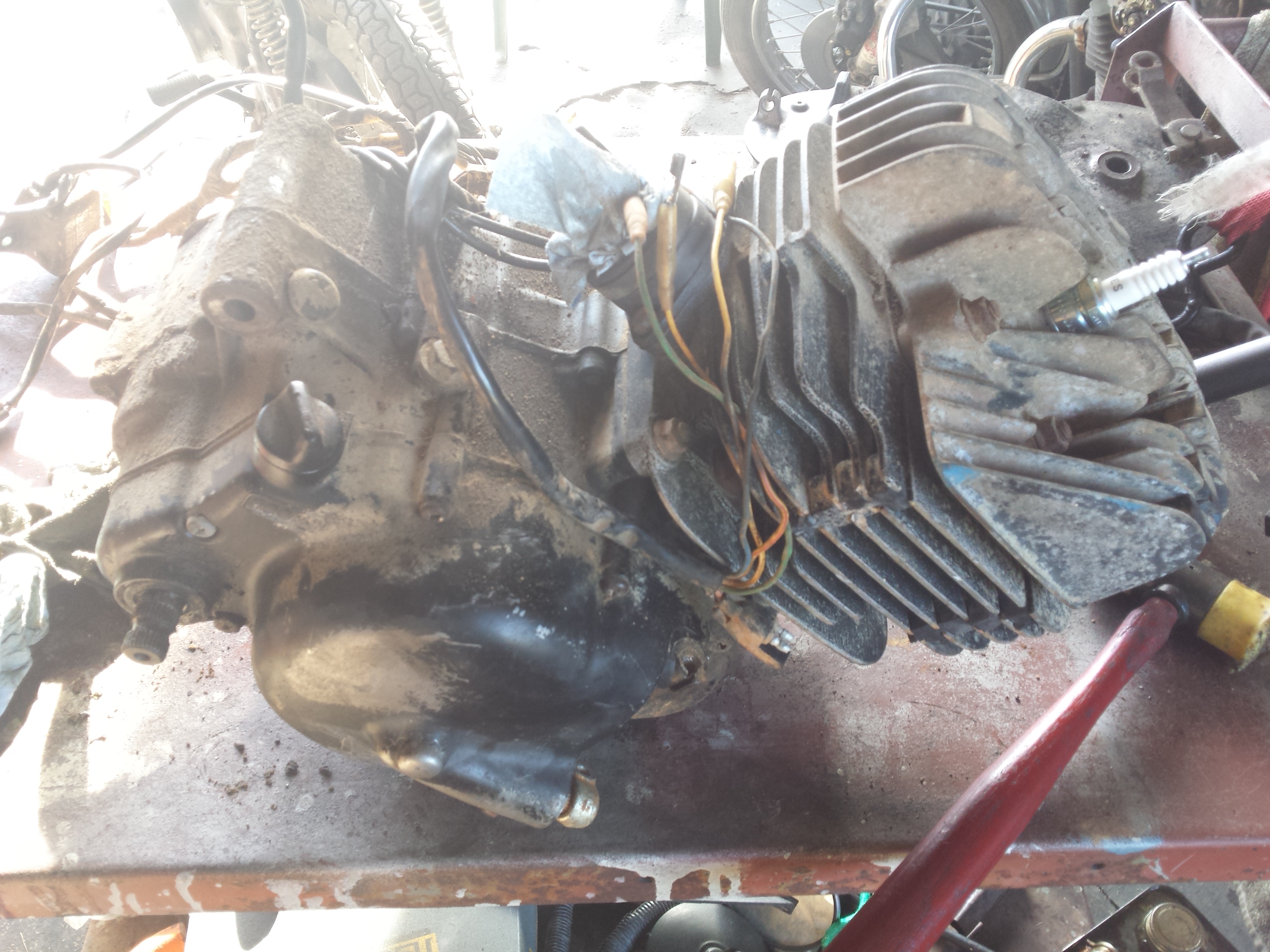
The engine was still sitting on the bench looking like this.

<nasty filthy engine>

and most of the small parts hadn’t been touched yet & most of them had a thick coating of baked on red clay mud. But with the aid of my beautiful assistant I was able to get it back together this far.

<my fantastic old lady>

<ts185 frame & engine>

It’s been a long time since I have pulled a hard weekend thrash on any vehicle like this, the fact that I didn’t have to push so hard was part of the challenge for me. When I was younger I spent may a weekend or late night wrenching non stop just to be able to get back to work on Monday, and it’s really nice not to be in that situation any more. It’s also nice to know that I can still pull it off if I have to.

<ts185 20 foot restoration>

So far so good, now of to order the rest of the parts that I didn’t anticipate needing! Appearance wise this might be a 20 foot restoration but all of the mechanical bits will be in 100% working order!

The 20 Foot Restoration

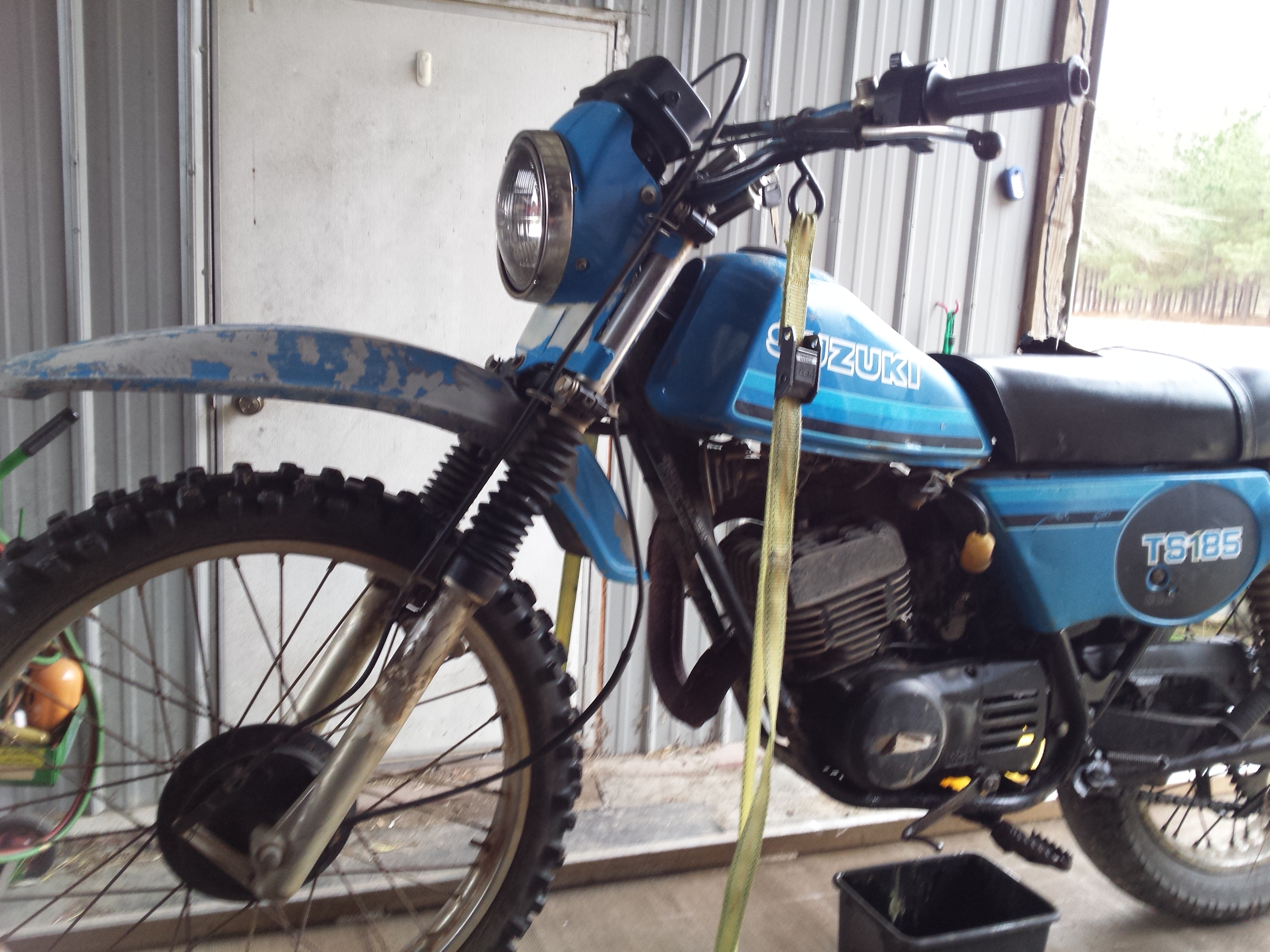
Finally started the repairs & upgrades to the old TS185. It was in dire need of new steering head bearings and brakes. A set of matching dual sport tires wouldn’t hurt either, along with a thousand other little things. So the day before yesterday I pulled it all the way down to a bare frame.

<81 ts185 before>

This is not going to be a show quality restoration by any stretch of the imagination. You may have noticed that the title of this post is The 20 Foot Restoration. If you’ve never heard that term before it describes a vehicle that looks really good from a distance of 20 feet or more, but when you get up close you can still see the dings & other imperfections.

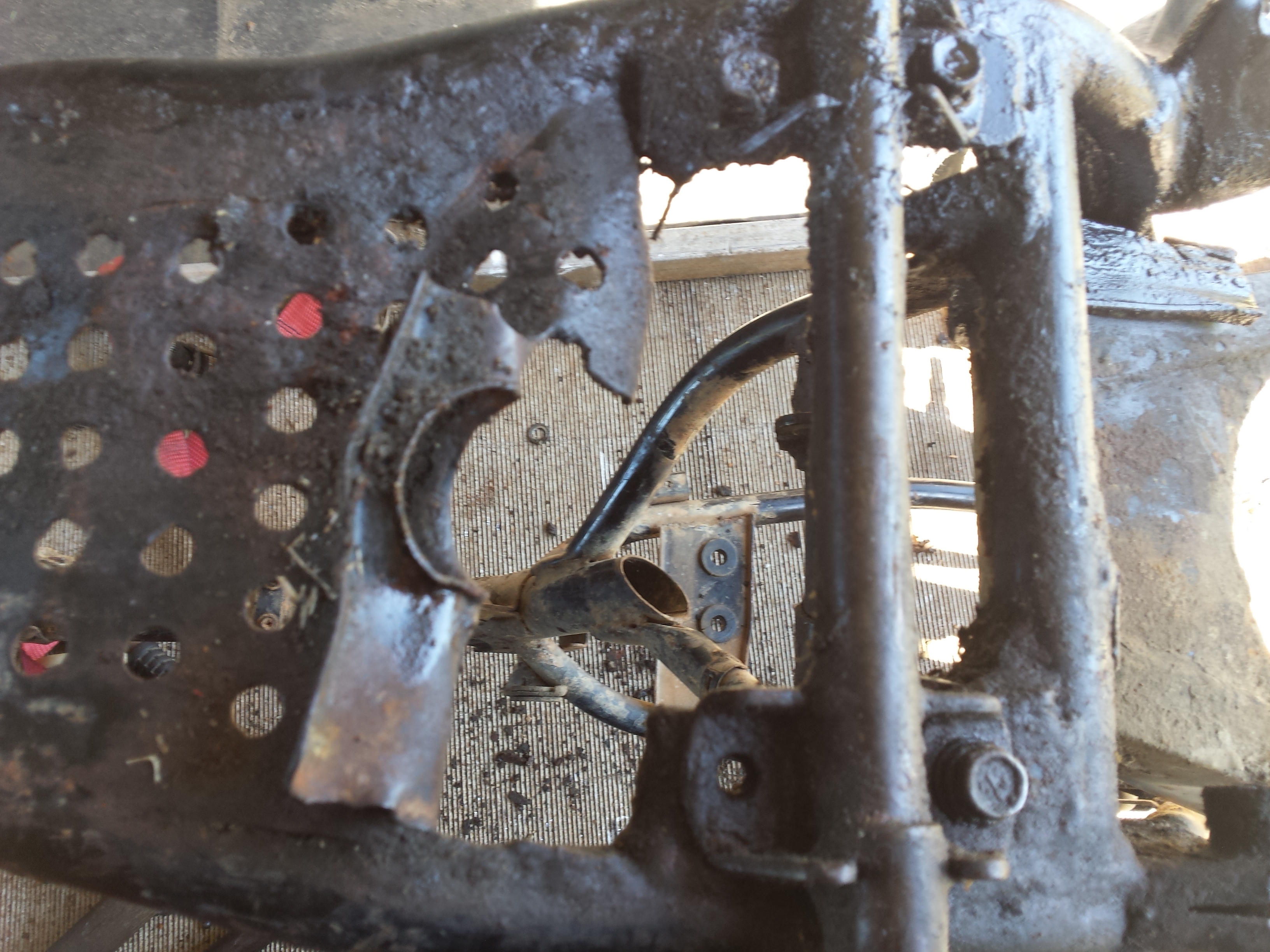
If the skid plate had been removable I probably would have left the engine in the frame for all of this as it runs excellent. But the skid plate is an integral part of the frame, and the area between it and the engine was packed with a mixture of red clay mud & two stroke oil. Plus there was some damage to repair.

<ts185 skid plate damage>

After getting it cleaned up reasonably well, I took some body hammers to it, straightened it up some,  and the welded all of the broken bits back together. Then I hit it with the wire brush & sandblaster before shooting a coat of rattle can primer.

<motorcycle frame on clothes line>

All of the frame bits & pieces are painted with some some cheap spray on truck bed liner, while parts such as the shock bodies etc. are being done in brake caliper paint. I disassembled the shocks & dropped the springs into a bucket of metal rescue to soak overnight. they’re not perfect but they look a lot better.

<oem ts185 shocks repainted>

After 2 days of hard work this was my stopping point last night, this morning I am going out to detail the engine as much as I can without actually taking it apart. and will continue the reassembly of this poor old thing.

<fresh painted TS185 frame>

<The VJMC>

2015 Carolina Classic Motorcycle Show

<Carolina Classic Motorcycle Show>

Carolina Classic Motorcycle Show registration tent

The Triad Vintage Motorcycle club hosted their 9th annual Carolina Classic Motorcycle Show on May 2nd 2015. Mrs. Finch & I saddled up the old Suburban Assault Scrambler and rolled out of our driveway headed toward the N.C. Transportation Museum in Spencer N.C. Rather than running up on the super boring slab I plotted a course to Spencer that involved rolling up to Chesterfield, S.C. and picking up Highway 742 and rolling into N.C. and picking up U.S. 52 for the rest of the way into the Show.

Let me get started by praising the venue, the Transportation Museum is a very nicely laid out train museum with great parking for visitors and a really nice grassy area with paved pathways for the show grounds. Although you will see glimpses of it in the pictures the best way to see how nice of a facility they have is to watch this little video clip I made riding into the museum. Some of the show bikes are also featured in the video as well.

I have decided to make this mostly a pictorial post with random comments. There was something for everyone here.

<1929 Indian Scout>

Lets go ahead and start out with this 1929 Indian Scout!

<29 Indian Scout engine>

Of course while our baby boomer parents have driven the collectible motorcycle market so far, I predict that as those of us in Generation X take over you will see the motorcycles that we lusted over in our younger days such as this pristine Suzuki Katana experience a surge in value & collect-ability.

<1st Gen Suzuki Katana>

<81 82 83 Suzuki Katana>

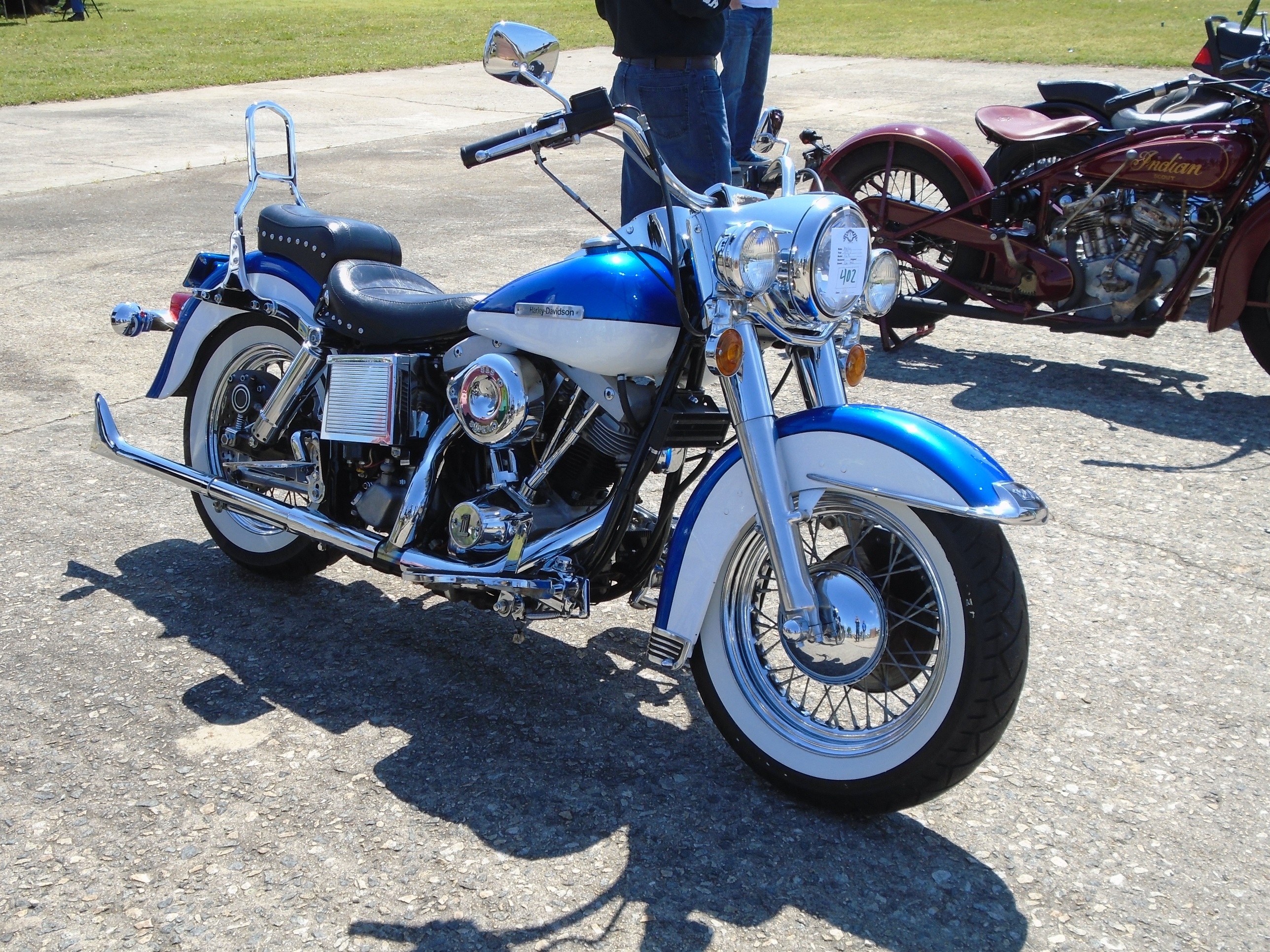
No motorcycle show is complete without a couple of nice Harleys

<old shovelhead Harley>

The old FLH was nice but I really loved this Evel Knievel replica Sportster.

<Evel Kneivel replica sportster>

Is that cool or what?

Some really nice British iron was there also.

<triumph tr6>

<Norton Commando 750>

<77 Triumph Bonneville sidecar>


Some off road racers were being shown as well.

<CR Honda & YZ Yamaha>

<restored Suzuki TS185>

The cafe racer crowd was well represented.

<classic cafe racers>

<80 CB650 Cafe Racer>

A very tasty looking Yamaha RZ350 Kenny Roberts signature edition.

<RZ350 Kenny Roberts>

<2 stroke Yamaha>

For once mine was not the only rat bike in the show, check out this XS400 chopper.

<rat yamaha chopper>

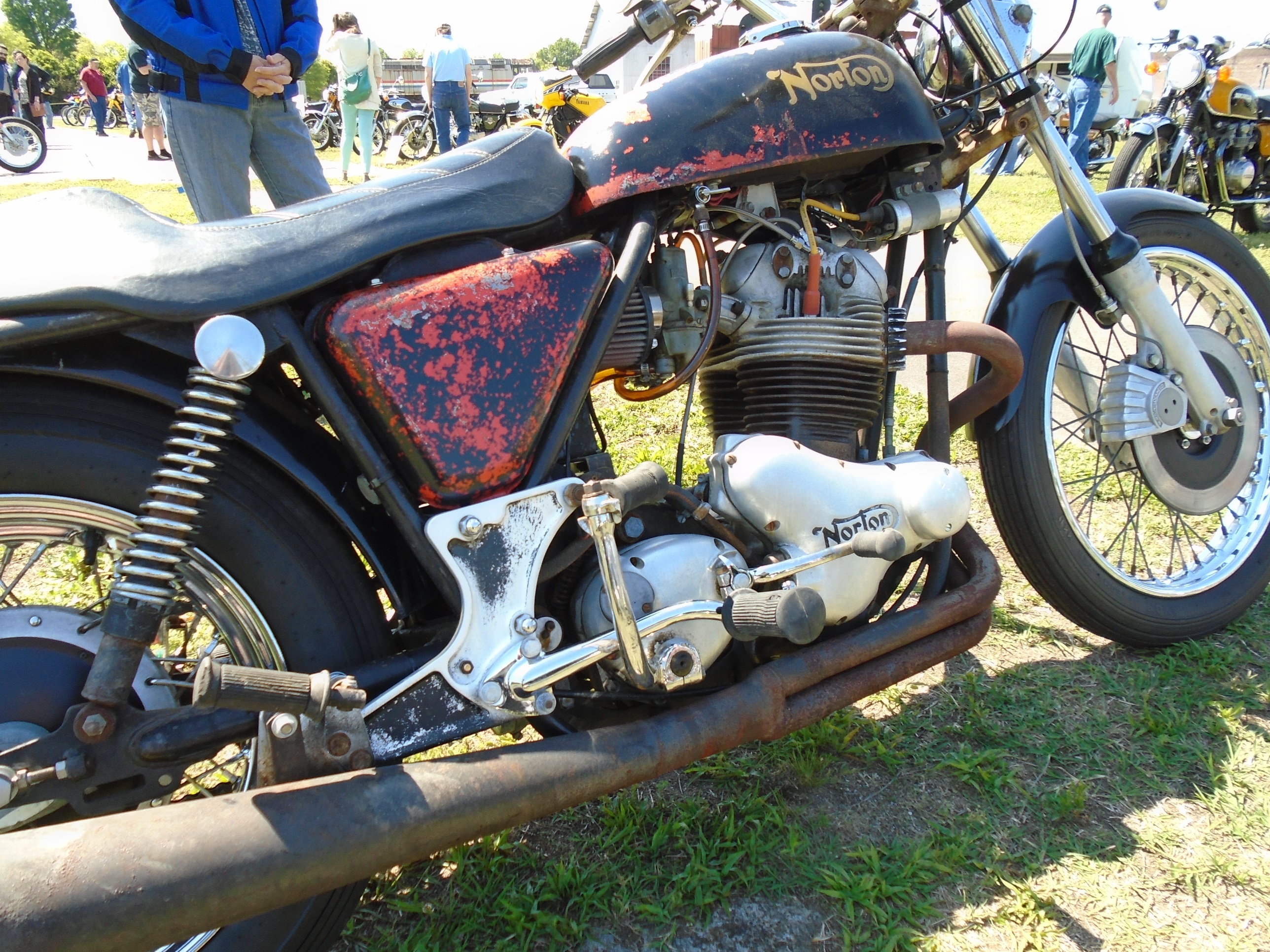
Great looking patina on this old Norton

<Norton Rat>

<Norton Rat>

Another Gen X favorite we couldn’t afford when we were 19, the Honda Interceptor

<Honda VFR1000 Interceptor>

The trains rolling in and out during the day greatly added to the atmosphere of the event.

<historic transportation>

It’s time for me to stop writing now & let the pictures do the rest of the talking…

<Yamaha Seca Turbo>

Yamaha Seca Turbo

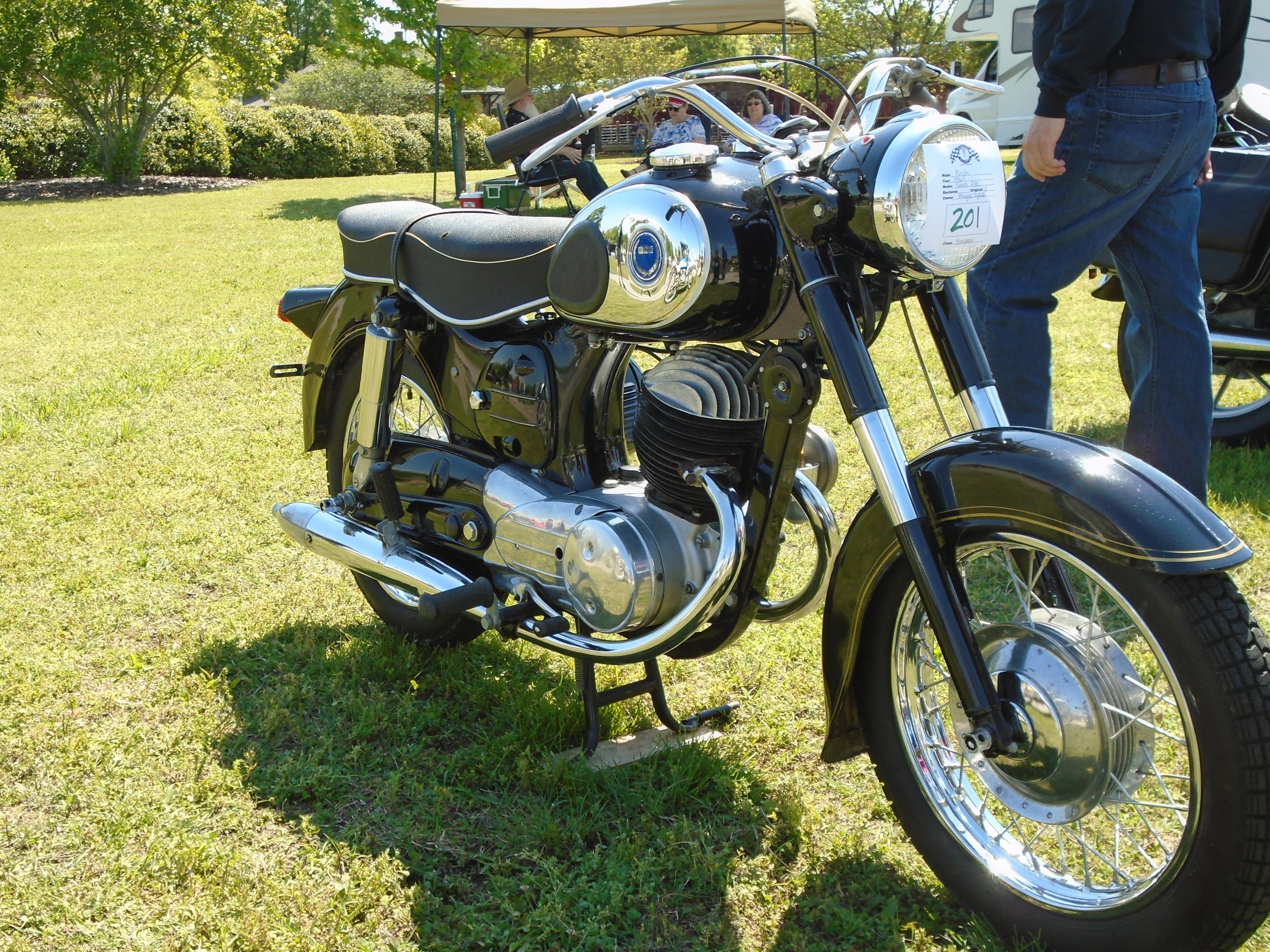
<Sears Puch 250 Twingle>

Sears Puch 250 Twingle

<1966 Honda Super 90>

1966 Honda Super 90

<the Gold Wings>

To see more visit the Triad Classic Motorcycle Club Facebook page

Peace Y’all


’58 Cushman Eagle For Sale

A friend of mine has this finely restored 1958 Cushman Eagle for sale. In 2014 he did a complete nut & bolt restoration on the thing. All of the tins have been repainted, everything else that isn’t chromed or polished has been powder-coated. The engine was overhauled and received a new piston, rings, & camshaft in the process.

<Cushman Eagle for sale>

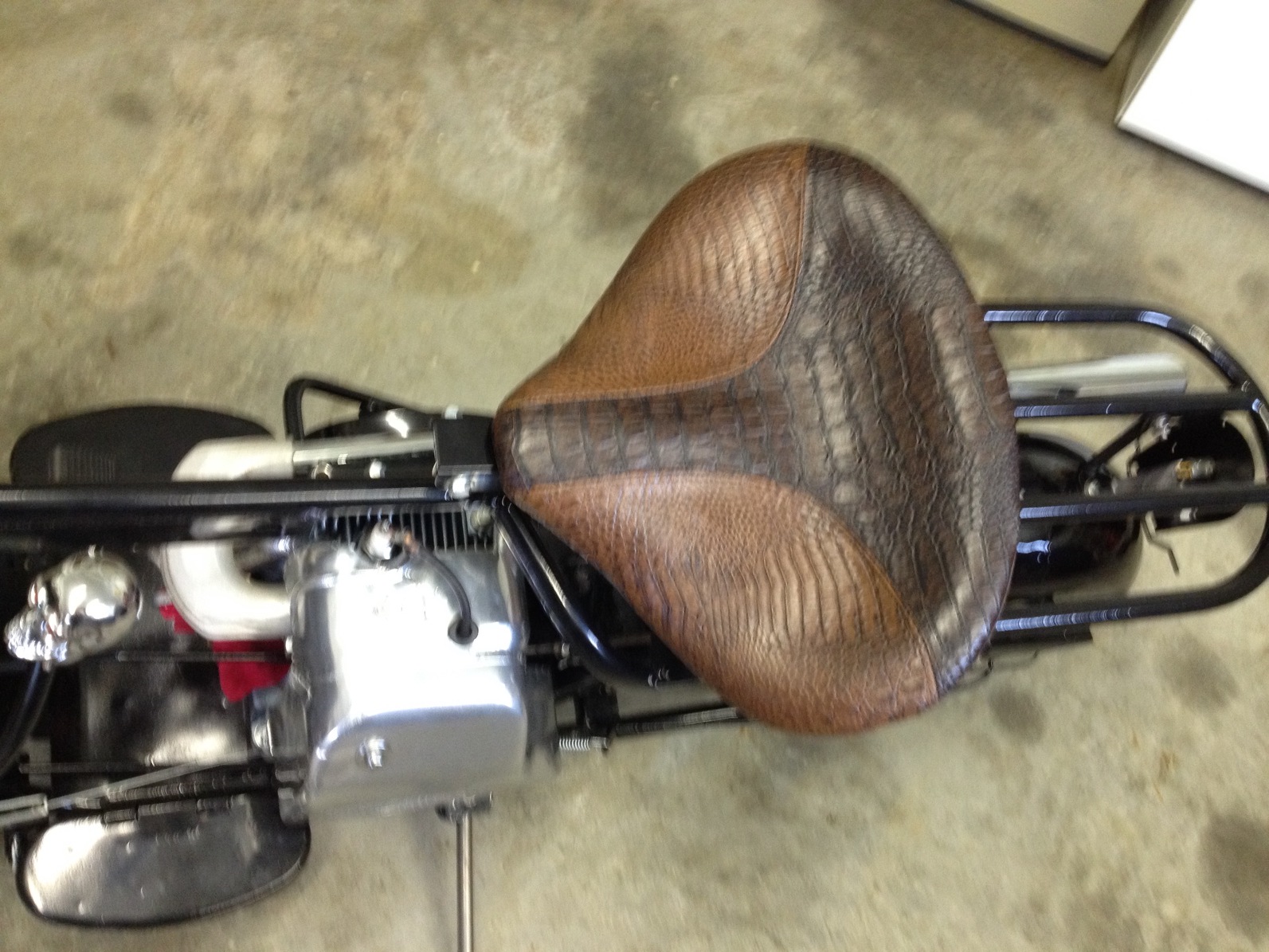
You have to see this one in person, and hear it running to believe it. Did I tell you about the seat? It does have one very nice custom upgrade, an alligator hide seat cover.

<Cushman Eagle Alligator Seat>

The price for this vintage piece of all American Coolness? $4500.00 USD picked up in Waterloo S.C. If you need to have it shipped that will be your responsibility to arrange for shipping & crating. So if you are interested call Larry Rossi at 864 677 5252 between the hours of 8:00 am & 9:00 pm Eastern Standard Time.

A Busy Time at Motopsyco’s Asylum

Boy life has been running wide open these last few weeks, There have been a few ups and downs but overall more ups than downs, so if you hear me complaining, just ignore me things are actually pretty good around here.
In my professional life (the one that pays the bills since I seem to be unable to sell enough motorcycle parts to survive) the last few weeks, my spare time has been devoted to studying to take the Certified Solidworks Associate exam and this past Saturday I took the test and passed it! So now in addition to my other software skills & certifications I am now also certified for Solidworks 3D CAD as well.

<Solidworks CSWA>

A couple of weeks ago I was trying to change out a 20 year old motorcycle tire when I bent a top of the line name brand made in U.S.A. tire iron. Instead of taking this as a warning I continued try to wrestle with the ancient rubber until I pulled a muscle in my shoulder.

<not supposed to happen>

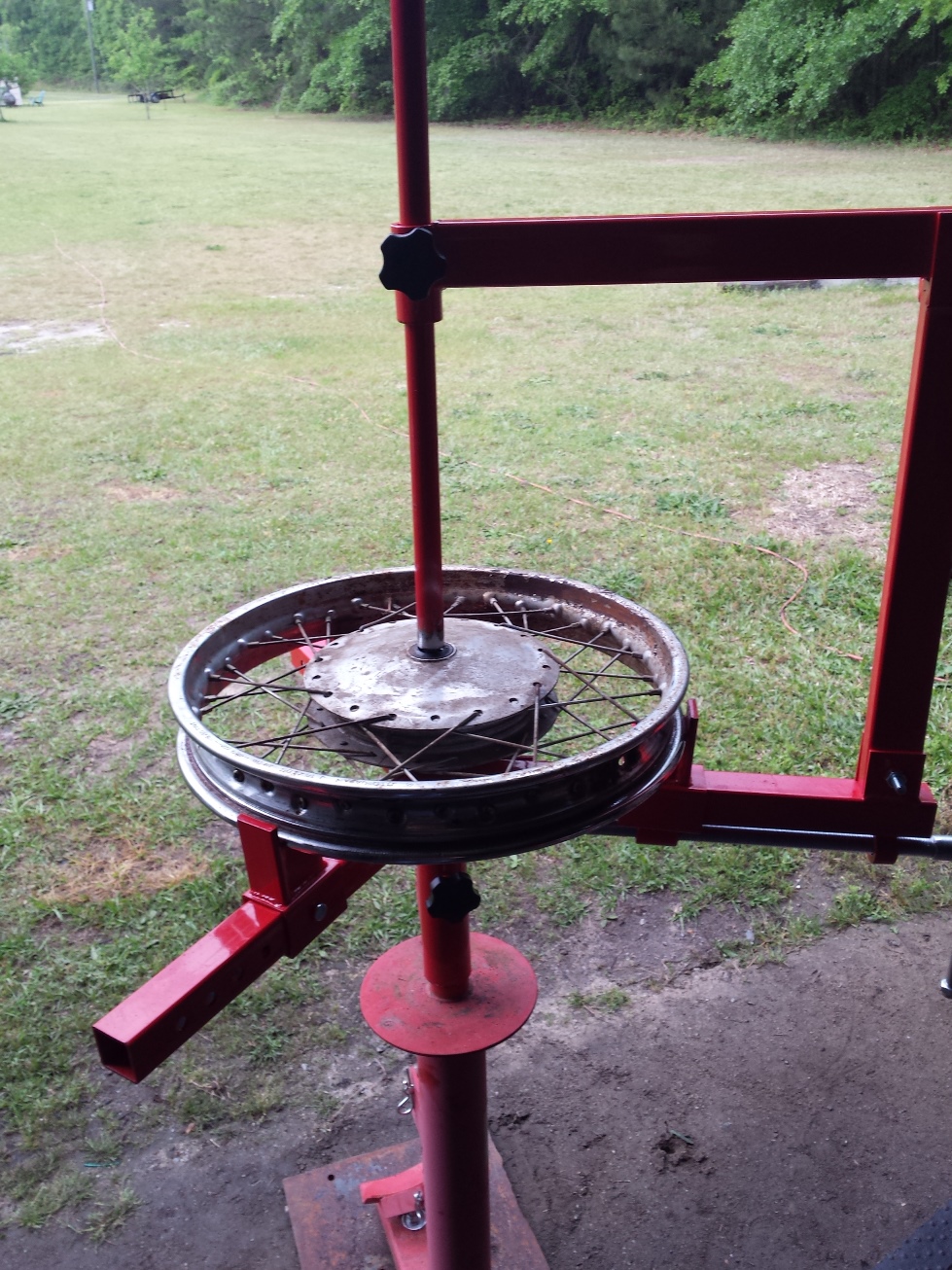
So I decided at last to try to buy a manual tire changer. My Dad already had the Harbor Freight cheapie car tire changer that he used to change his truck, lawnmower, & small tractor tires and was very happy with it. He finally got himself a new truck and decided last week that being 72 years old, he didn’t want to fix his own tires anymore, and sent the tire changer home with me. I ran up to my local store and grabbed the motorcycle tire attachment. Unfortunately as delivered out of the box with the changes that have been made to the rim clamps on this latest redesign, it was useless. It might be capable of mounting a fresh new tire without modifications, but if you are like me and frequently deal with the treasures, (‘er junk heaps) that you have dragged up from old barns, cow pastures, and junkyards then it won’t be of much use to you either.

<needs serious improvement>

Since the next cheapest manual motorcycle tire changer I could find was 600 bucks it’s time to order a few parts & make a few changes. I will post more about those adventures later after I get all the parts in and put it all together. In the meantime I broke out my reciprocating saw and took care of the next pesky tire.

<I like cutting up>

I like cutting up

We are heading into the heart of motorcycle show & rally season now here in the southeast, The Myrtle Beach Hog Rally, and Atlantic Beach Bikefest are the two biggies along the coast. For the vintage & antique bike lover, this weekend (May 2, 2015) in Panama City, Florida is Bikes on the Beach, in Spencer, North Carolina is the Carolina Classic Motorcycle Show, followed in two weeks by the AMCA Southern National Meet in Denton N.C.

<Carolina Classic Motorcycle Show>

Have fun & I hope to see you on the road!

Meditative Machinery April 2015 Website of the Month!

Meditative Machinery is the personal blog of Michael Morgan. Now I have never met Mr. Morgan but I know that he is a kindred spirit who loves his time in the workshop with his motorcycles as much as he loves riding them. I hope he doesn’t mind me quoting a few words from his “about me” side bar.

Finally I am doing what I want to do in my shop at my own pace. I have discovered that under these circumstances, if I can keep my mind clear, my mechanical work really is a type of meditation. It clears my mind and profoundly relaxes me. That is the point of this blog. Relax, stay in the moment and enjoy the opportunity to restore and refresh these wonderful machines.

This is a nice simple little blog  with great writing & decent photography and although there are a couple of street bike restorations shown, he specializes in vintage off road machinery especially old trials bikes such as the Honda TLR & Yamaha TY series.

Thank you for sharing your workshop with us, and should I ever find myself headed to Baja, I’ll be sure to look you up.

Click here & go spend a little time at Meditative Machinery, you’ll be glad you did.

Dry Coat Rust Preventative Review

All of us who work with metal have a common enemy, rust insidious and seemingly unstoppable it creeps into all the places we don’t want it to be, destroying our hard work, valuable treasures & expensive raw materials. About a month ago I did a review of Metal Rescue rust remover from Workshop Hero. The product worked very well & I have been  pleased with it.

One thing we all know by now is that once you get the rust off of a piece of steel is that afterwards you have to keep it off. If you have ever removed rust from steel using any chemical method you may be familiar with a phenomena known as flash rusting. This occurs when you remove your rust free part from the solution (or the electrolysis bath), rinse it off and then leave it to air dry, only to find out that in a very short period of time, often well less than a day, the entire surface is covered in rust again. While there are a few finishes that actually  require a flash rust coating to work such as POR-15 semi gloss black chassis paint  & some gun finishing techniques, most of the time this is not desirable. Freshly machined parts are prone to flash rusting as well. In the past I have always just tried to coat all such surfaces with oil or grease to preserve them, and while this works it is messy, expensive & makes handling a pain. So when the fine people at Workshop Hero offered me a sample to test and to write about in this Dry Coat rust preventative review I jumped at the chance.
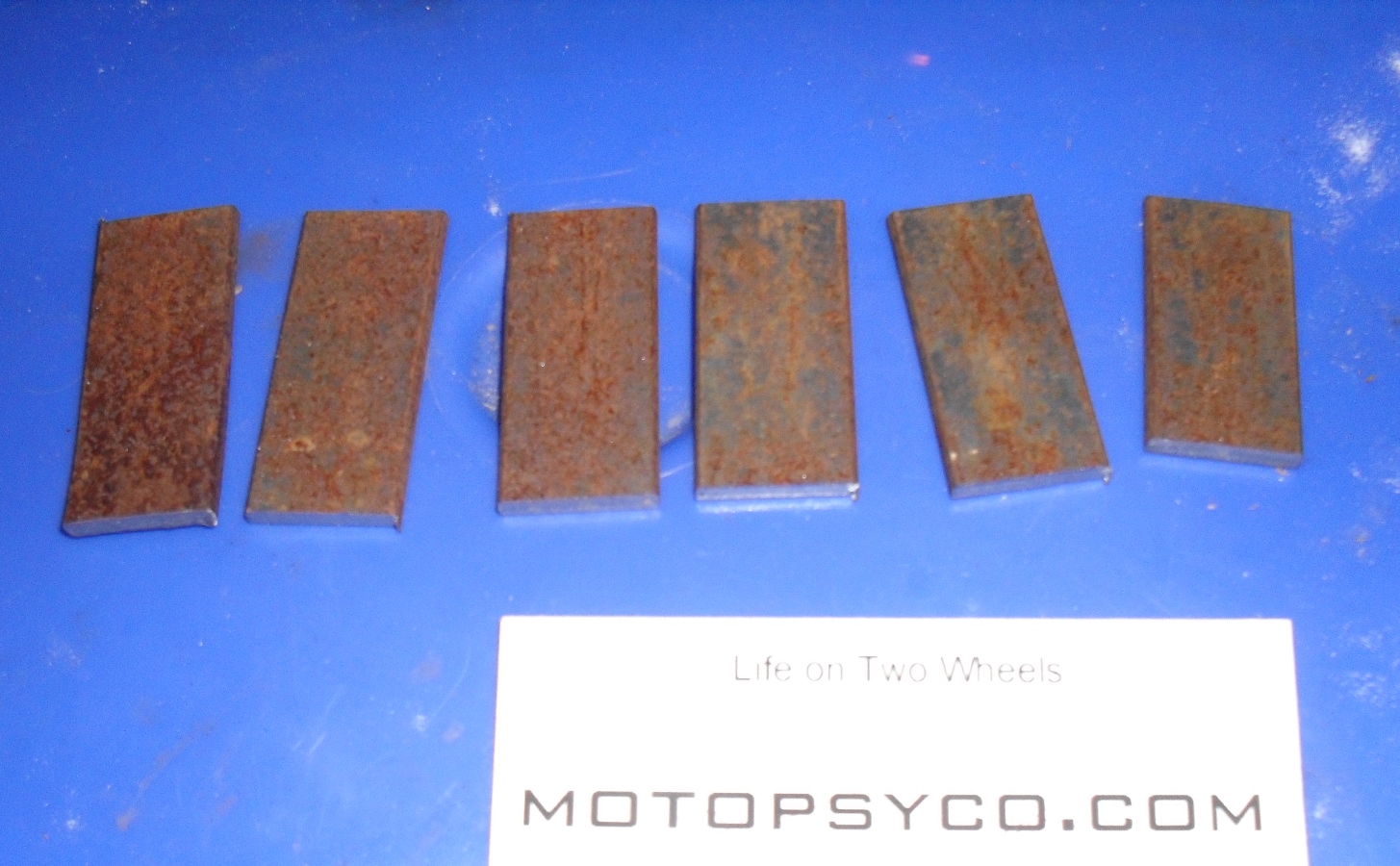
<rusty metal by motopsyco>

Just to keep thing honest & interesting let’s start by going out to the scrap pile and grab a rusty strip of 1/8″ thick x 1″ wide and cut six strips from it approximately 2 inches long. And then throw the strips into our bucket of Metal Rescue for an overnight soak. Yes this is the same solution that I used for the previous review, it has not been changed but it sure has removed a good bit of rust from various motorcycle parts.
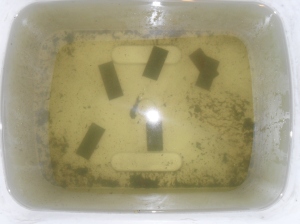
<clean the rust off>

Compare this to the before picture the rust is gone, I rinsed the parts with water and patted them dry with a paper towel
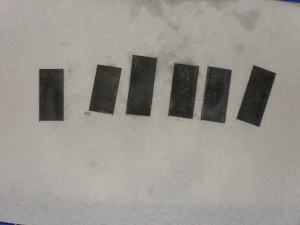
<6 clean strips of steel Metal Rescue>

The plan for this little experiment is very simple to coat 3 of the strips with Dry Coat and allow to dry according to the instructions. Then I placed one coated test strip and one un-coated control strip paired together in 3 different locations around my property. This was on March 14th, 2015.
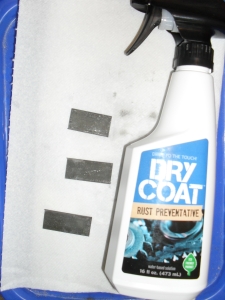
<metal recue dry coat rust prevenative review>

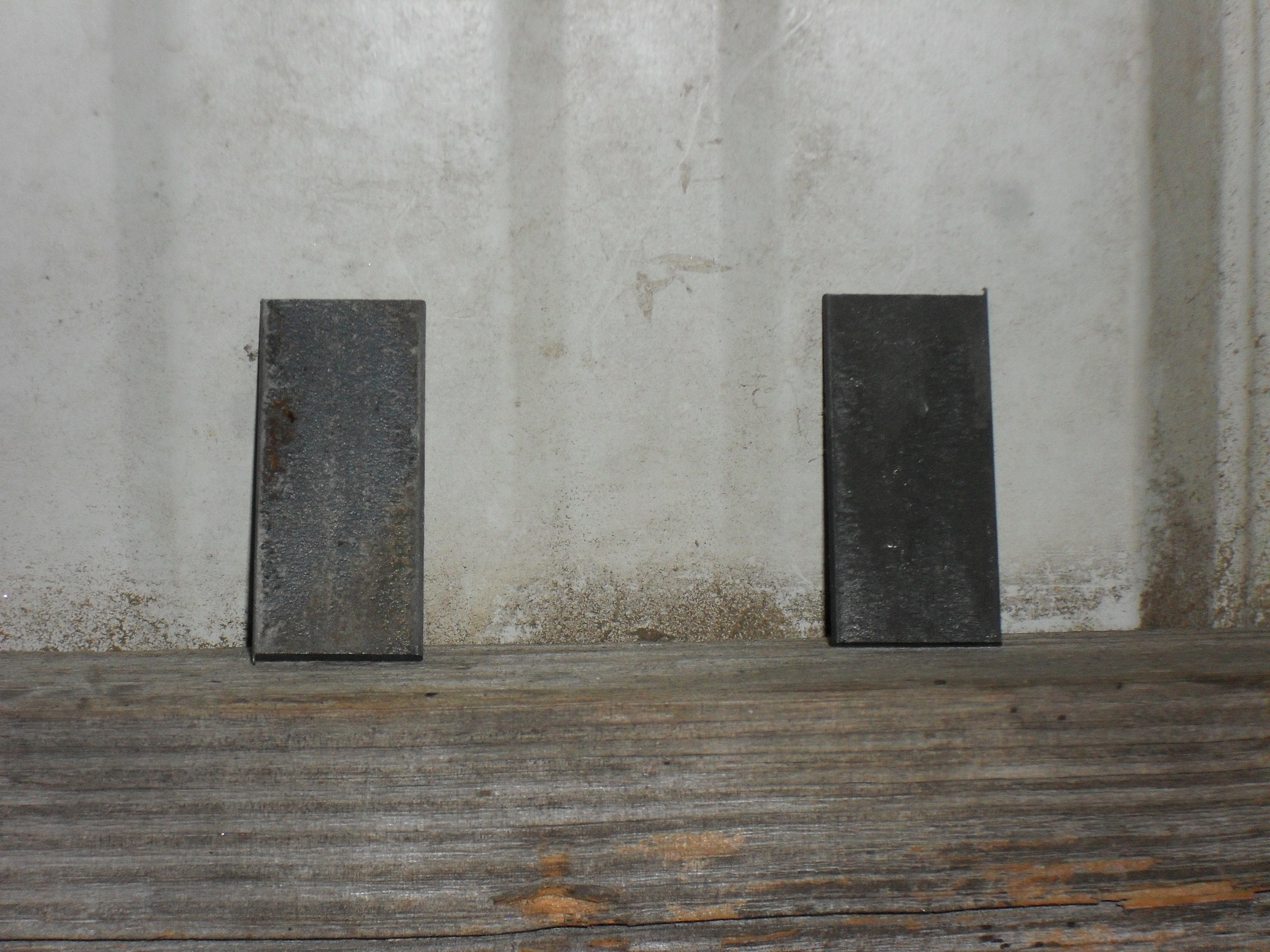
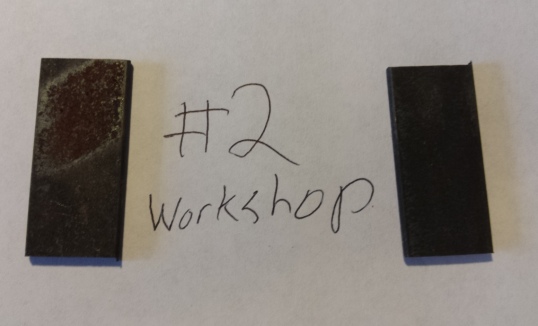
According to the company website it should give up to 2 years of protection from rust for steel parts stored indoors. The first two steel strips I left here in my office, literally indoors. The next two strips I placed on a ledge in the uninsulated, drafty humidity plagued old horse barn that I have converted into my workshop. Now this is definitely indoors out of the sun and the rain, but temperature swings cause enormous condensation problems that leave all of my bare steel tubing, rods, flat bar etc. coated in surface rust if they are not fabricated into useful items & painted quickly. If it can work here it should work at any other indoor location.
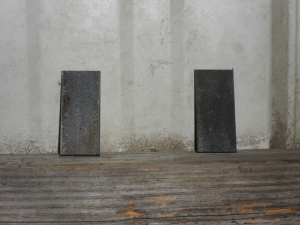
<out in a real workshop hero's workshop>

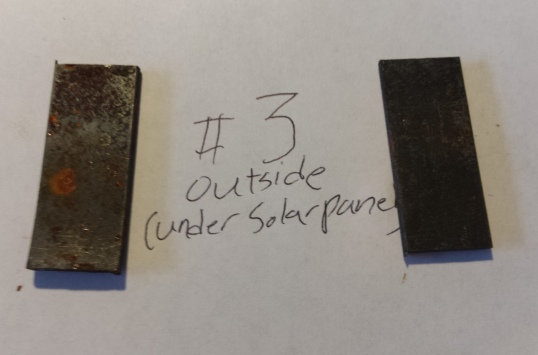
The final two pieces I stuck in a semi-exposed outdoors location. Let me be perfectly clear about one thing, this product is rated for indoor use by the manufacturer, if the coated strip rusts this is not a failure of the product, it’s just that an extremely curious cat wanted to push the limits. When I say semi-exposed, the two strips in the picture below are lying on the control enclosure of the solar panels that provide the lighting for my workshop. The solar panels are about 18 inches above them but they are exposed to the weather from 3 sides.
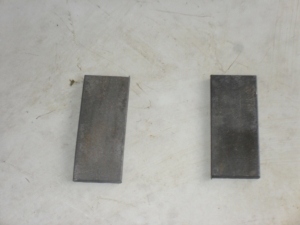
<dry coat test strips outside>

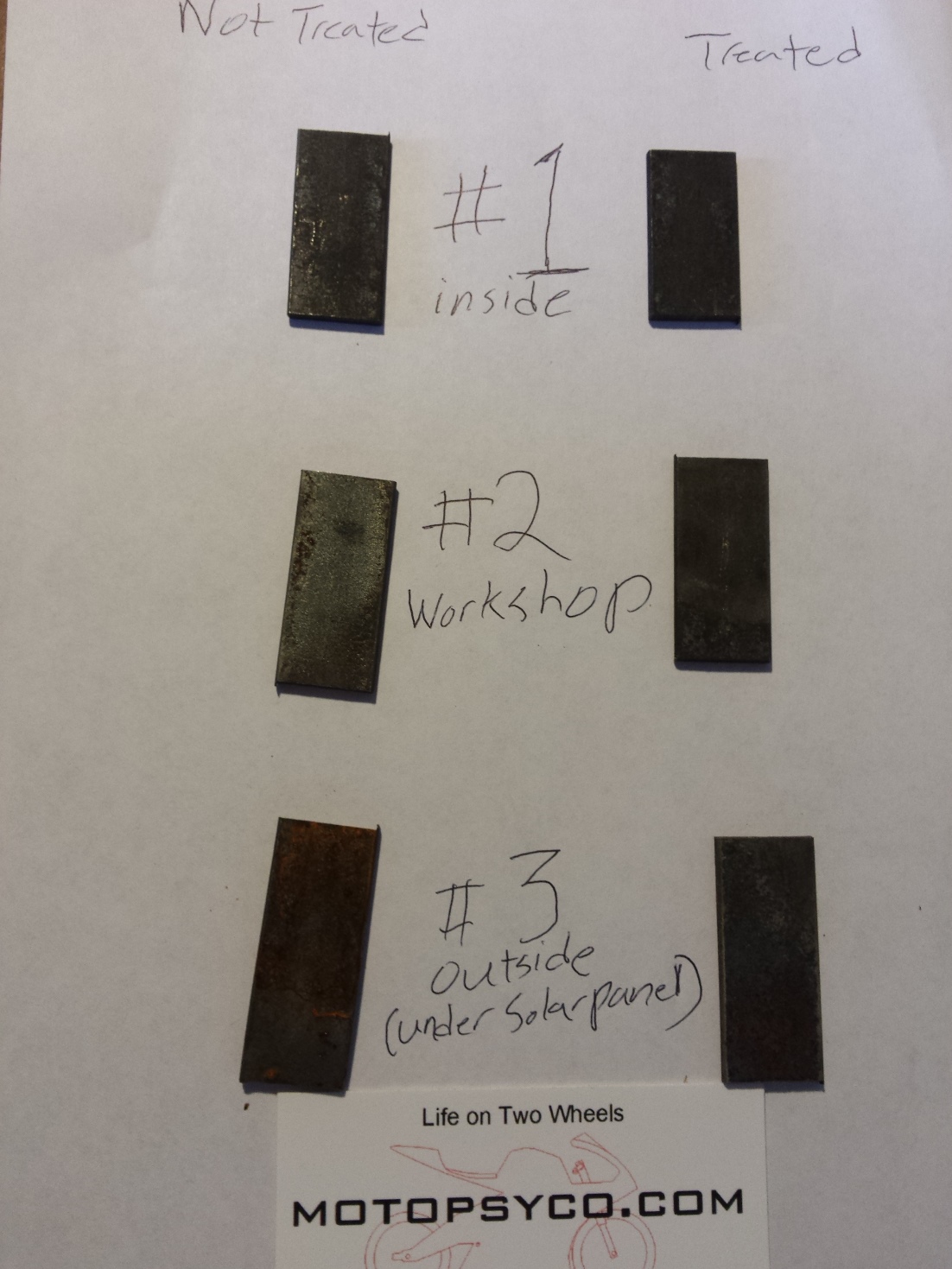
Just over 4 weeks later on April the 6th, 2015, I gathered all of the test strips together & photographed them. The parts that were coated with Dry Coat are on the right.
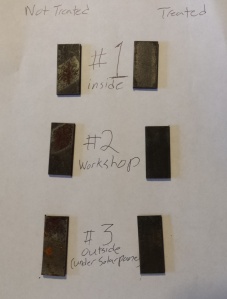
<workshop hero dry coat test>

I decided to flip the pieces over so you could see both sides.
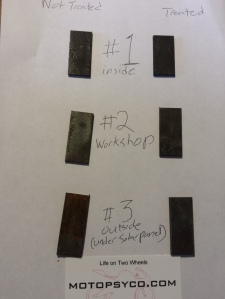
<dry coat rust prevenative review>

Now lets look at some close up pictures. Here’s the samples that I left in my office. The part on the left is well on its’ way back to the original rusty appearance, but the part on the right is not. You can clearly see the pitting from the original rust before treatment, but not any new iron oxide formation.
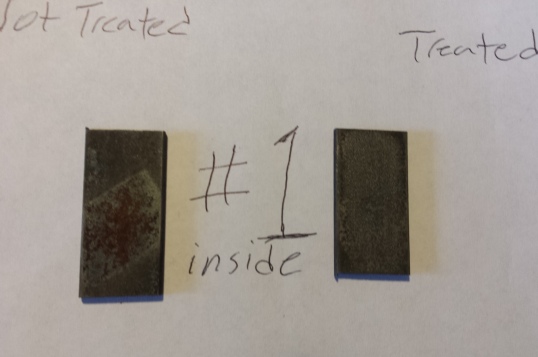
<dry coat test sample 1 indoors>

This next sample is the one that I really wanted to check after a month in the old barn with a typical South Carolina late winter/early spring weather pattern. It is not unusual at this time of the year to have temperatures swing from 15-20 degrees Fahrenheit up to nearly 80 and then back down again in the space of a day or two. Of course when the frost melts in the morning it will sometimes look like rain inside of an uninsulated metal building. You can see the difference that this made when looking at the untreated part on the left, it’s a lot rustier than the control strip that was left in the house. Once again you can see that the coated strip is still rust free, even in the pits left behind by the previous rust that was removed at the beginning of this test.
<dry coat test sample 2 shop>

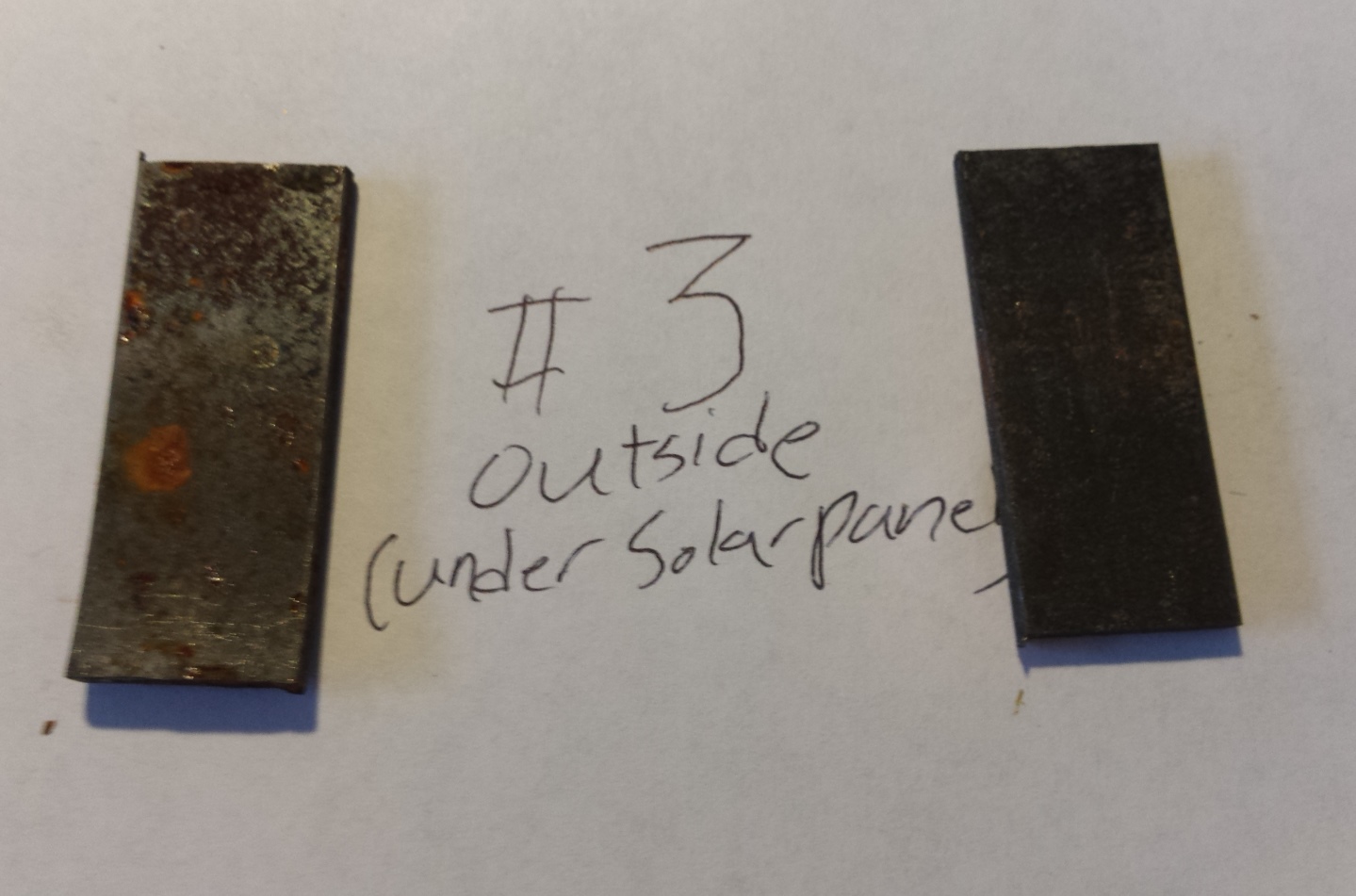
The outdoor test strips are next, the control strip on the left is quite rusty. The test strip on the right has developed a tiny bit of rust down in the existing pits in the metal. It still looks a lot better than the un-coated strip. Just remember Workshop Hero’s Dry coat is sold for indoor use and these last two test strips were just me satisfying my curiosity. The two pieces of steel shown here, have been rained on several times, and subjected to near daily freeze/thaw cycles. I am still pleased with the results and wouldn’t have problem recommending this product to anyone.
<dry coat test sample 3 outdoors>

I did download a copy of the Material Safety Data Sheet for this product so that I could see if there was anything in it that required any special protective equipment beyond the usual safety glasses and gloves. It is non toxic, non-flammable, and does not require any special disposal precautions. I didn’t see anything about welding two pieces of coated steel together so I contacted the manufacturer’s representative, and was told that they suggest washing any parts that are to be welded with soap and water first. The coating is 3 microns thick and probably wouldn’t interfere with most welding or cutting processes, but it would be wise to follow their guidelines.

So who needs this stuff? Obviously those of us who restore or repair old motorcycles, atvs, tractors & automobiles. Also machine shops, especially those of you who are storing & shipping items like re-bored steel cylinders, crankshafts, and other bare steel parts. Steel fabrication shops & o.e.m. manufactures of steel plant equipment, platforms, vehicle parts, or anyone else who stores bare steel either as a raw material or a finished product and needs an inexpensive solution for temporary prevention of rust, without having to deal with a hazardous material.

Both Metal Rescue and Dry Coat are available in a wide variety of sizes ranging from small bottles, 5 gallon buckets, 55 gallon drums and even 330 gallon totes for industrial users. As I said this is not permanent rust protection but it beats using expensive, messy, and hard to remove paints, oils and greases just to keep rust off of steel for a short period of time until you can use it.

Product recommended. I am going to place all of the test strips back in the places where I had them and will check on them over time. If anything changes I’ll be sure to let you know.