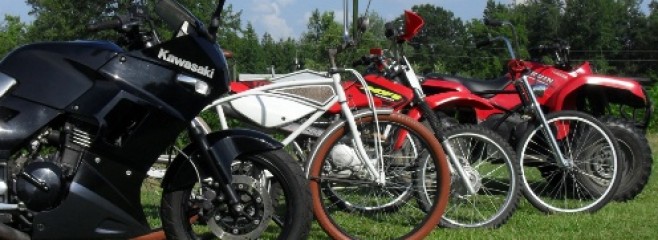
The GTC Torque Converter for Minibikes & Go Karts Installation and Review

Here’s what came in the box. I ordered it from GoKarts USA mainly because it was listed as being a direct bolt on fit to directly replace the cheesy jackshaft plate & tensioner that this minibike came with. Despite what is said on some of the forums around the internet, this is a good quality unit that is made right here in the good old U.S.A. Yeah sure it’s got a couple of imported components in it, but suck it up sunshine that’s just the way the world is, we’re all on one rapidly shrinking planet and the market place is making it smaller everyday despite the best attempts by idiot politicians and knuckle dragging nationalists to stop it. Still it’s nice to see something made here that is of good quality and is price competitive. The backing plate is especially well machined & finished to the point that it is almost a shame to cover it up with a belt guard.

<contents of the GTC kit box>

Now this is not going to be a full complete step by step set of installation instructions, just an overview with a few tips. If have lost your kit instructions or have purchased a second hand unit without instructions please click here to get a set from the GTC website.  As always you may click on any picture here for a larger view.

First you have to remove the original plate with the factory clutch & intermediate sprocket.
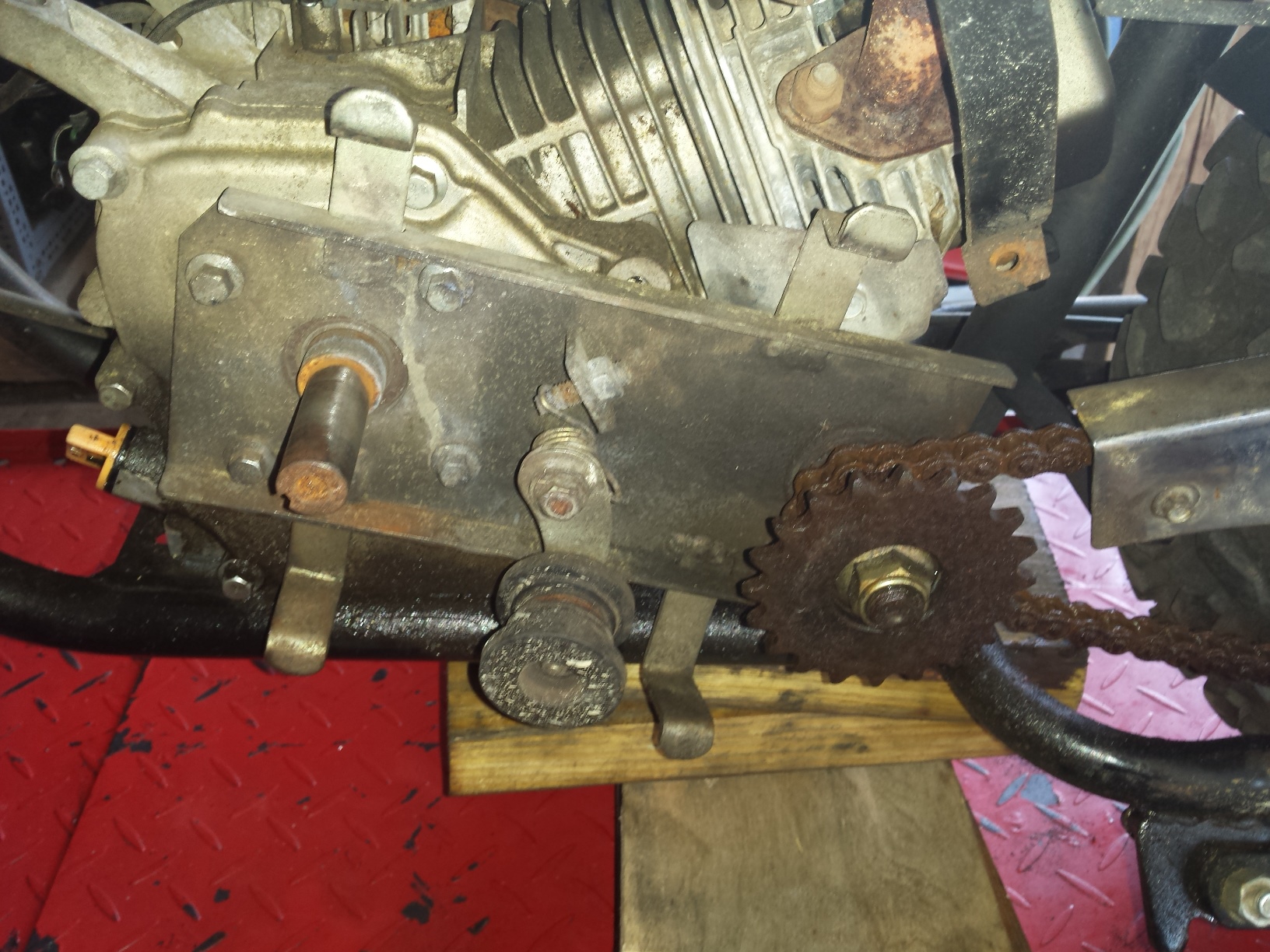
<Baja MB165 jackshaft chain tensioner>

Make sure you remove all of the spacers from the end of the crankshaft, if you are doing this to an older engine oxidation may cause the spacer to look like an integral part of the crankshaft. If you don’t remove it the drive pulley won’t line up and you’ll be scratching your head for a few minutes like I was.
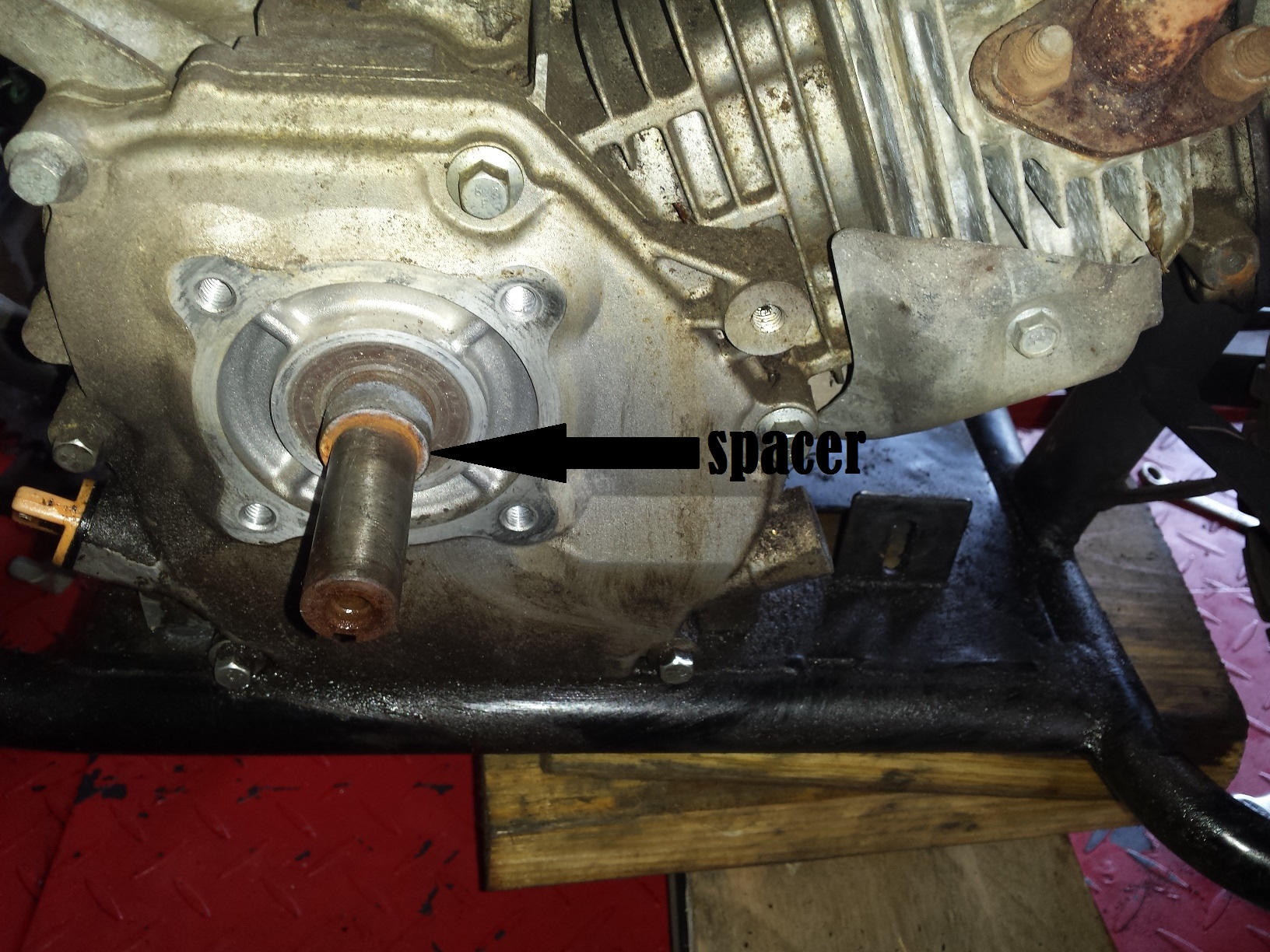
<baja minibike crankshaft spacer>

This tab is no longer used and will have to be flattened or removed for the torque converter to fit.

<remove this tab>

The kit comes with longer bolts to mount the plate if needed.
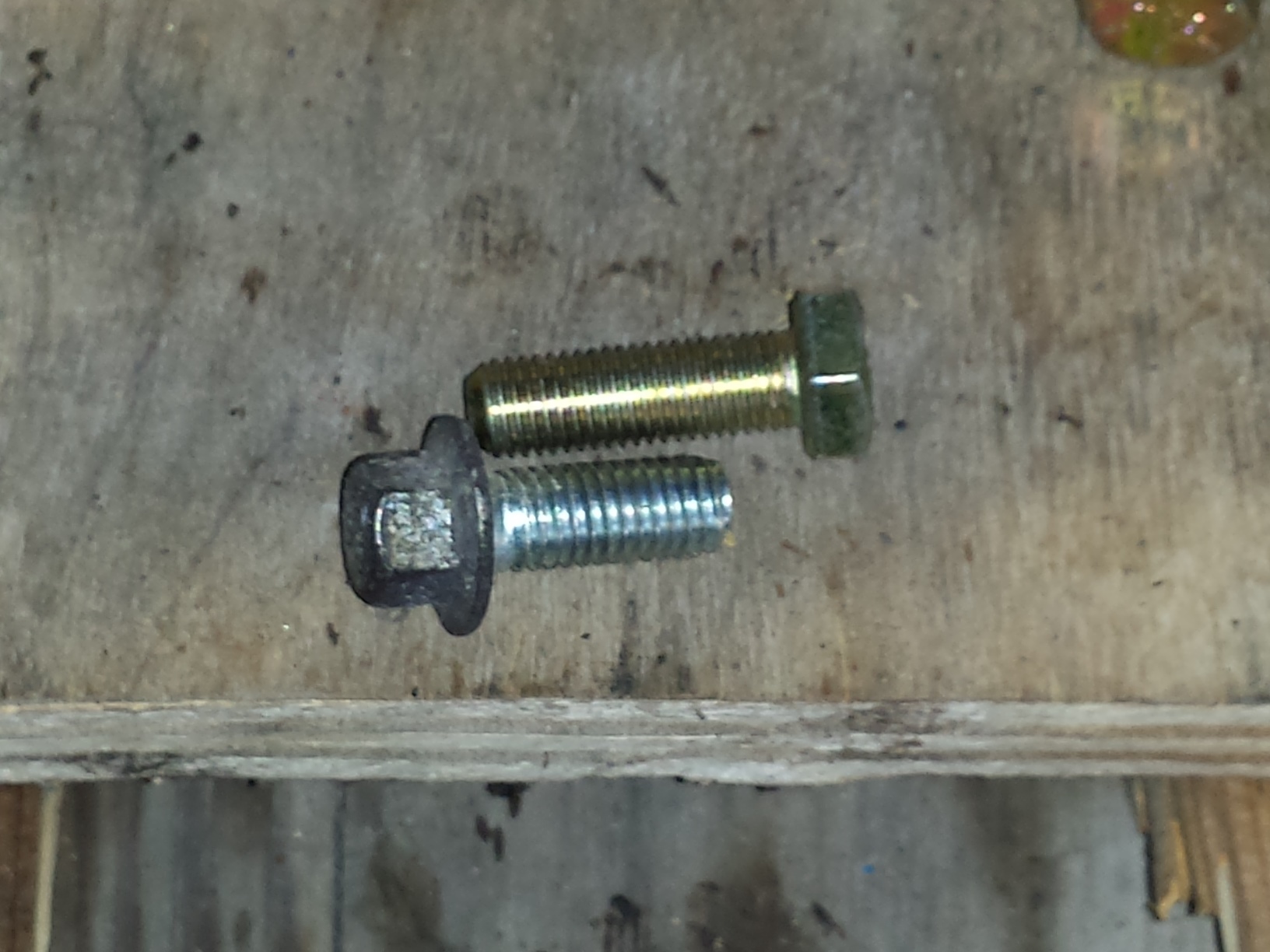
<GTC kit bolt>

This particular installation just reused the stock bolts

<GTC mounting plate on Baja minibike>

A picture of the driven shaft with the snap ring and washer installed.

<driven pulley shaft GTC torque converter>

Here it has been started through back of the mounting plate.

<installing the driven shaft>

Next get the chain sprocket, key & spacer,

<sprocket,spacer,key>

sprocket,spacer, & key

and slide them onto the driven shaft as shown here.
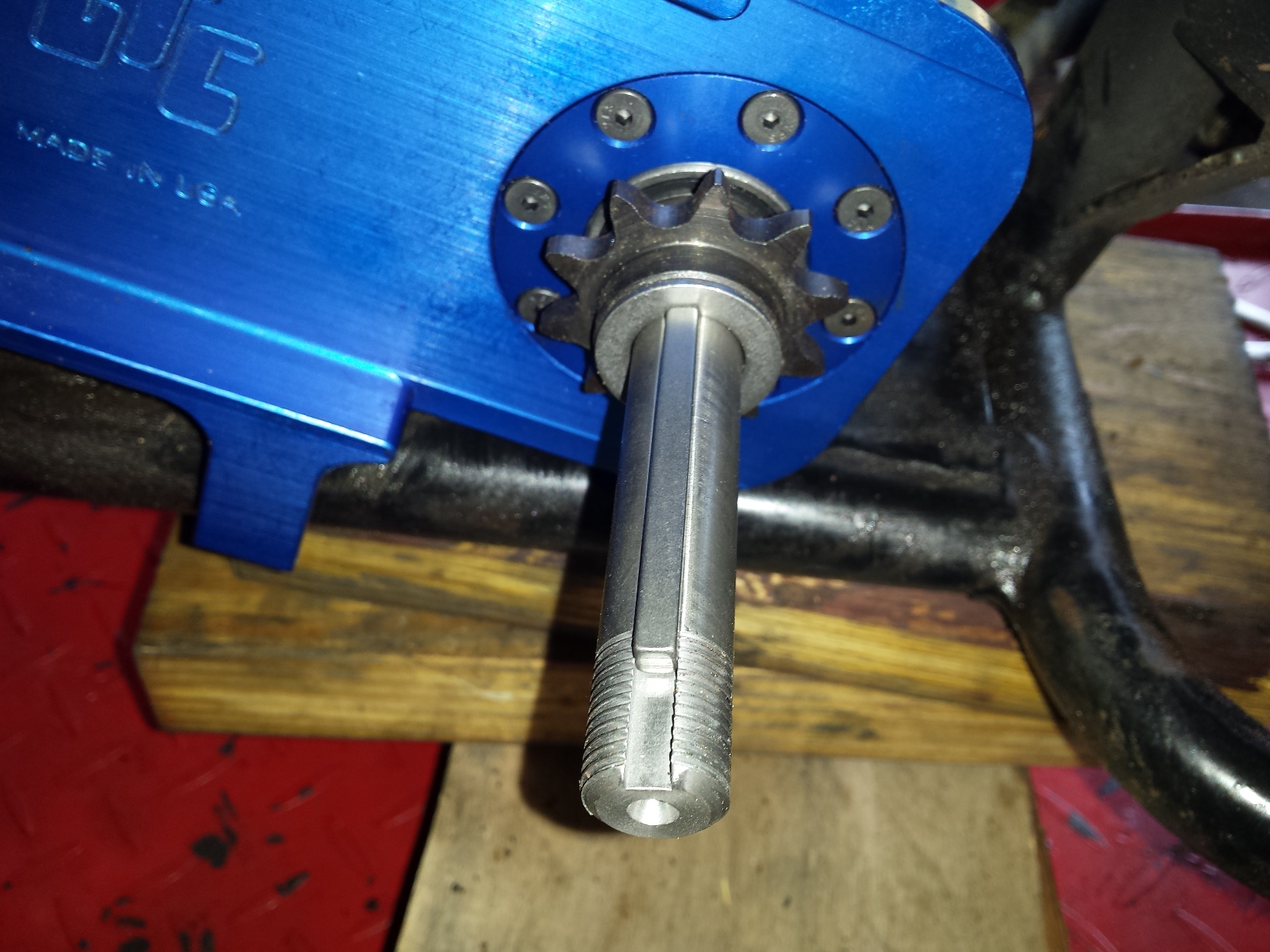
<This is what drives the rear wheel>

The next shot shows the driven pulley with it’s associated hardware, slide it all into place and install the nut finger tight at this time.
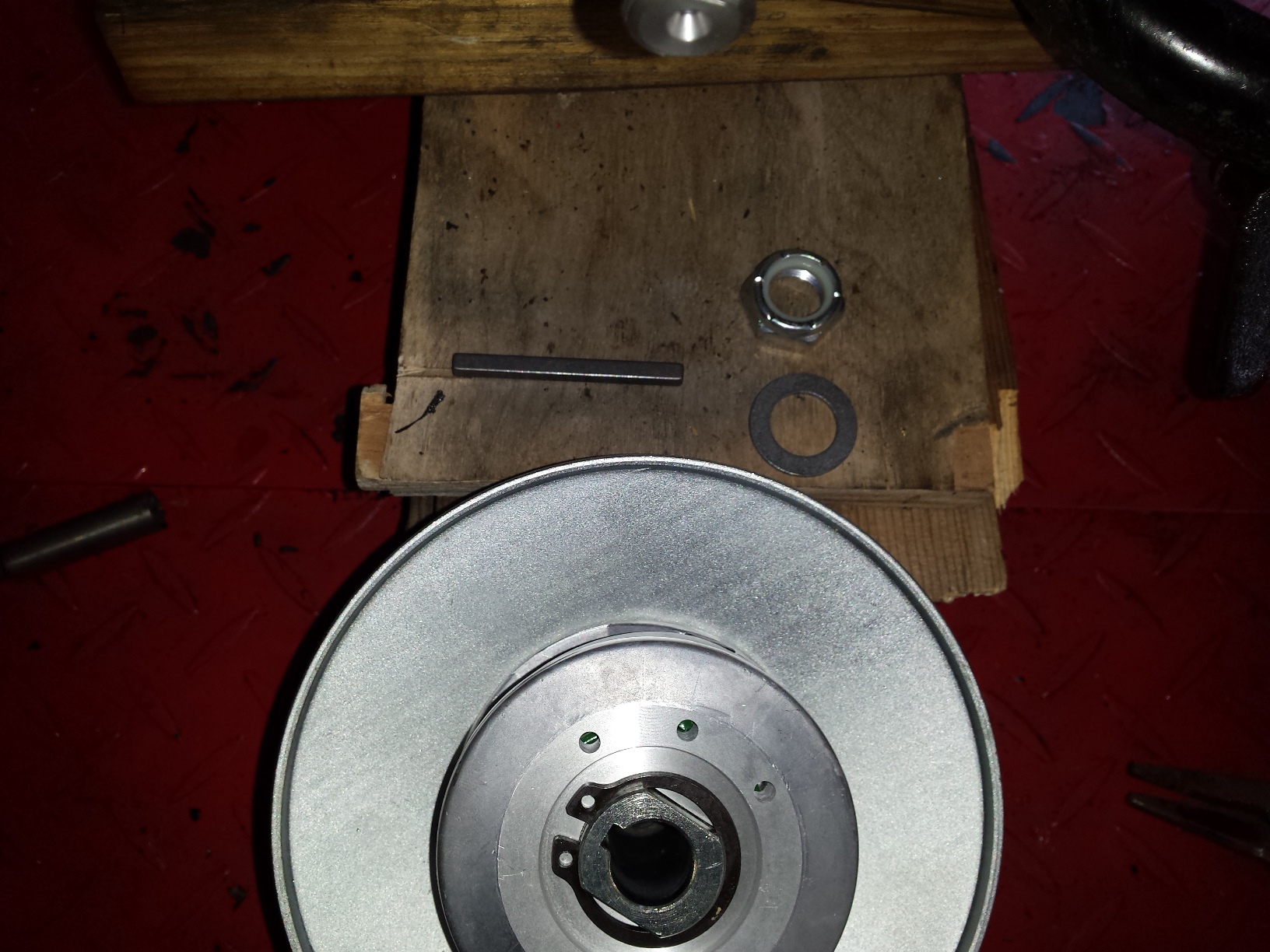
<GTC driven pulley>

Here is the driving pulley & the belt. When you cut the tie wrap to install it take not of how the various parts & pieces fit together so you can re-install them correctly.
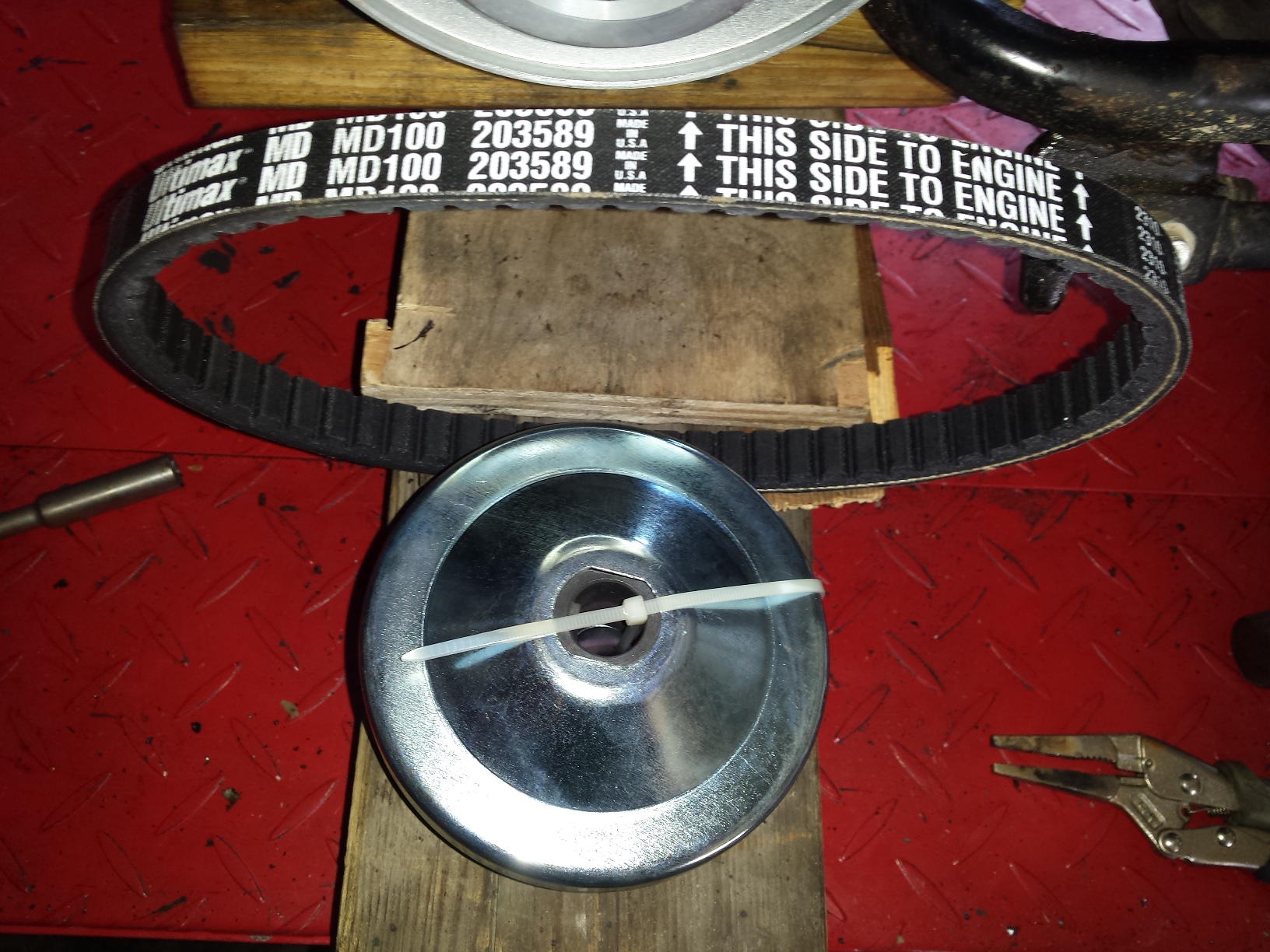
<torque converter drive pulley & belt>

I should have cleaned up the screw threads in this hole before I got this far, be sure to learn from my mistakes. BTW your engine must have an existing tapped hole in he end of the crankshaft or you cannot install a torque convertor. Be sure to check this before you spend your money as a few of the Honda clone engines are missing this feature.

<baja minibike tapped crankshaft>

The other drive pulley parts

<gtc drive pulley parts>

Stick the belt into place & begin assembling the drive pulley onto the end of the crankshaft.


<drive pulley parts on crankshaft>

Now that you’ve gotten everything assembled it is time to tighten it all down.
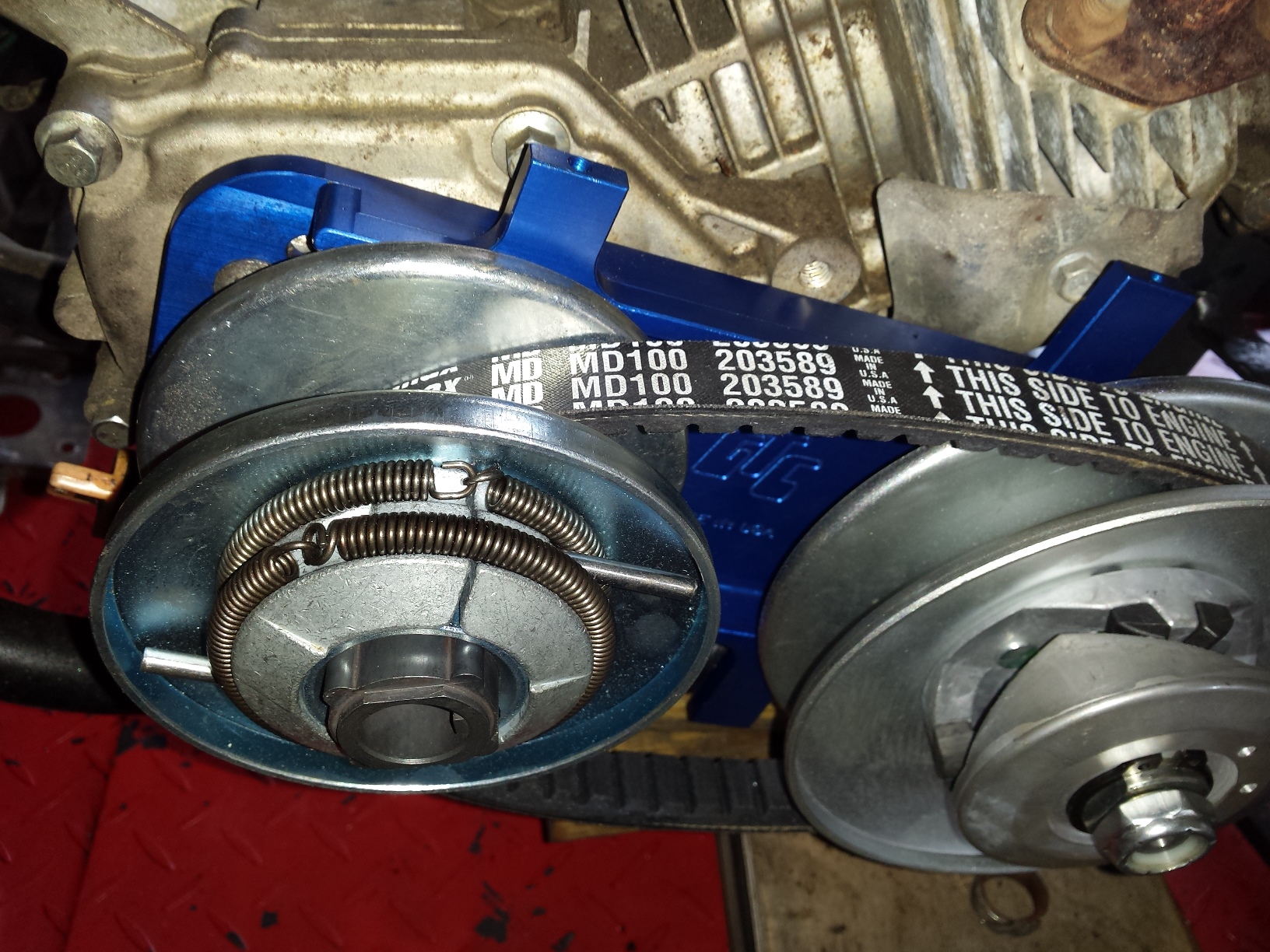
<GTC torque converter Baja minibike>

You really need to use a torque wrench and tighten the bolts & nuts to the torque specified in the instructions. Even a cheap one is more than good enough for everything the average home mechanic will ever do. If you over tighten the nut on the driven shaft it will pop the snap ring loose from the other side. Sure GTC could redesign the shaft to eliminate the snap ring but are you prepared to pay an additional 20 or 30 dollars for the kit to cover the cost of the additional machining and wasted material? Just use a torque wrench and you won’t have to worry about it.

<use a torque wrench dammit>

I did this install several months ago and have been driving this thing around the farm at least two or three times a week. While it did not transform my otherwise nearly stock MB165 into a 50 mph speed demon it did bump the top speed up enough to be much faster than a stock Baja minibike. Perhaps on a smooth surface with the governor removed it would but it is already able to outrun it’s own steering and stability out here in the deep soft sand & mud where I live.

<Baja heat warrior torque converter>

Four months ago when I installed this it was purely out of curiosity to see if it would really be an improvement, and it really is. The initial low speed engagement is much smoother than with a factory clutch allowing it to be driven at a lower speed than was possible with the clutch, while still increasing the top speed. The belt has proven durable and still looks fine after four months of hauling my big 200+ pound ass around the farm, down the dirt road, through the woods.  And when it does eventually wear out the belt is a little over half the price of a factory clutch. So is this worth spending the extra $200 buck on? If you are serious about actually riding your minibike, the answer is yes especially since the GTC TC2 is a direct bolt on that does not require engine mounting spacers to fit a stock Baja frame. Granted at this price it should come with the plastic belt guard but that really is my only complaint. At this time I’m running mine without the guard for a cool but possibly dangerous open primary look, but I don’t let kids ride it either.

Here’s a little video of the completed minibike so you can see how it works.

Peace Y’all


If you really enjoyed The GTC Torque Converter for Minibikes & Go Karts Installation and Review please visit our sponsor by clicking an ad below.

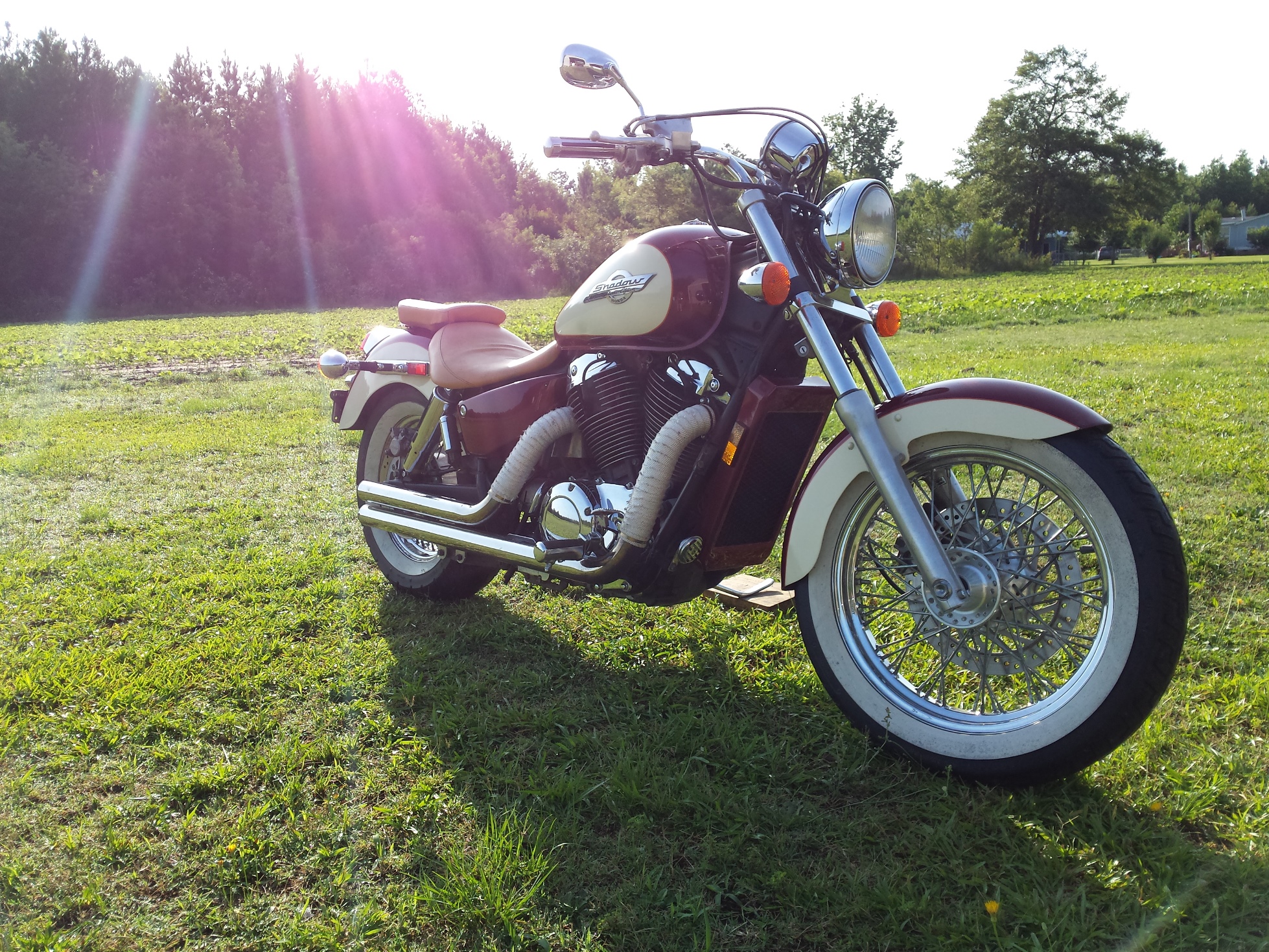
97 Honda Shadow 1100 Carb Cleaning & Jetting ~ Part 1

<97 Honda Shadow American Classic Edition>

Let’s jump into another “how to” post! Above is today’s patient a 1997 Honda Shadow, a great riding 1100cc v-twin that while still running very well, needed a little tweaking.  These motorcycles came from the factory with the carburetors set up toward the lean end of the spectrum for emissions reasons. This led to some drivability issues on some of them, when you combine the original lean jetting with a set of drag pipes, and 17 years of ethanol contamination it was running mighty lean indeed. The engine had a tendency to run hot, hesitate on acceleration, and frequent backfiring on deceleration. So I am going to pull the carbs off, clean them up a bit and install a Dynojet Research jet kit in them. To hear what this bike sounds like before the carb tuning click here go to my youtube channel.

First get the bolt out of the rear of the passenger seat.

<001 ace seat bolt>

Then remove the 2 from beneath the drivers seat one on either side

<002 ace shadow seat bolt>

Lift it up and set it out of the way.

<003 honda shadow seat remove>

Locate the petcock and shut off the fuel.

<004 honda 1100 petcock off>

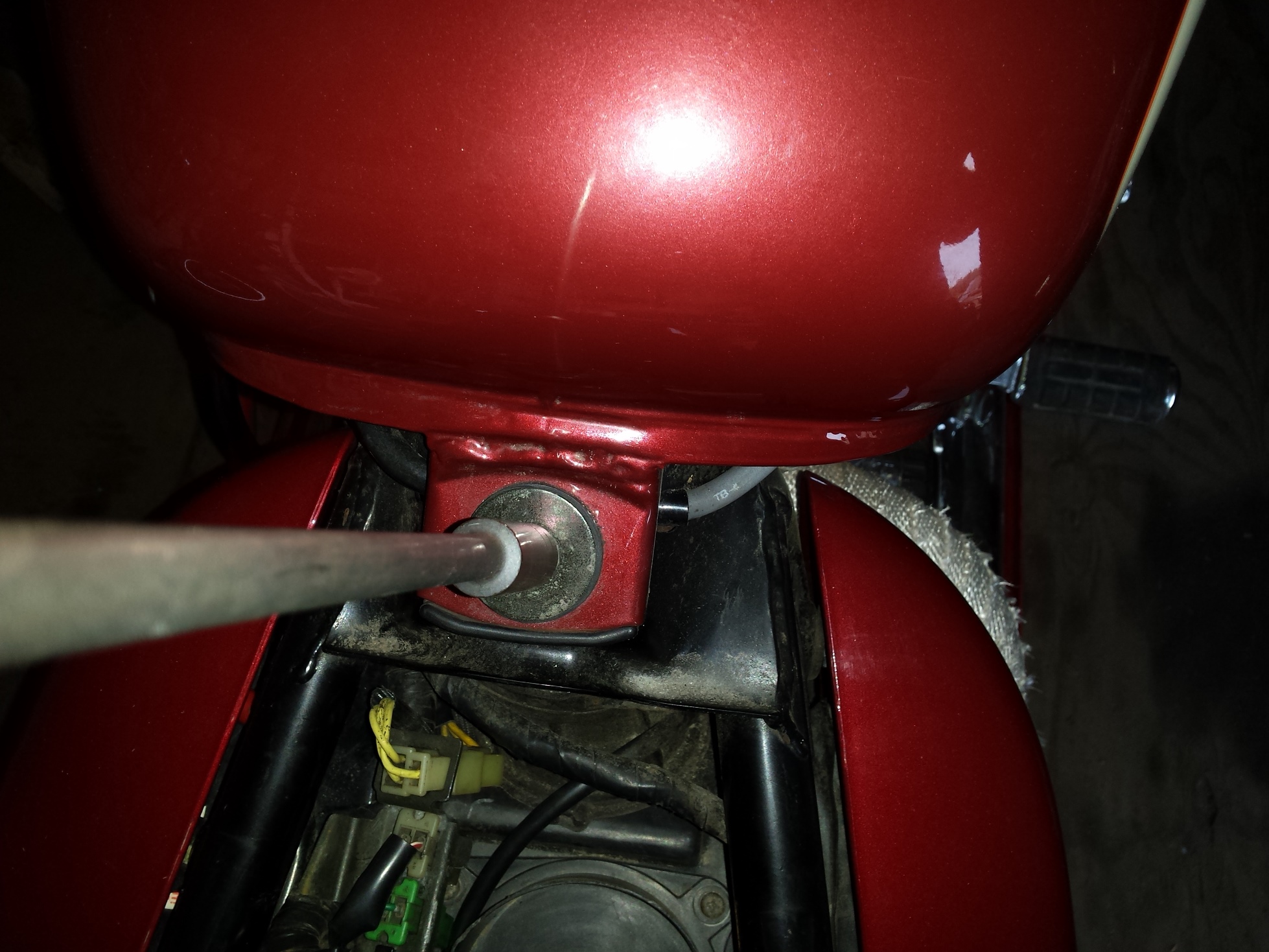
Remove the bolt at the rear of the tank,

<005 shadow 1100 tank bolt>

and the other one at the front of the tank.

<006 shadow ace tank bolt>

Disconnect the fuel line from the petcock.

<007 remove fuel hose>

afterwards lift the tank high enough to remove this vent hose from the bottom

<008 honda shadow tank vent>

After you have removed the gas tank and placed it in a safe location this is what you should see.

<009 honda 1100 air inlet>

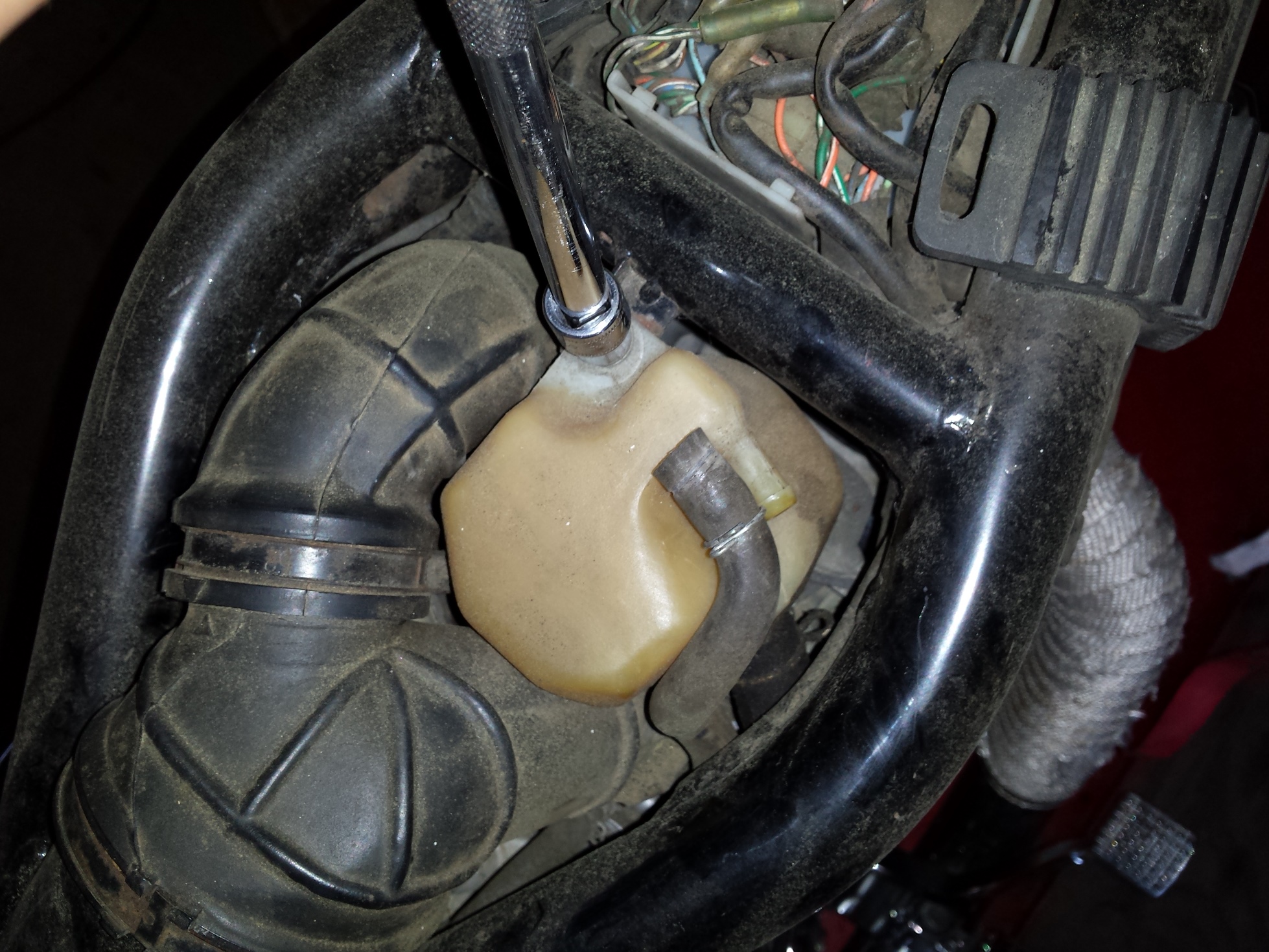
The yellow plastic container is there to catch any oil that happens to emanate from the crankcase ventilation system, so unbolt it,

<010 shadow ace oil breather catch>

pull the hoses loose, and set it out of the way.

<011 crankcase vent hose honda>

Next loosen the hose clamps on the rubber piping that leads from the frame to the inlet of the carburetors.

<012 honda shadow air hose removal>

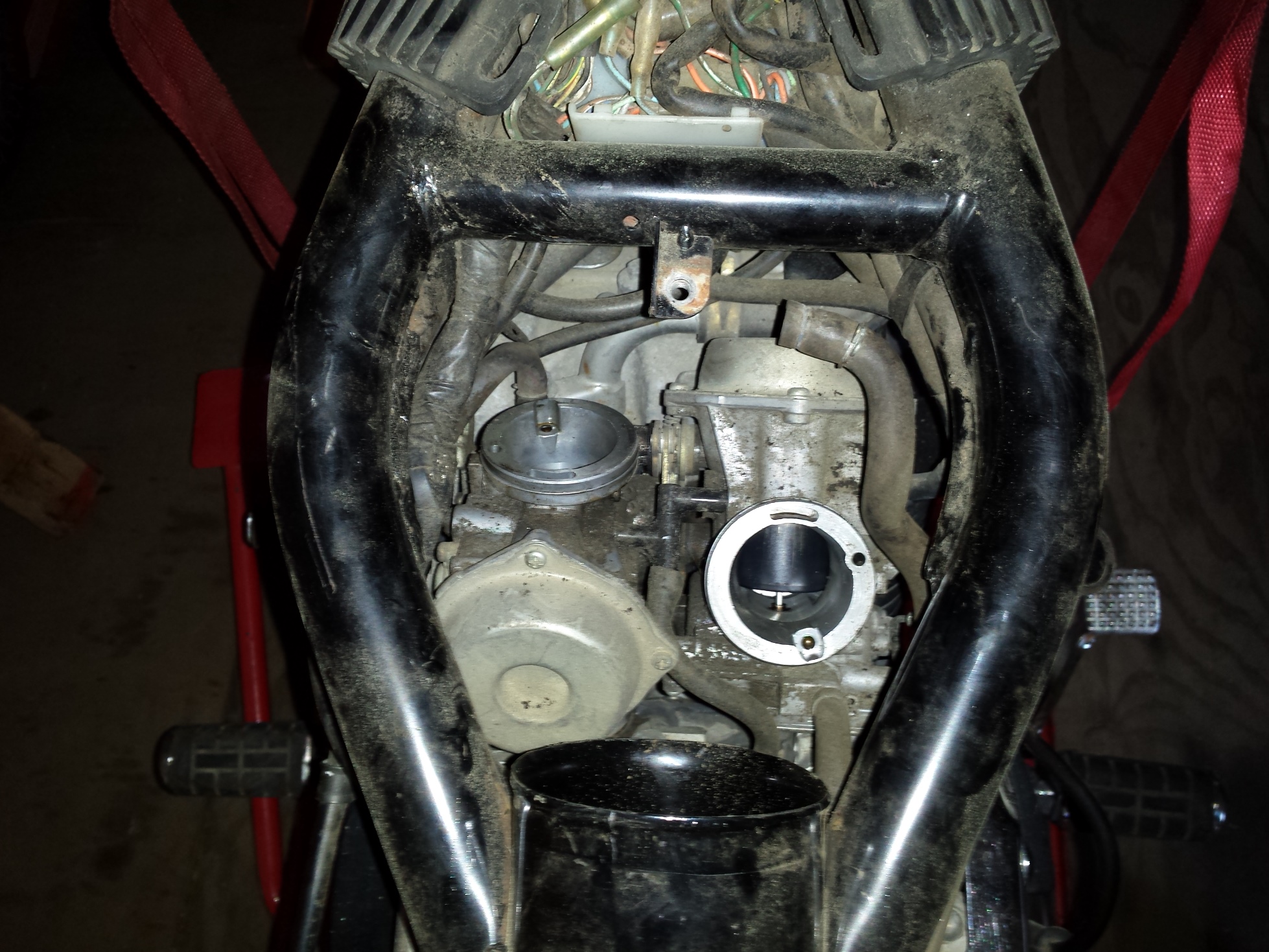
Now we can finally see the carbs!

<013 there be the carburetors>

Time to remove the throttle cables, remove the 2 screws (indicated by arrows) and you will be able to get the cables out of the pulley on the end of the butterfly shaft.

<014 1100 shadow throttle cable>

The cold start enrichener is next. These 2 little plungers take the place of choke flaps on the most of the last production carbureted motorcycles. Instead of blocking the air they just add more gas. It works well but is a bit more aggravating to remove. I used to have a special home made tool for getting these out but it has been at least 10 years since I saw it last so I just you whatever combination of open wrench & needle nose pliers that allows me to remove & reinstall them without boogering them up.

<015 honda enrichener aka choke>

Here I am holding one of the enrichment plungers so you can see what it looks like on the inside.

<016 cold start enrichner honda ace>

Go around to the right side of the bike and pull the hoses in this tee junction that was connected to the crankcase vent reservoir and fold them back out of the way.

<017 shadow crankcase vent hose>

The rear spark plug wire runs through a loom that is attached to the right carburetor so remove it and the enrichener  on this side.

<018 rear plug wire standoff 1100 shadow>

You can reach under the carbs now & loosen the clamps holding the carbs to the spigots.

<019 carb boot clamps honda shadow>

With a rocking and twisting motion you should be able to pop the carburetors loose, but dont rush to pull them up out of the frame just yet.

<020 pop the carburetors loose>

Before you try to pull them all the way out remove all of the fuel lines and vent hoses, being sure to note which hose goes to which barb.

<021 pull off all the hoses>

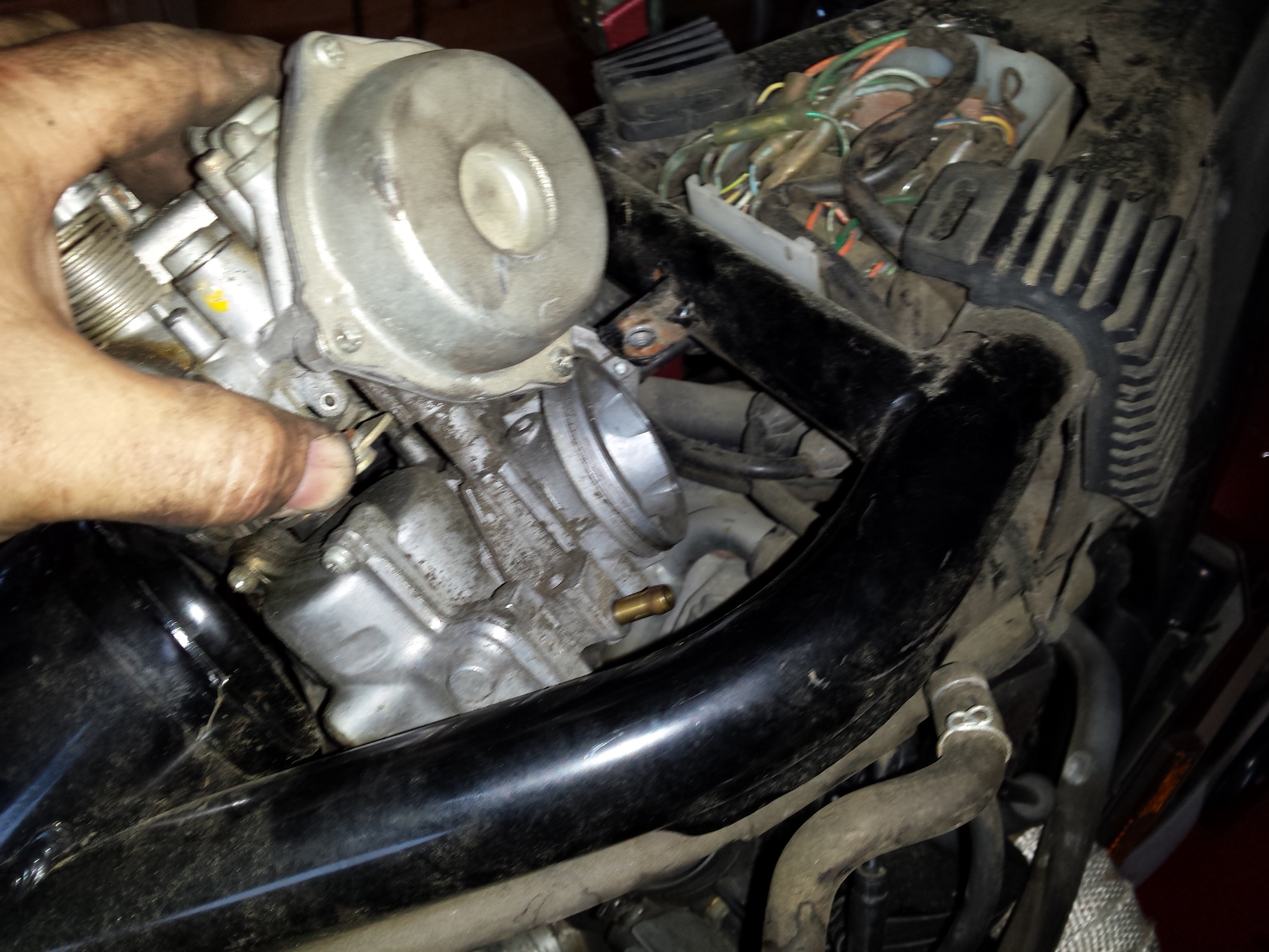
These carbs come out of the top, just tilt them up sideways and turn them as needed, this is actually much easier than most Japanese cruisers of the same time period that require you to remove the carbs from the side.

<022 shadow carbs come out the top.>

Here are the carbs sitting on the workbench ready for cleaning. The next step is into the parts washer to get all of the exterior crud off for dis-assembly.

<023 dirty nast filthy carburetors>

Keep checking back as I will be posting part 2 of this series very soon.

Peace Y’all

Part 2 of this how to article is up & you can reach it by clicking here.


How To Adjust Valve Lash (1980 Honda CB650 SOHC)

<Honda 650 SOHC Valve adjusters>

Here I’ve already removed the tank and all of the necessary engine covers.

Since I have already put enough miles on this bike since I got it running to warrant an oil change I decided to re-check the valve adjustment for two reasons; one is that as long as the engine had been sitting without running I want to keep a close eye on it for a while & two so that I could show everyone how I do it. As you can see in the photo above I’ve already removed the gas tank, all four spark plugs  and all of the appropriate engine covers. The first thing to do before you adjust the valve lash is to adjust the cam chain tensioner. On a 1980 Honda CB650 this is done by loosening the nut on the rear of the cylinder just a little bit. Do not remove it just loosen it some

Honda CB650 Cam Chain Tensioner Nut

This is the nut you loosen to adjust the cam chain tensioner.

Then put the correct size wrench on the hex spacer behind the nut at the ignition unit on the right side of the engine. Then rotate the wrench clockwise slowly 4 to 5 turns as you simultaneously tighten the lock nut that you loosened at the beginning of this step. This is also the first thing you should try if you own a motorcycle and you can hear the cam chain rattling, but if after making the correct adjustments you still have a rattle then it will be time to start replacing parts. Keep the wrench that you used to turn the crankshaft handy, you are gonna need it a few more times.

1980 Honda Ignition Pulse Generators

The Clymer manual describes this as a 15/16″ nut. That is wrong this is a 24mm. OOPS

Here in this picture taken on the left side of the engine you can see 2 of the three openings in which we will be working to check & set the valve lash. The adjusters for the intake valves are on the back of the head in front of the carburetors and the exhaust valve adjusters are on the front of the head behind where the exhaust pipes stick out. The first step is to get the number 1 cylinder to top dead center. Take your large wrench and rotate the crankshaft clockwise and watch for the intake rocker arm on the first cylinder to drop down into the head and start to rise back up. Then look at the timing marks on the ignition advance unit (photo is further down the page) and continue to slowly turn the engine until the 1.4 T mark is aligned with the pointer that is cast into the crankcase.

Honda SOHC Cam & Rockers

The camshaft & rocker arms are in the left hole & one of the adjusters is in the right hole.

At this point both the intake & exhaust valve on cylinder number one should be loose enough both rocker arms to be wiggled. If not you either have a valve that is way too tight or you did not stop turning the crankshaft at the right mark, either way you should verify which problem you have before moving on. a simple way to see if the cylinder is at top dead center is to take a long small diameter wooden or plastic dowel and insert it into the spark plug hole. If the piston is at the top of the cylinder the dowel will not go in very far at all.

With the number one piston at TDC on a 1980 CB650 you should be able to adjust both valves on the number one cylinder, The exhaust valve on number two, & the intake valve on number three. Once you have those done you need to repeat the step above but this time watch the intake rocker of cylinder 4 on the right side of the motor cycle. With that one at TDC you can adjust both valves on number four, the exhaust valve on number three, and the intake valve of number two.

Lets talk about tools for a little bit. All of the shop manuals show a special tool for adjusting the valves, but the simple truth of the matter is that for a number of engines you don’t need them and this CB650 is one such example. For the lock nut, I just clamped a pair of Vise Grips around an old cheap 10mm socket that I have on hand and then just used the proper size of flat-head screwdriver to turn the adjustment screw with. Works great for me on this motorcycle, your mileage may vary, if you break something I’m not responsible, etc.

tools for valve adjustment

Macgyver was an amateur!

Speaking of tools let’s get the feeler gauges to set the valves with. The ones that I use are from Snapon and are about a foot long. The also came with a nifty holder that is very handy for working with the really thinner sizes in hard to reach places. The intake valve lash setting for this generation of Honda CB650 is .05mm (.002 inches) and the exhaust setting is .076mm (.003). So to do this job I will get out three feeler gauges in sizes .002,.003 & .004 (.1mm). Why three sizes? I’ll explain in a minute.

The next picture is of the .002 feeler gauge slipped in between the rocker arm & camshaft. This is where you measure the lash on this engine. Basically what I do is turn the adjustment screw until I can just slip the feeler gauge into place with just a little bit of wiggling. You should tighten the lock nut each time you do this as it may affect the final adjustment. If you tighten the lock nut and find that your lash setting has changed tighten the adjustment screw a bit to compensate, re-tighten the lock nut and check it again. Usually after I do all of this, and I am satisfied with my setting, I then take the next larger feeler gauge (.003) and try to insert it into the gap. If it doesn’t fit great I move on to the next one but if it slips in I readjust the lash until the correct sizes slips in fairly easy but the next size up wont go in. You may wonder why not just set it a little tight and not worry about it? I like to set these things exactly as needed for the best performance. The other reason is the way that motorcycle engine valves wear. Very rarely is there any wear at the top of the valve, most of the wear occurs where the valve closes at the valve seat in the head, this causes the valve lash to get tighter as the engine wears & not looser. This is especially problematic when you are running old motorcycles on the toxic, corrosive, & environmentally unsound corn juice that passes for gasoline in this day & time. If you must err on the side of caution it would be a little tiny bit better for your valve lash to be just a hair too loose than to be to tight.

<setting the 1980 CB650C intake valve lash>

For really thin feeler gauges like this .002 I recommend a holder like this one from Snapon tools.

Next take the .003 feeler gauge & set the exhaust valves as shown here. Then use the .004 gauge to make sure your adjustment is just right. It is especially critical not to over tighten the exhaust valve lash. If the valve wears down and is not able to close all the way due to a lack of clearance you may get a burned valve & a big repair bill.

<adjusting the 1980 CB650 exhaust valve lash>

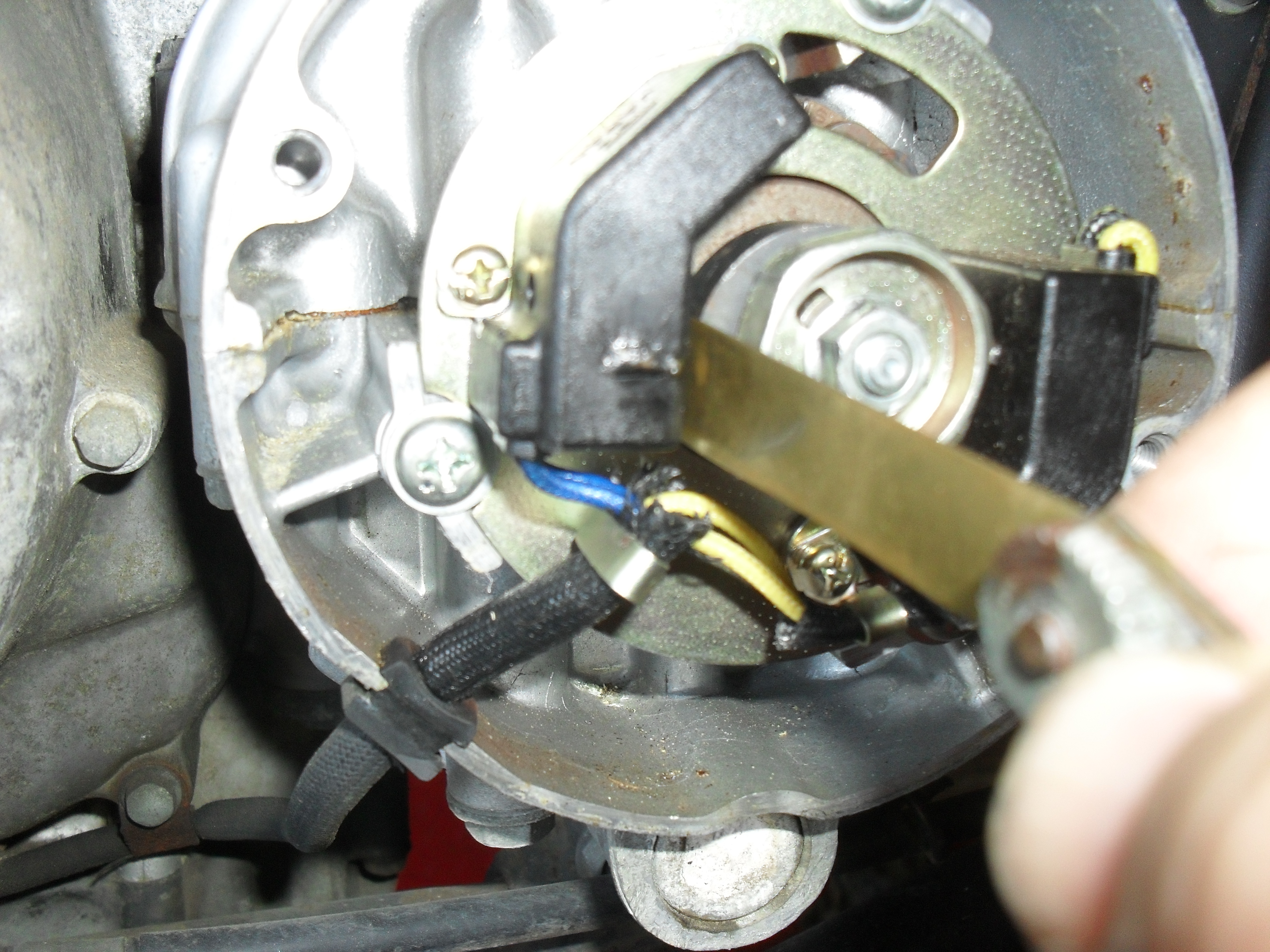
If you have a late 70s or early 80s Honda with the factory electronic ignition you definitely want to perform this next step. First get yourself a set of nonmagnetic feeler gauges. DO NOT not use steel feeler gauges to set the magnetic pickups aka pulse generators on these bikes.

Brass non-magnetic feeler gauges

Non-magnetic feeler gauges are a necessity to set air gap on the pulse generator of most OEM electronic ignitions of this time period.

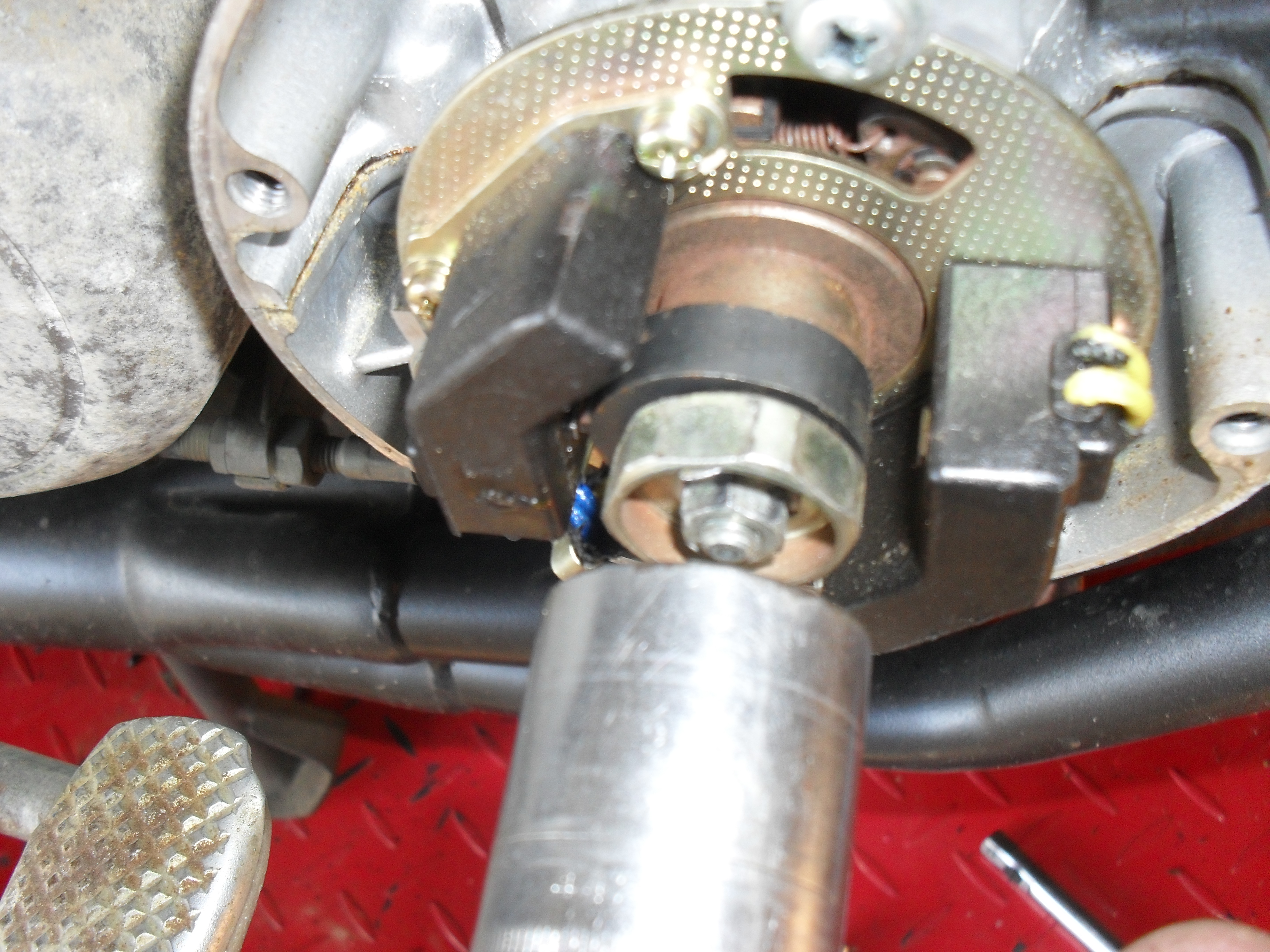
The range of settings for the air gap between the pulse generators (black boxes in the picture below) and the trigger mounted on the end of the crankshaft is .012-.016 inches (0.3-0.4mm) You can also see the pointer & the timing marks that I mentioned above in this picture.

<80 CB650 timing marks, pulsers & advance plate>

1980 CB650 timing marks, pulse generators & advance plate

Believe it or not I have never seen any motorcycles with this gap set correctly from the factory, but the system is still good enough so that most bikes run without any problems whatsoever. Still if you have one of these and it runs okay except for a little surging & hesitation the pulse generator air gap should be the first thing you check. To set mine I just rotate the engine until the trigger ( little square nib sticking out of the crankshaft ) is aligned with nib on the pickup, loosen up the adjustment screws, stick the feeler gauge in place, & hold it all together while tightening the screws back down. Then rotate & repeat to do the other one.

<Honda electronic Pulse generator Air Gap>

This makes a huge difference in engine performance if it is set correctly.

There you have it, put a little lube on the advance mechanism behind the plate, reinstall all of your covers, spark plugs & fuel tank. Now it’s time to fire it up & check it out. Once you are sure that you did everything correctly & your engine is sounding just the way it should take it out for a ride & enjoy the fruits of your labor!

Peace Y’all

How to Deal With Stuck of Frozen Screws & Bolts

I was invited to be a Guest Blogger over at the Clark Heintz Tools blog, so I sat down and wrote for them what I hope is a nice informative article on one of the most vexing problems anyone can have when working on a motorcycle or bicycle. Click here to go check it out.

There is even a picture of the infamous old  Honda oil filter bolt showing just exactly what you might have to do to remove one…..

If you like the post let them know, if you don’t let me know.

Peace Y’all


A Custom Battery Tray & Other Stuff

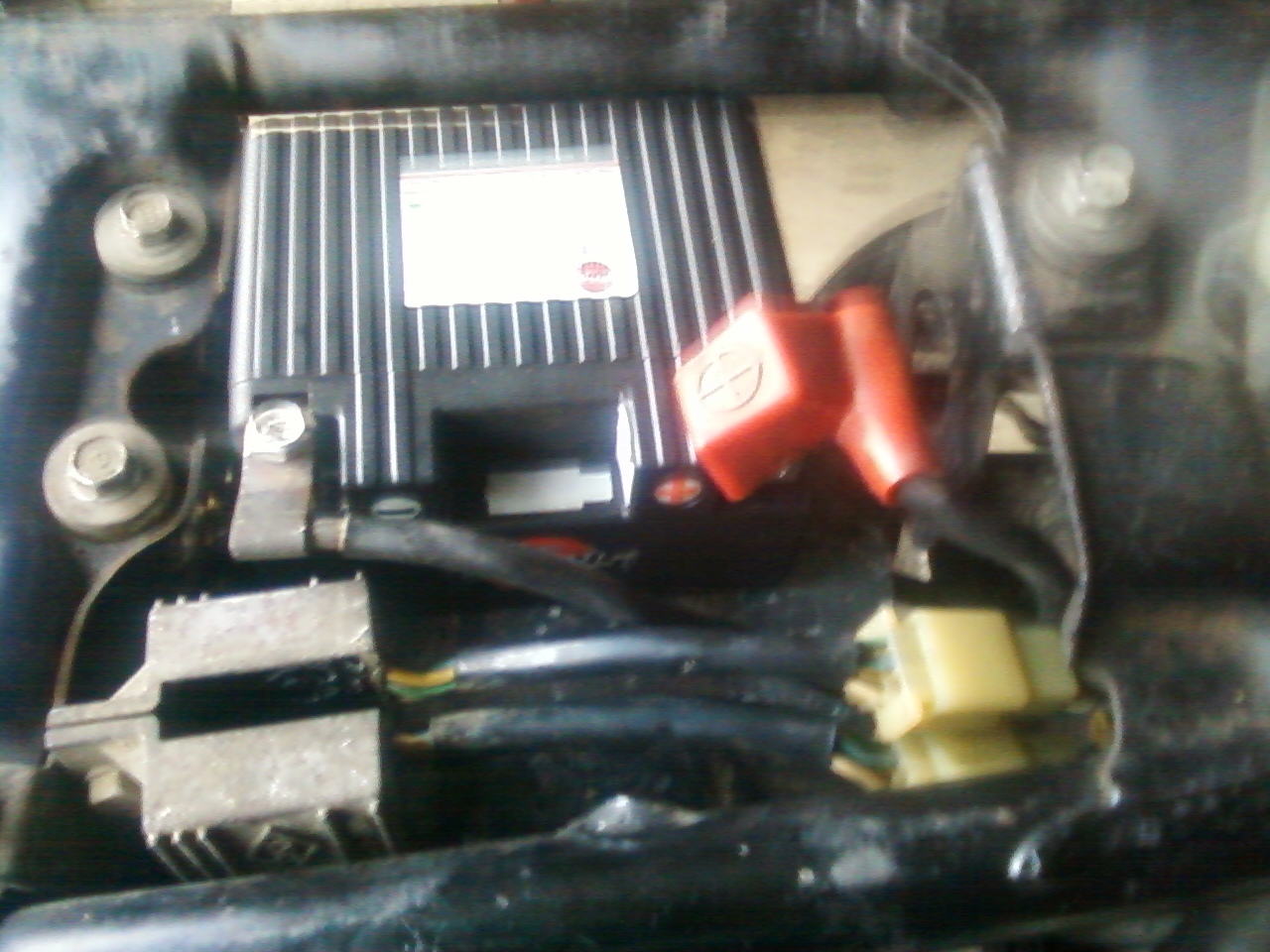
Just thought I’d do a quick update on some of the things that I have done with my CB650 project. I have been working on it a little at the time between my normal day job, a few bikes & atv’s for other people, & some painting (airbrush practice & landscape oil painting). Since I’ve decided to go with the “rat suburban assault scrambler” look some of the things about this project have gotten easier, but other design ideas require just a little more ingenuity. Rather than sawing off the back half of the frame & welding in a new seat loop as required to get the proper cafe racer look I am opting for a modified stock seat with a 74 CB750 tank, but I still wanted to eliminate the stock side panels. My plan now is to replace the side covers with 2 pieces cut from some rusty old expanded metal sheet I have lying around. To do that I still needed to modify the mounts for the electrics, and since I will be using a Shorai lithium battery that is much smaller than stock, a custom battery tray was in order also. Since this is a rat I decided to do this with nothing but materials I already had on hand. After sitting down & staring at it a while with my note book, pencil & ruler in my hand I came up with a basic design that tucks everything up high, bolts into the stock mounts, & allows me to reuse the inner fender to protect the electronics. Here’s how it goes…

First I removed the stock battery tray, along with the airbox & some other now useless items. Then I drilled out all of the spot welds holding the mounts, & various brackets to it.

butchering a Honda CB650 battery box

butchering a Honda CB650 battery box

In the spirit of my deep back country roots I decided to make do with the stuff I had on hand & not buy any new stuff to make this from, so this left over shelf divider that was destined for the scrap bin will get to live on as a motorcycle part. Here it is with all of the brackets & mounts salvaged from the original battery box.

custom built motorcycle parts

a custom battery & electronics tray in kit form 😉

Then using my band saw I cut the tray to shape & bent it in a vise.

<custom motorcycle battery tray blank>

Then I bolted the stock mounts back into place using the original hardware & clamped the tray in between them. Since I do not have a tig box for my welder (YET) I simply use a 1/16″ 6013 rod to tack the pieces together without burning through the sheet metal too much.

tack welding battery box

tack welding battery box

After I got it tacked together with the stick welder I took it out and flipped it over & then brazed it securely together with the oxy-acetelyne torch. Then I laid out the various components such as the rectifier, turn signal flasher & etc & then brazed those mounts to the bottom of the plate.

custom rat motorcycle electronics mount

custom rat motorcycle electronics mount

I know it looks awful, but I might just leave it that way, this is a rat after all. I will have to sort & secure all the wiring though, because neatly sorted wiring is easier to trouble shoot in the future & is less likely to develop problems that need trouble shooting.

Here’s a view from the top side showing the Shorai battery lying on it’s side. I still need to make a plastic box to keep the battery from sliding around. Since my day job is doing design work using Solidworks, I may just draw one up & have it printed out using a 3d printer. If not I’ll form one out of ABS sheet.

<Honda CB650 battery box Shorai LFX>

fits just right!

I can’t say enough good things about these batteries, they’re light, powerful & durable. I’ve installed them in a couple of customer bikes, this one, and even have one in my lawn mower! Sure the cost a little more than the lead acid batteries, but are in my opinion a threefold improvement in all areas. I do sell these & would be happy to quote you one if you contact me.

Here a couple of other items that have been added, first an Ebay find of a 74 Honda CB750 fuel tank. This fit with modified rubbers & a custom rear mount. I’ll show you some more details later after I have it all worked out with the seat fitment. but I think it looks really good on here!

Honda CB650 with CB750 tank

Honda CB650 with CB750 tank

Another Ebay purchase is this 1970 Honda CL450 Scrambler. I bought the whole bike just to get the handlebars!

1970 Honda CL450

1970 Honda CL450

It’s pretty much seized up and there’s no paper work but the handlebars gave me exactly the look I wanted for my project. Good solid bars with just enough crust to blend in. No need to treat a new set of bars to a faux patina.

1970 CL450 handlebar on 80 CB650

1970 CL450 handlebar on 80 CB650

The CL450 will be parted, I plan to keep the frame, engine, carbs, gauges, charging system, fork & wheels. All of the sheetmetal and the exhaust are up for grabs to my fellow hobbyists who want them. The fuel tank is rusty bondoed junk but everything else is decent. Contact me using the form below.

I had a few other adventures including dealing with a stuck oil filter bolt that I’ll go over with you soon including how far I had to go to get it out.

Peace Y’all

Go back

Your message has been sent

Warning
Warning
Warning
Warning
Warning

Warning.

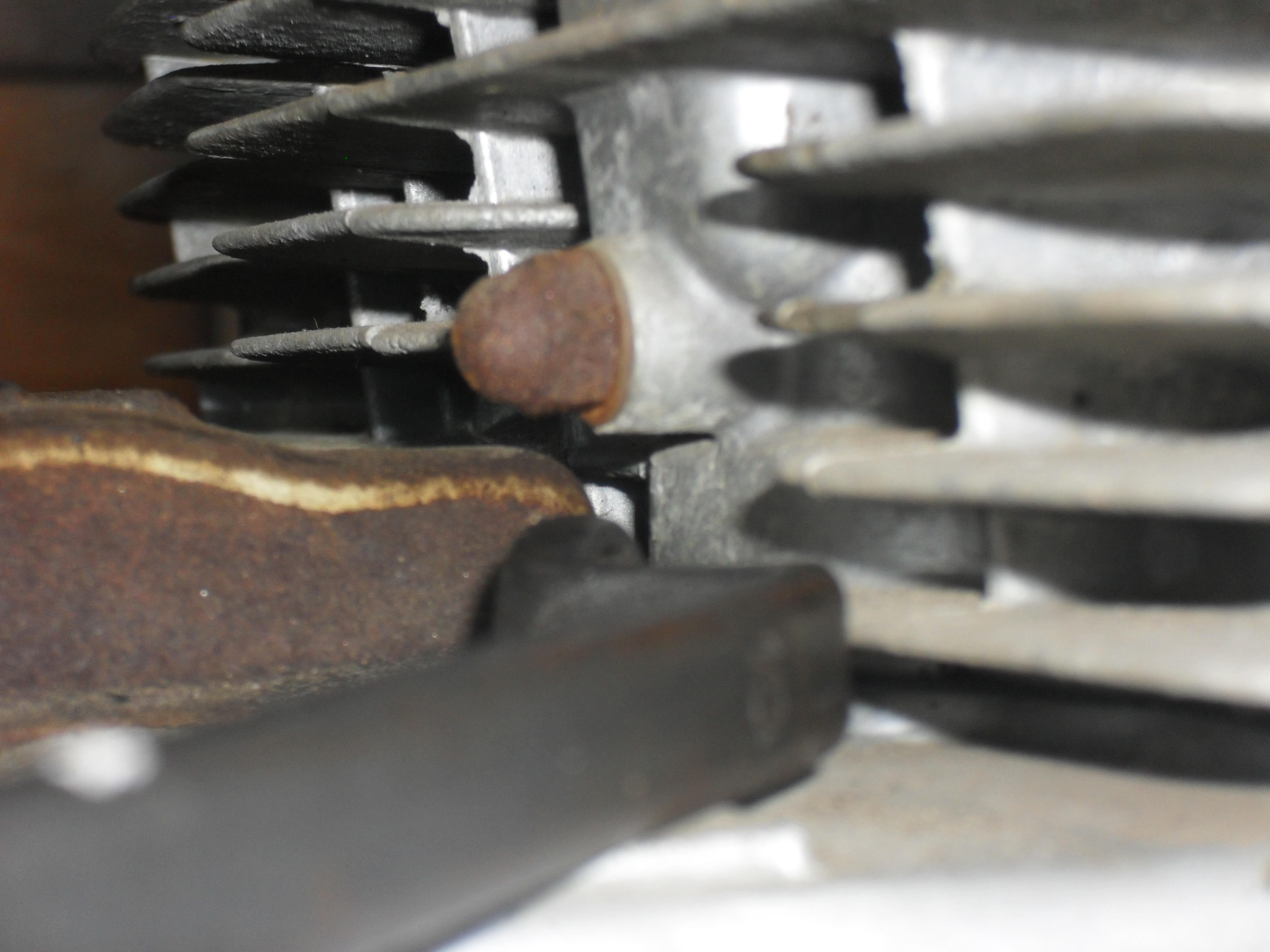
Random Tech Tip, Vintage Carburetor Intake Boots & Clamps

Today’s post is about those annoying rubber boots that attach your carburetors to the spigots on the head(s).

dry brittle old carb boots

dry brittle old carb boots

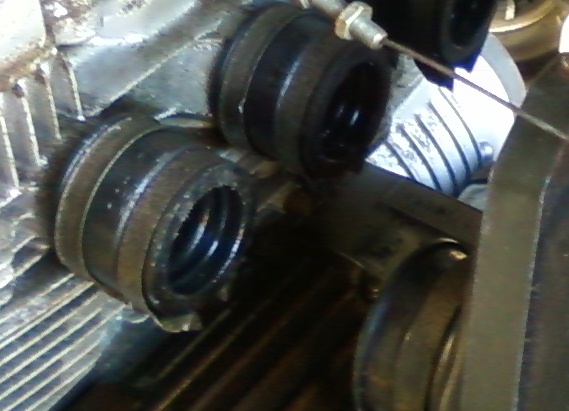
Often on old project bikes these are hardened and brittle, most of the time you can get the carbs out but it is almost impossible to get them back in. One thing that greatly helps is to take a heat gun and heat them up to soften them. Some people on the net have removed them and placed them in very hot water. Regardless of the method a small amount heat will help get them soft enough to reinstall the carbs. Just do not use an open flame or you will end up with a charred & useless mess. On some motorcycles these bolt to the head and on others they clamp to spigots cast into the head. If you are dealing with removal of old intake boots from a set of spigots like shown in the picture above prepare to be very patient. Don’t just grab a big screwdriver & start prying! First loosen & completely remove all of the clamps, then twist and pull them by hand until they will at least wiggle & turn on the spigots. If they still won’t come off you have to decide if it is worth the risk to pry them off. Choose your leverage points very carefully, if you have any doubt at all about being able to remove them safely or if you are working on a rare or valuable antique or classic machine this is where you break out a good sharp utility knife & cut them off. The cooling fins and other castings on most motorcycles are very thin and will often break before an old piece of dry rotted rubber will,so better to be safe than sorry.

intake manifold clamps

intake manifold clamps

Also be sure to look at the clamps when removing the boots. They are not just straight rubber hoses, often one end is bigger than the other, and the clamps are 2 different sizes as on this Honda CB650. The intake manifolds only fit one way but they have directional arrows on them, the clamps are not marked so be sure you note which ones go where.

That’s all for tonight, until next time have a fantastic life!

Changing the oill in your forks. (yes you should occasionally)

I’m going to cheat a little bit and just link to an excellent article over at Eric Peters Autos. In addition to doing automotive reviews and how to he has a great selection of motorcycle articles as well. This particular article that I am pointing out to you today is,        “Fork Oil Change How-To (and Why-To)” It’s informative and a good general guide for anyone who has never performed this often neglected prevenative maintenace on their own cycle. Enjoy!


2012 in review Thanks to all of my readers!

2012 was a very good year for motopsyco.com, I hope to entertain and inform you even more in the years ahead! Thhank you all, come back often and bring friends.

Peace Y’all


The WordPress.com stats helper monkeys prepared a 2012 annual report for this blog.

Here’s an excerpt:

600 people reached the top of Mt. Everest in 2012. This blog got about 12,000 views in 2012. If every person who reached the top of Mt. Everest viewed this blog, it would have taken 20 years to get that many views.

Click here to see the complete report.

Lining a Fuel Tank with Kreem Tank Liner

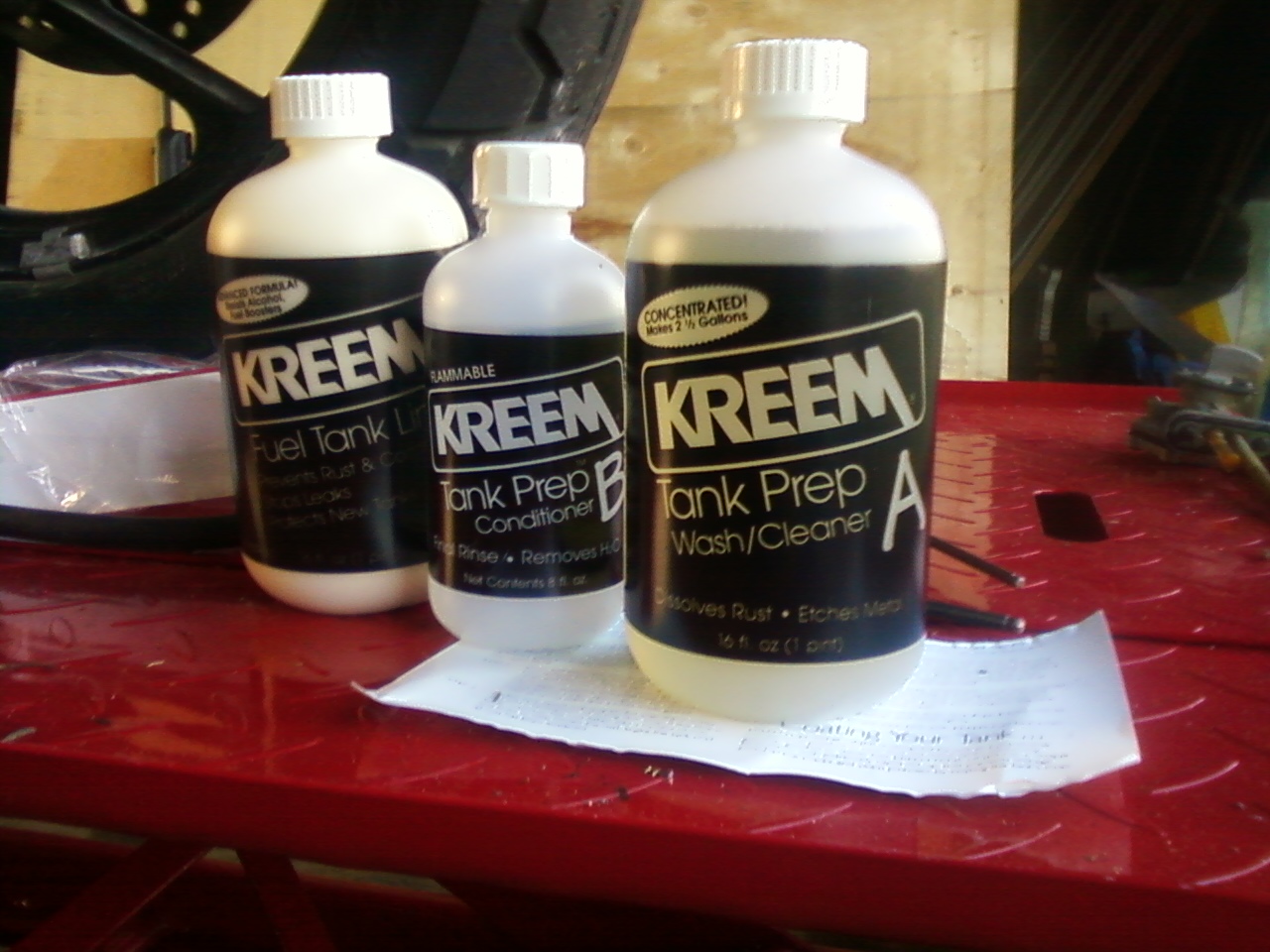
Kreem tank liner kit

Kreem tank liner kit

This is sort of a combo how to and product review. I will admit that my review is a little biased because I have been using this product for over 20 years and have always been satisfied with the results. I wont repeat the instructions word for word but I will give you a few tips to help you get better results. First empty your tank and remove the petcock and filler cap if it is bolted to the tank.

Remove the Kawasaki locking fuel cap

Remove the Ninja’s locking fuel cap

The next step is critical to getting good results especially if working with the tank from a 2 stroke engine. You must completely degrease the inside of the tank with a good industrial degreaser. Do not use dish liquid because it often contains oils to protect skin. Be prepared to wash it more than twice if needed to get the oil out.

Wash & degrease tank thougoughly

Wash & degrease tank thoroughly

Now open up the kit and get out the bottle labeled “A” wash & cleaner. Use duct tape or a blocking plate to block all of the holes in the bottom of your tank. I like to use a piece of metalized tape first and then cover it with duct tape.

Kreem Kit Part A

Kreem Kit Part A Use proper precautions for mild acid.

The instructions say to use warm water and I agree it does help the acid work much faster. Please note the standard kit shown here is for smaller tanks. Normally for a 5 gallon tank like this I would buy the larger size, but I had some left over from a previously restored tank, that I added in after using this up according to the instructions. The cleaner part A can be saved and re-used a time or two.

Warm water is reccomended to mix with cleaner

Warm water is recommended to mix with cleaner

After the tank is full seal off the top and let it sit for at least the minimum time given in the instructions. Since this was an old tank with some rust inside I let it sit overnight. At this stage some people will put in rocks or nuts & bolts and shake the tank to help remove thick rust. If you need to do this I recommend that you use steel nuts & bolts so that you can retrieve them easily with a magnet. Some fuel tank designs make it difficult to remove rocks after you are finished cleaning out the rust.

Next remove all tape from the openings rinse the tank well until the water comes out clean. and then thoroughly dry the tank on the inside. Since I had plenty of time I placed the tank in a hot sunny location to air dry. In the winter time or if you are in a hurry use a hair dryer or a hot air gun to speed up the process.

<ninja fuel tank drying in the sun>

fuel tank drying in the sun

I do need to warn you about one thing if you are trying to fix a tank with a nice paint job or if you are coating a new tank as a preventative measure you want to be very careful with this stuff, especially in the next two steps.

Seal up all the holes again and get out part “B” the conditioner. This bottle contains MEK which can remove paint faster than tequila removes panties. If you have a nice paint job & spill this on it, you wont have a nice paint job anymore, so be careful. I am re-painting this tank so I don’t really care if I spill some. After sealing the tank back up shake all around the inside of the tank & the carefully drain it out protecting your paint as needed.

Kreem Part B final rinse

This is highly flammable & can destroy paint so be careful.

Since the petcock on this one bolts into place before going to the next step I put two screws in the bolt holes to keep the threads clear. To me this is just much easier than cleaning out the holes afterward.

petcock screw holes

I like to put bolts in these holes to keep them clear

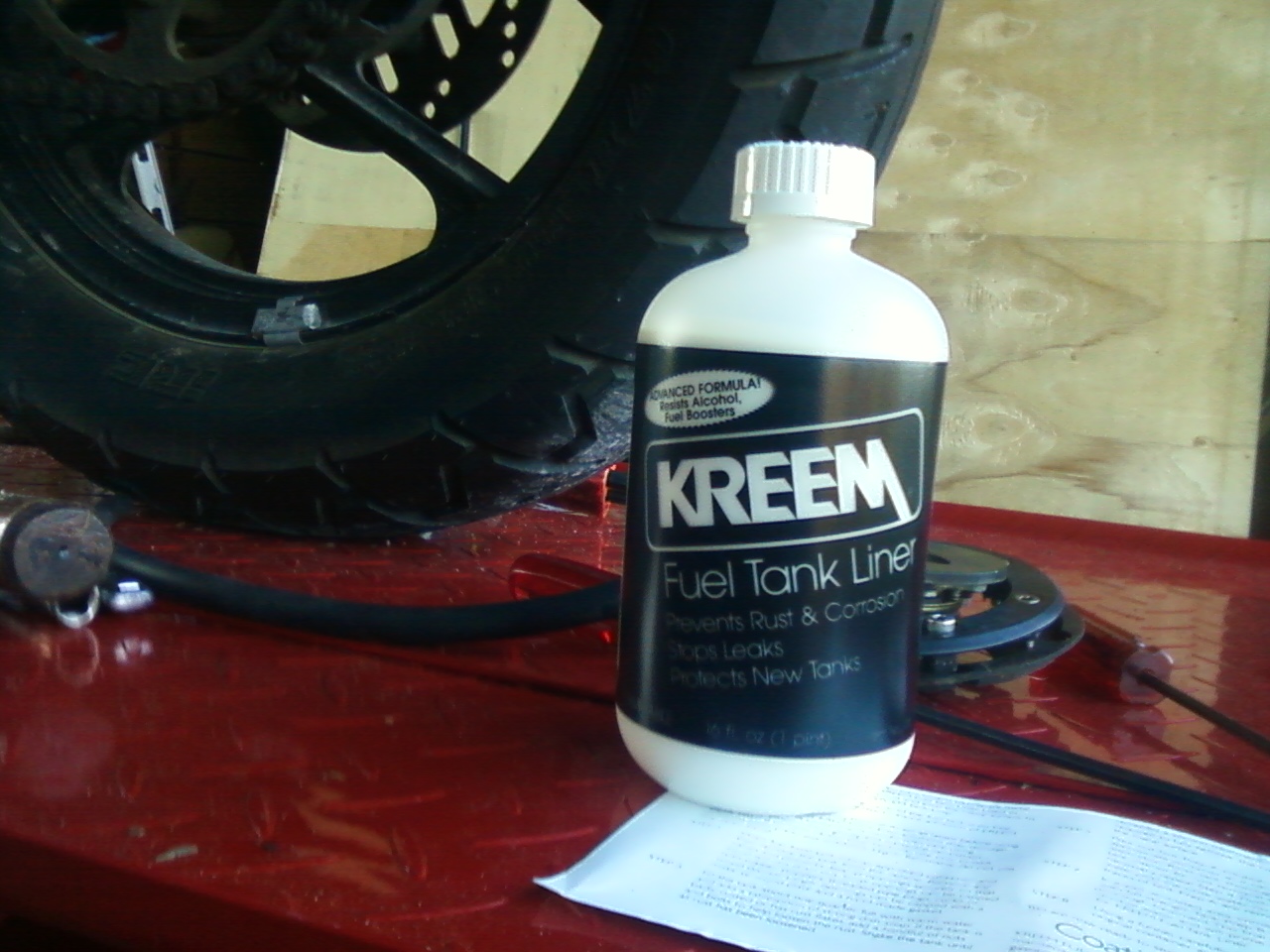
Now you are ready for the bottle of fuel tank liner. All the same warnings about paint damage apply to this bottle as well.

Kreem Part C liner

Kreem Part C liner

Here is a shot of how I use the metal tape first & then cover it with duct tape to seal the openings in the tank. It works well for me, but I make no garuntee that it will work this well for everyone.

<handymans best friend>

Red Green is absolutely right about this stuff! (Duct tape that is)

Then pour in the whole bottle of liner, and then seal up the filler hole as I did in the next picture.

pour in Kreem Tank Liner

pour in Kreem Tank Liner

then seal up the filler hole

then seal up the filler hole with duct tape

Then spend the next 30 minutes or so slowly rotating the tank end over end and sideways until you are 100% certain that the entire inside of the tank has been covered with sealant. Next (and this is very important) open the tank back up and drain the excess sealant back into its original bottle. Do not leave it in the tank as it will greatly increase drying time. If too thick it may skin over on the top and take nearly forever to dry all the way through, causing you to have problems later. I usually save the excess to use on the next project. I am usually able to do a lawnmower tank or two with the leftovers.

Like I said if you follow the instructions in the kit and the hints that I gave here you should be able to tackle this job yourself at home. Just give yourself a couple of days if your tank is rusty, and be sure you drain the excess sealant out of the tank and give it time to dry really well. This stuff aint cheap at approximately $50 a pop (November 2012 price) so you want it to work right the first time. I have used other tank sealers with varying degrees of success, but I always come back to the original Kreem brand. Plus it is usually in stock on the shelves in most motorcycle dealerships. Besides have you priced a new gas tank lately? It’ll give you a coronary!

Peace Y’all

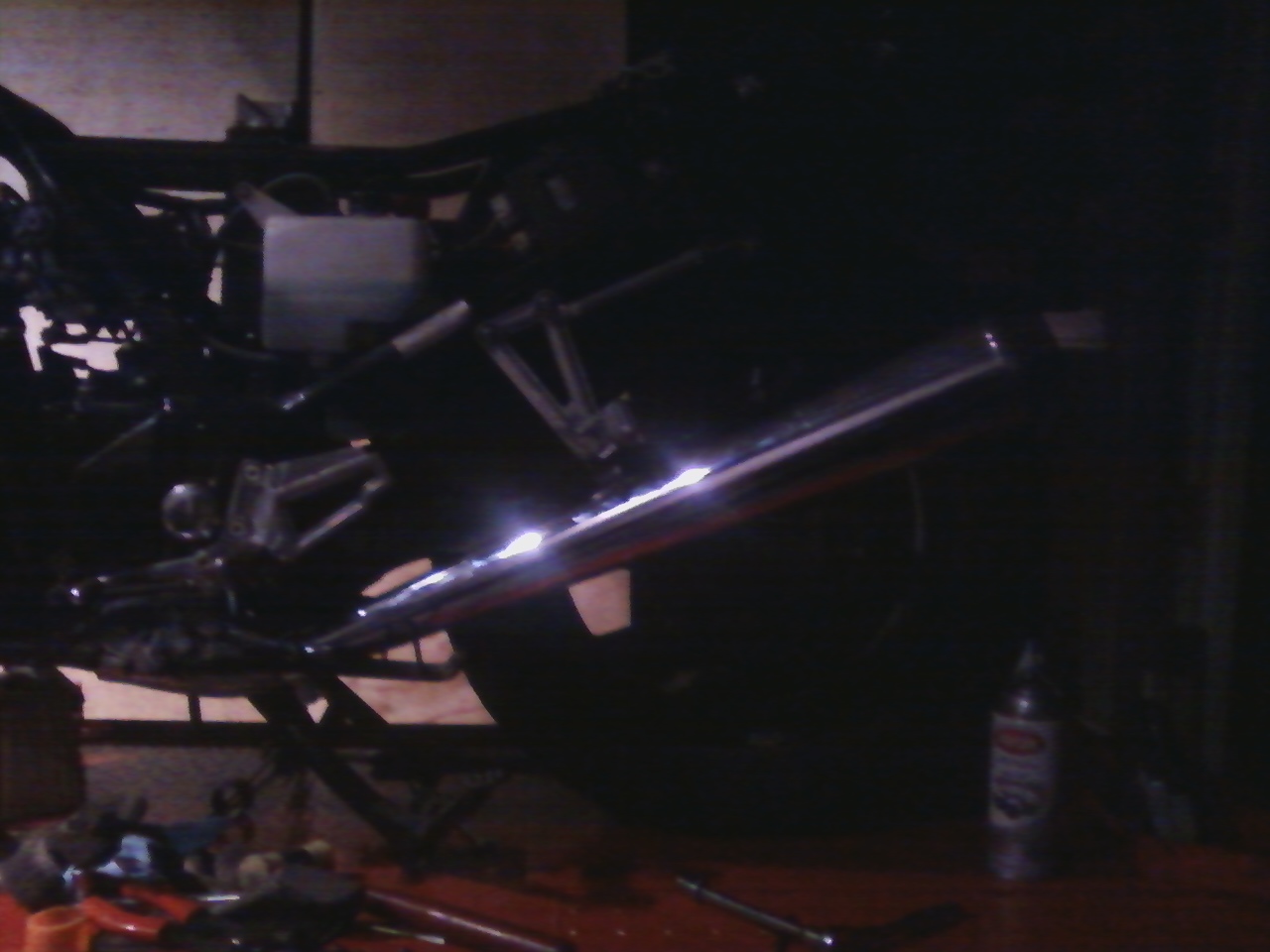
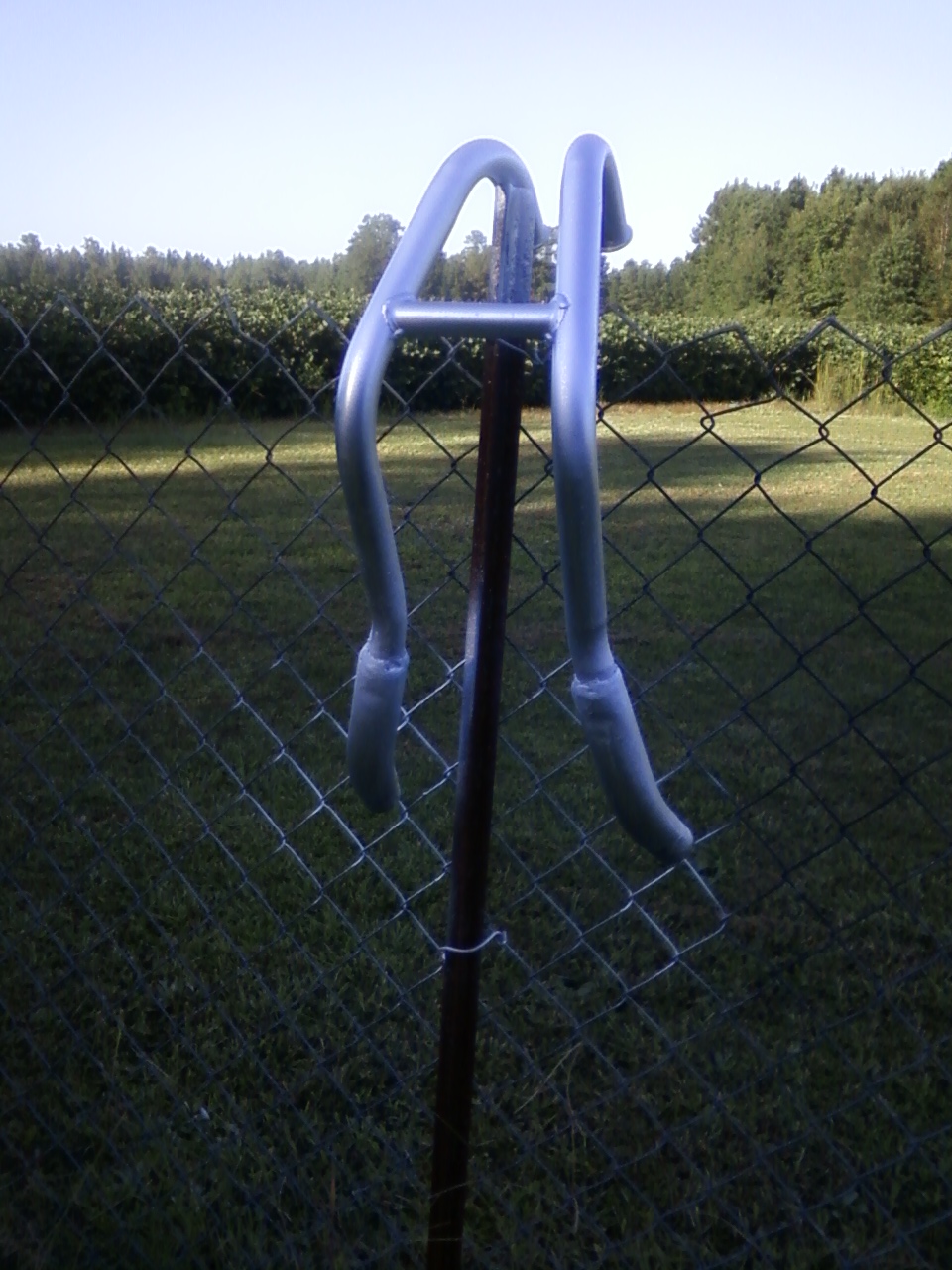
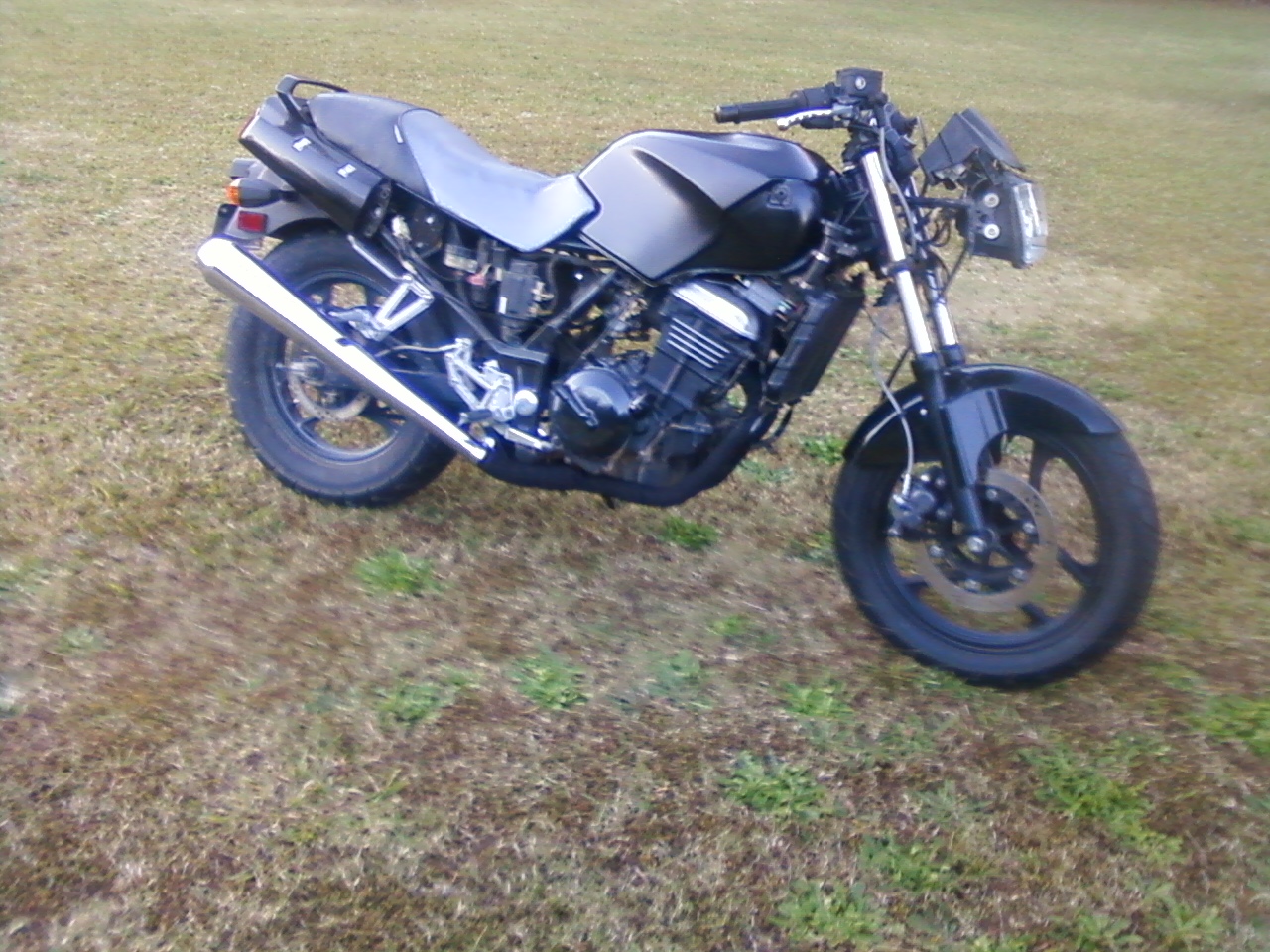
Installing Dunstall Replica Mufflers on an EX250 Ninja

When I last posted about my work on the Minimum Ninja, you saw a photo of a damaged and worn out aftermarket exhaust header. When my wife bought this as an abandoned bike from the back lot of a Kawasaki dealer for a c-note a few years ago, it had the Yoshi pipe on it, so I had to  buy a stock head pipe. If your Ninja has the stock mufflers you don’t have to do all of this work, just figure out where to cut them off, put the right adapters in the new muffler, make some brackets and go. Not being that fortunate I had to do a little more work, not a problem for me tinkering on a motorcycle is as much fun as riding one. I started with a piece of 1 1/4″ water pipe,way bigger than the exhaust pipe but a good enough match to the size of the flange around the pipe to be easy to weld.

1 1/4 inch water pipe nipple

So I stuck it in my handy dandy pipe bender and bent it to the desired angle. Please note that pipe benders like this will NOT bend thin wall tubing without crushing it, they are meant to bend schedule 40 steel pipe or very thick walled DOM tubing.

An inexpensive pipe bender

After bending and cutting it to the right length grind one down enough to slip into the new muffler. And absolutely grind away all of the galvanizing from the area to be welded. The fumes given of by burning galvanizing are very dangerous. Use all necessary precautions. I would have used black pipe but the hardware store was closed and Lowes did not carry it in this size.

home made muffler adapter

one is done and one more to go

Then I mocked it all up on the bike and tack welded the adapters to the head pipes.

Ninja Dunstall muffler adapter mockup

Mocked up for tack weld

After that I pulled everything back off and seal welded the pipes together, cleaned off the scale and shot the pipes with a coat of high heat paint

tack welding completed

tack welding completed

pipes seal welded & painted

pipes seal welded & painted

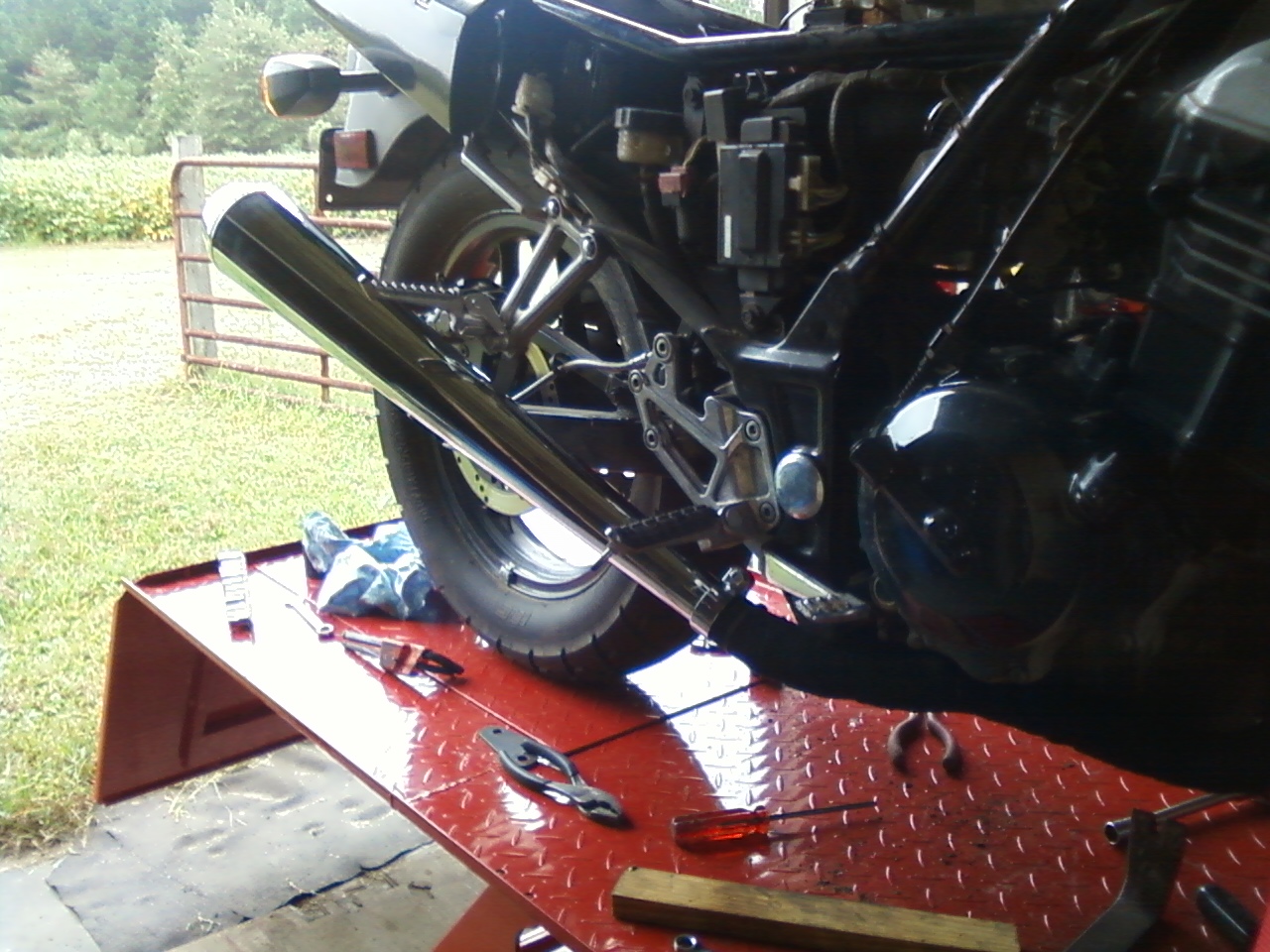
Then I wrapped the entire head pipe with header wrap and reinstalled everything.

Head pipe wrapped with 2" wide fiberglass wrap

Head pipe wrapped with 2″ wide fiberglass wrap

I did take the centerstand off, 😦 it just did not work with the new pipes. Besides now I have a motorcycle lift table when I need to work on it now.

Next time I’ll show you how I lined the fuel tank with tank Kreem. An oil & plug change how to is in the works too.
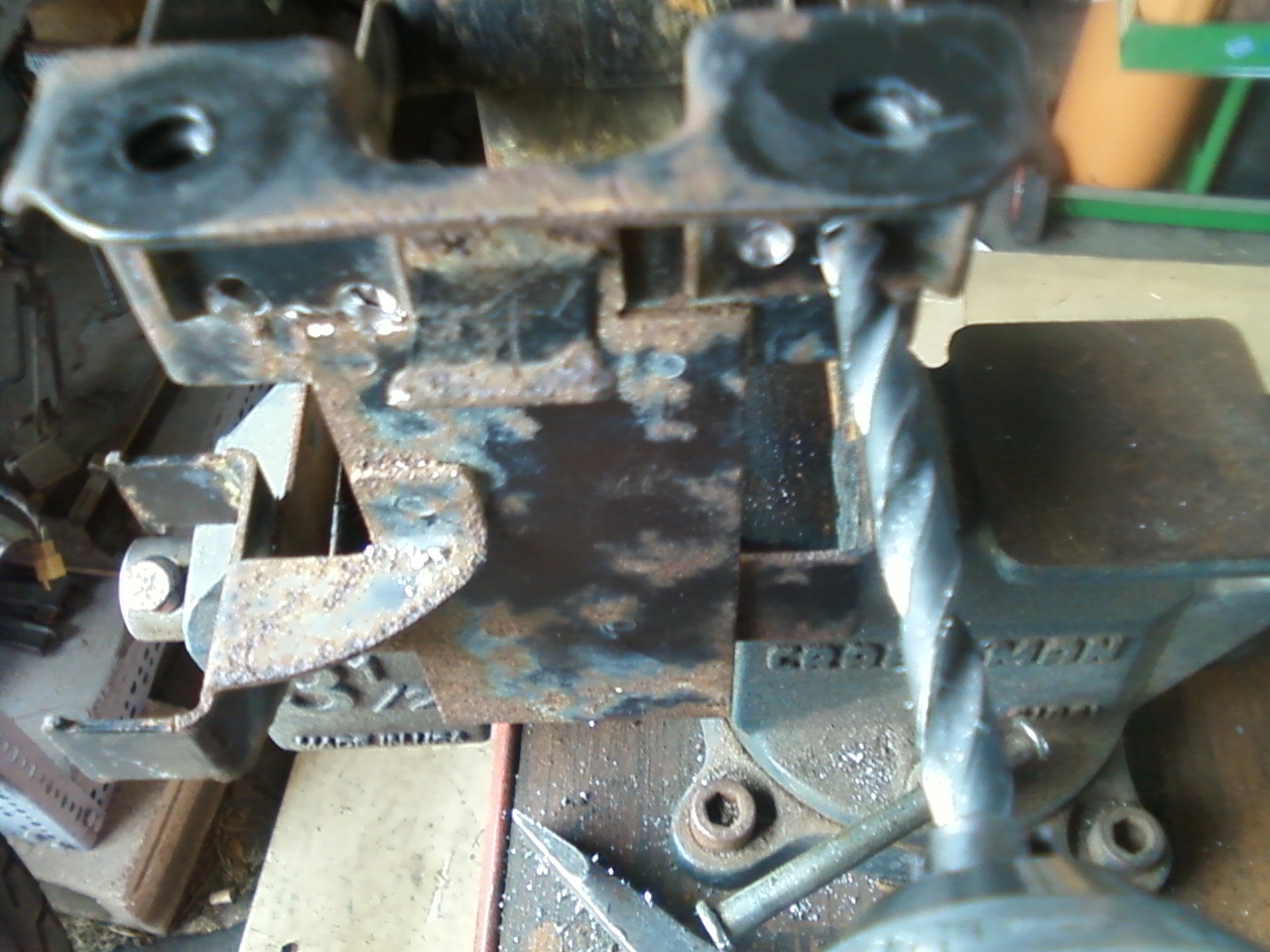
Peace Y’all

 fiberglass header wrap

P.S. This thing sounds really good now and is not nearly as loud as it was.