Another Project wAmmo CM400 Update

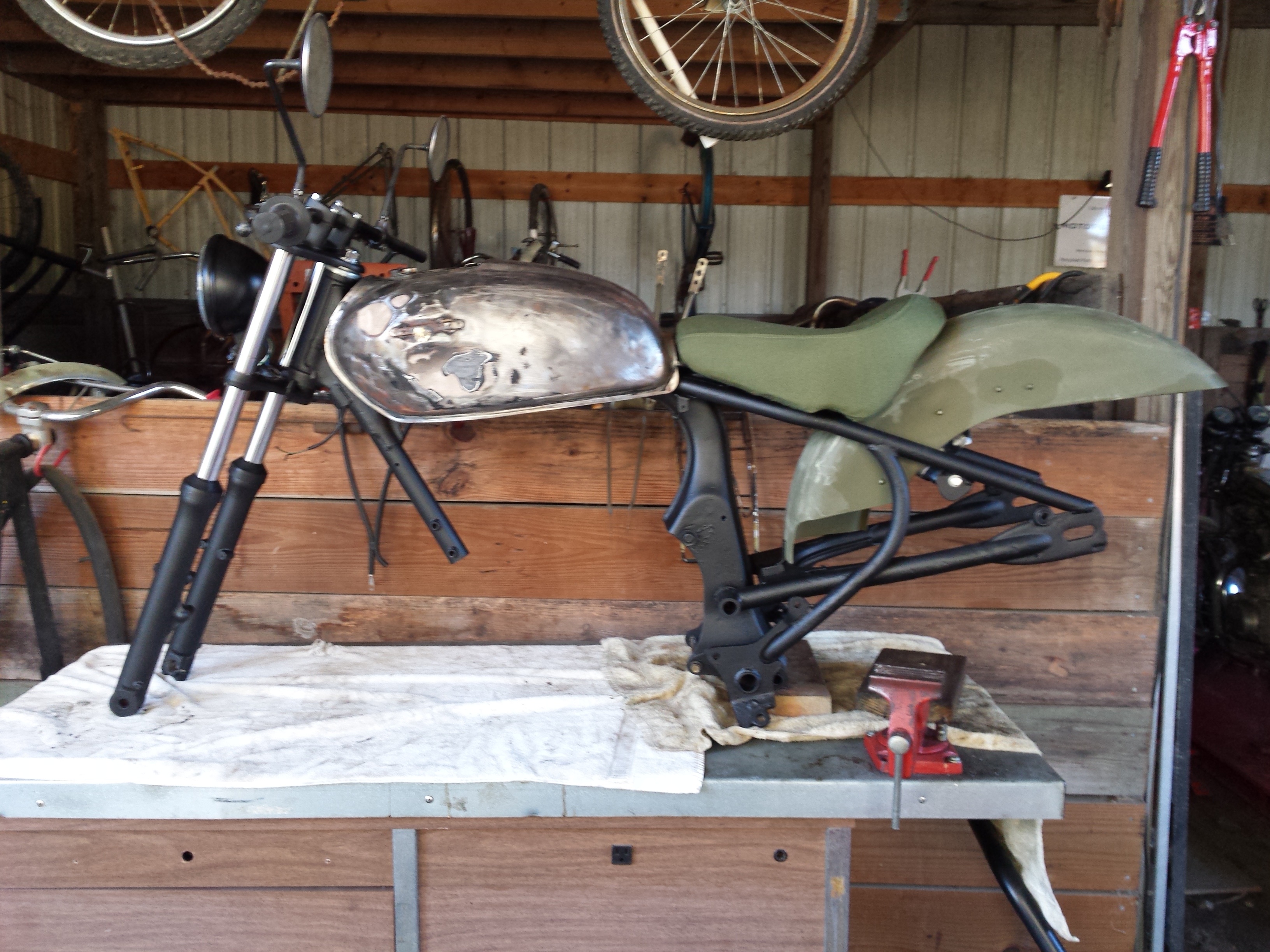
It’s time for another Project wAmmo CM400 update. Let’s start with my confession that I lost interest in the project for a little while and was really short on time for it. Had some issues with getting the frame sandblasted so I wound up bringing it back home and hit the frame with some paint remover and went over it with my little hand held sandblaster before coating it with spray on truck bed liner. Did the same thing for the tank before brazing up a couple of damaged spots on it and sealing it with Caswell Epoxy Gas Tank Sealer. I also wound up replacing the fork because I was unable to identify the one that was on it to get the proper repair parts so I replaced it, and installed a set of tapered roller steering head bearings for good measure.

<project wammo cm400 bobber>

I got the modified Harley solo seat covered in olive drab Cordura fabric to match the overall theme planned for the bike.

<olive drab solo seat>

Even though the engine would start and run okay, compression on the right cylinder was consistently 50 psi less than the left cylinder. Even after adjusting the valves (click here for the proper procedure) which didn’t help, and putting some oil in the cylinder to see if it would come back up temporarily indicating worn rings, the right side was still 50 psi lower than the left side so I went ahead and pulled the engine apart for a top end overhaul.

<CM400 Engine top end>

The problem turned out to be that the oil rings were frozen to the piston and the gaps were aligned on the top 2 rings preventing them from sealing. The downside to this bike originally being such an artistically created “natural” ratbike is that it was incredibly nasty. Here I am soda blasting the cylinder to clean it. Yes that is the cheap hand held sandblaster
and it works just fine with blasting soda, so if you’re on a budget & just need to clean a few small parts without damaging them the way sandblasting can try this. Just do not hit any gasket mating surfaces with the soda.

<soda blast motorcycle cylinder>

Once everything was cleaned & honed I taped off the mating surfaces so that I could spray on some Duplicolor cast iron gray engine paint.

<paint prep motorcycle cylinder>

<Honda CM400 clutch cover>

The original clutch cover will be replaced with this good used one and since I was not splitting the cases for a full overhaul I sealed up the bottom half of the engine with duct tape so that I could degrease it and remove the existing paint.
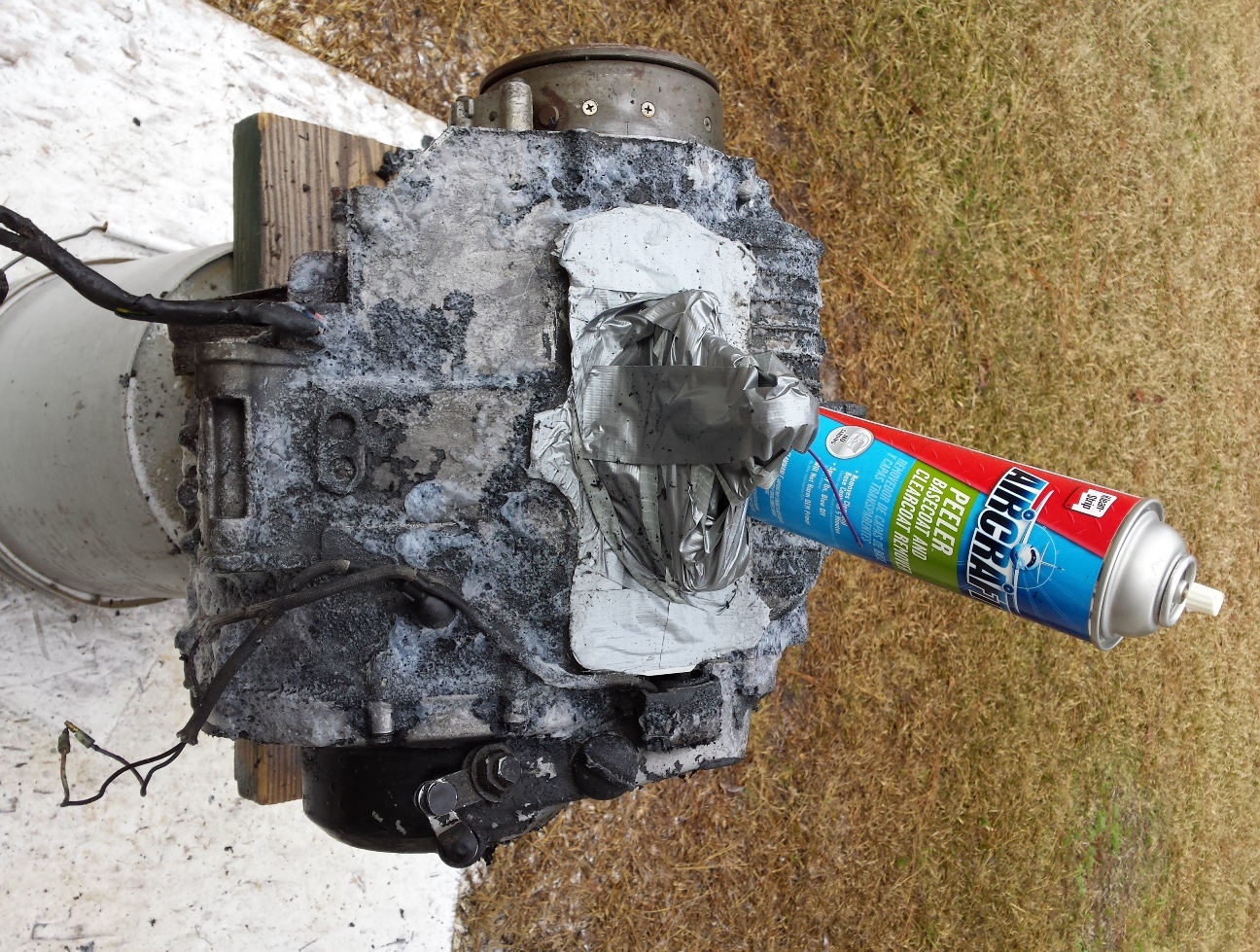
<aircraft peeler really works>

Since the head needed a good clean up, it became the subject of a head service tutorial that you can read by clicking here. The next picture is of the original pistons with new rings ready for the cylinder to be re-installed. The blocks of wood  held the pistons up and level while beautiful assistant slid the cylinder slowly into place while I compressed the rings.

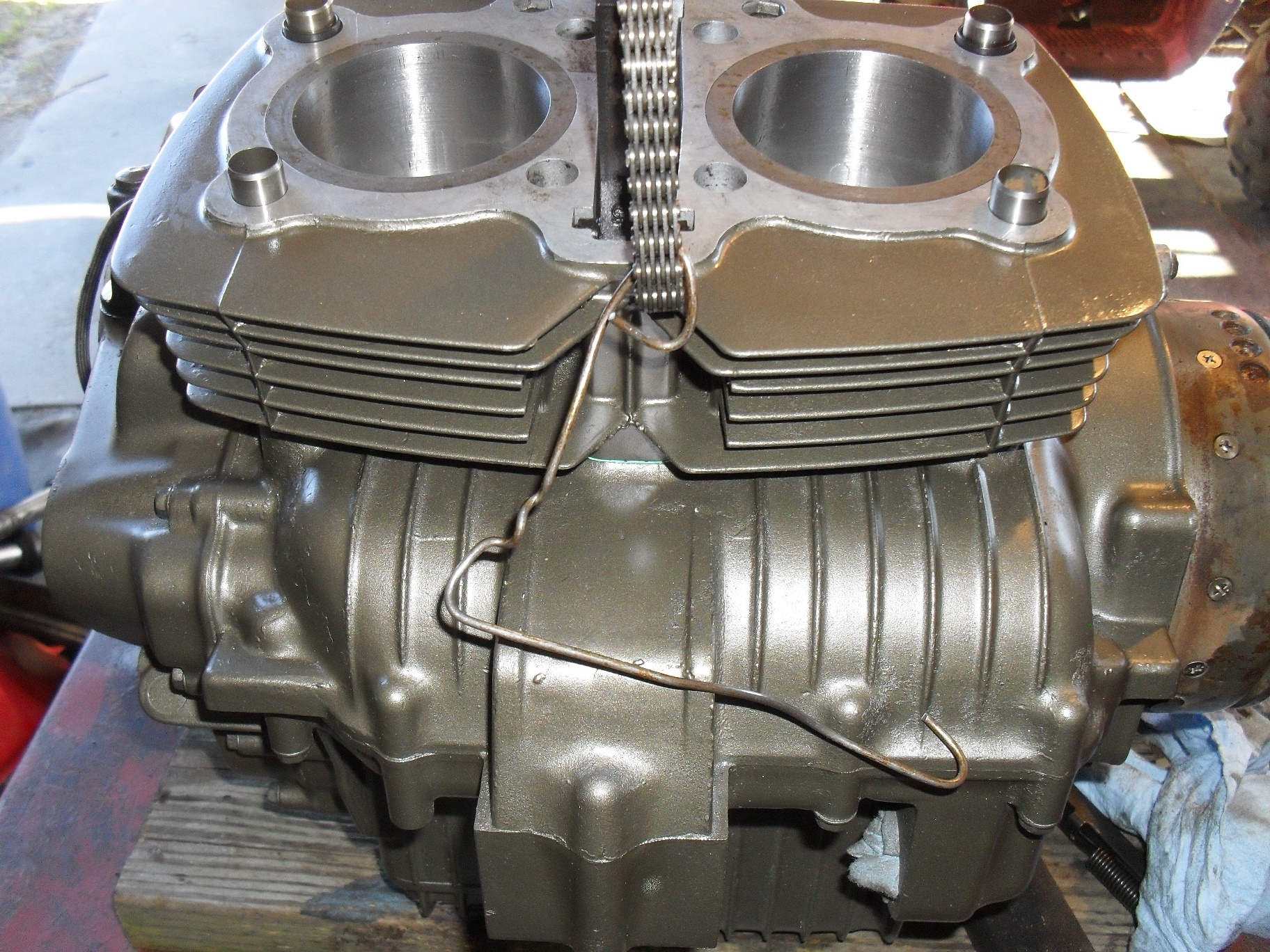
<Honda CM400 pistons>

<freshly honed Honda cylinder>

This looks a lot better than the before picture doesn’t it? Once I got the head back on it was time to line up the timing marks for the crankshaft & camshaft as shown below and put the camshaft back in.

<Honda 400 timing marks>

<Honda 400 twin camshaft timing>

Afterwards it was just a matter of putting the rest of the parts back on and torquing everything down properly. Don’t forget to fill the oil pockets under the cam lobes with oil before putting the rocker box cover back on.

<cm400 bobber engine>

The engine is now ready to reinstall, I am going to leave the rotor cover off until later, ditto for the new clutch cover.

<wammo engine in frame>

Now the engine is sitting back in the frame. The intake spigots are new replacements for the damaged originals.
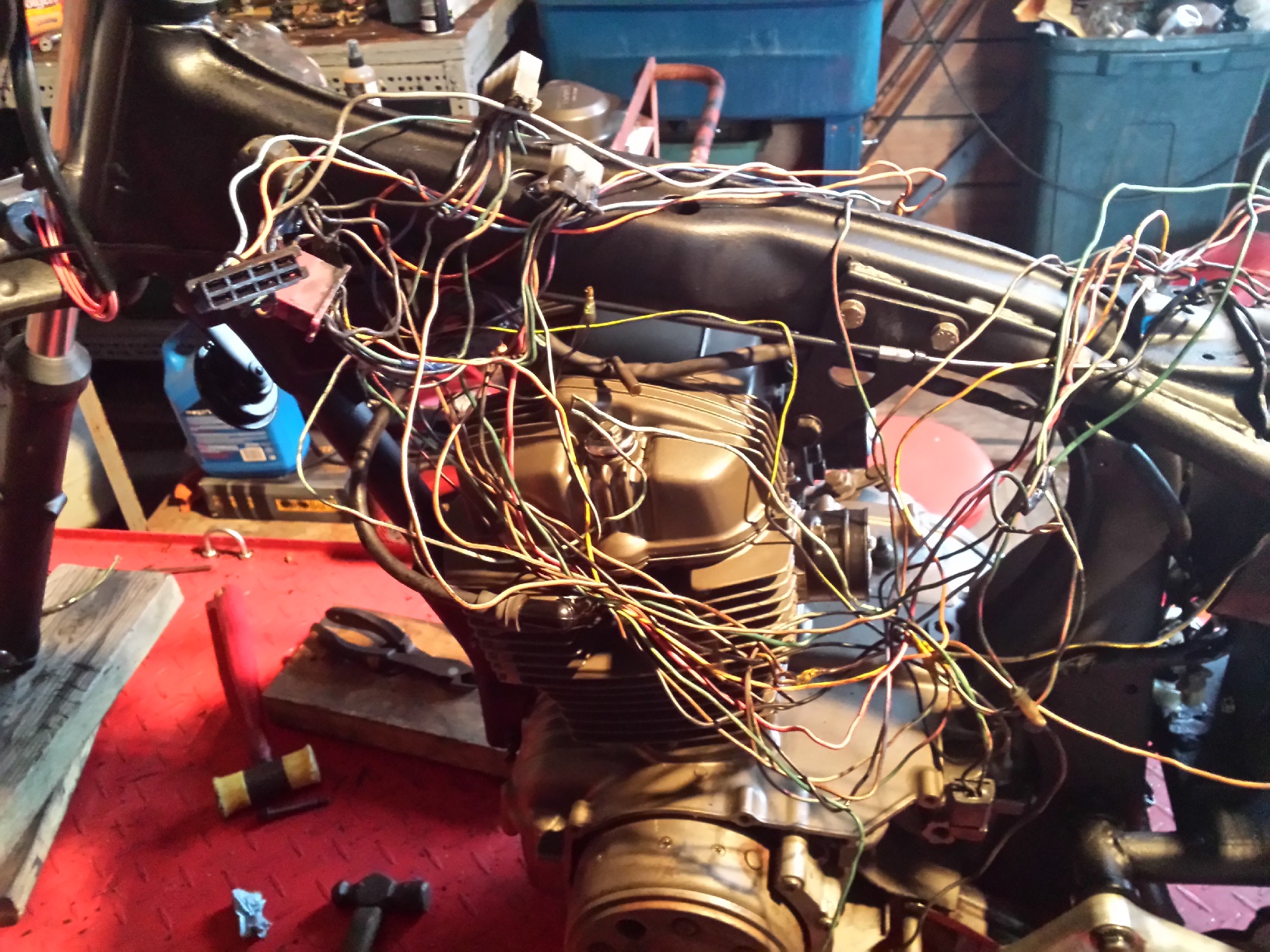
<I like puzzles>

I like puzzles

Now its time to sort out the wiring harness. Sometimes it is easier to start from scratch but for right now I am going to attempt to reuse at least some portions of the factory harness.

<honda twin regulator rectifier>

Normally on a custom motorcycle one would attempt to hide such parts as the regulator rectifier but since I am going for a post apocalyptic paramilitary look on this machine it is bolted to the side of the rear fender out in plain sight.

<Honda CV carbs>

Once I get the wiring sorted out and get the wheels back on it’ll be time top restore this set of CV carbs. I will probably do an in depth post on that process when the time comes.

Peace Y’all

Why Can’t I Let Dead Dragons Lie?

let dead dragons lie

What I see anytime I see an old Japanese classic left to rot…

Here we go again, I knew this old Honda was bad news the first time I saw it. Years of abandonment & sitting out in the weather had taken a severe toll on every single piece of it, how often do you see a rust hole in the top of a gas tank?

<really messed up Honda Tank>

To make matters worse it is a 1980 model the first year Honda started using that sway backed horse looking frame designed to get the seat closer to the ground in hopes of getting more people into riding and thus increasing sales. And yet here it is sitting on my lift as I am evaluating its potential as a custom possibly a cafe racer. The S.C. inspection sticker on the fork is dated 1988, and this was probably the last time it was on the road as S.C. did away with inspections soon after. The carb float bowls were completely gummed up and one slide was frozen in its bore. But the residue cleaned out okay and corrosion was minimal leading me to suspect that it was pre-ethanol gasoline in the carburetors!. It actually fired up and ran after a fast & furious carb cleaning. Heck I even wire brushed the original spark plugs and stuck them back in as they all 4 spit great big blue sparks during my initial testing.

"<a

It actually was kind of anticlimactic, this ancient corroded cobweb covered corpse fired right up and ran like a Honda. I felt like some  necromancer in a fantasy story that had prepared a powerful magic spell to reanimate the dried bones of a dead dragon only to have it sit up, yawn and say, “well that was a nice little nap,” before I could cast my spell.

<1980 Honda CB650 4 SOHC>

It did smoke a little but there were no strange noises, not even a cam chain rattle. Since the engine is very rough looking cosmetically and I like to be as close to 100% sure about my motorcycles as possible,the next step in this evaluation is to pull the engine from the frame & take the head off and have a look inside. If all looks fixable I start renewing this bike in earnest beginning with an engine overhaul.

<CB 650 standard rear wire b4>

Although I try to kid myself that I am still evaluating this thing, I did purchase a set of wire wheels that I spotted on Ebay at a good price, & to crank it up I bought a new Shorai LFX battery for it. Experience tells me that I should wind up with around 3-4 thousand dollars in a motorcycle that might be worth 2 grand at the most. :O

Shorai LFX  the best motorcycle battery money can buy.

Shorai LFX the best motorcycle battery money can buy.

Help here I go again 🙂

Recon 250 Into the Engine!

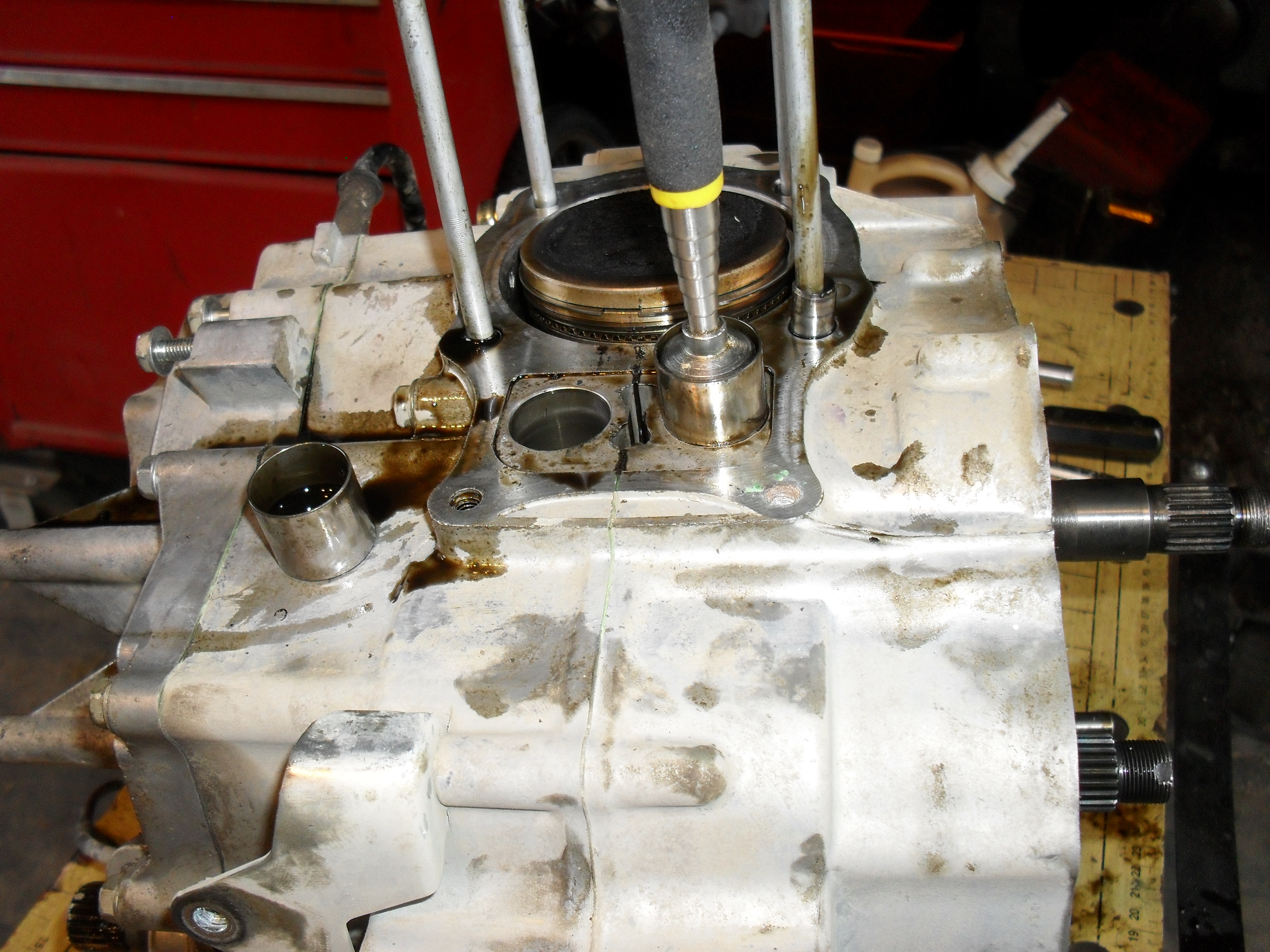
At the end of my last post about this the engine was sitting on the bench, so let’s pull it apart now. Start with the external accessories such as the starter motor, rope starter, etc.

On a full tear down like this I prefer to remove the clutches from the engine before removing the cylinder and head. That way there’s not any damage to the connecting rod or piston should I accidentally spin the crankshaft around too fast.

Of course the best way to remove the clutch nuts is with an impact wrench, but if you do not have one wedge something good and solid in the clutch gears to hold it still, and don’t forget the centrifugal clutch nut is reverse threaded.

You’ll need a steering wheel puller to get the centrifugal clutch out. It’s possible you could get lucky and break it loose with a rubber hammer, but I doubt it. Don’t try it because you can damage either the clutch, the crankshaft or both by hammering on the clutch.

Now you can see the timing and oil pump drive chain, along with the shifter meachnism in the front of the shifter drum.

After pulling all the little parts off the front making sure to not exactly where all of the thrust washers go, it’s now time to move up top and unbolt the rocker box.

Now set the pushrods off to one side and unbolt the head an pull it straight up to remove and then do the same thing with the cylinder

Here you can see me using the magnet to remove the lifters from their holes.

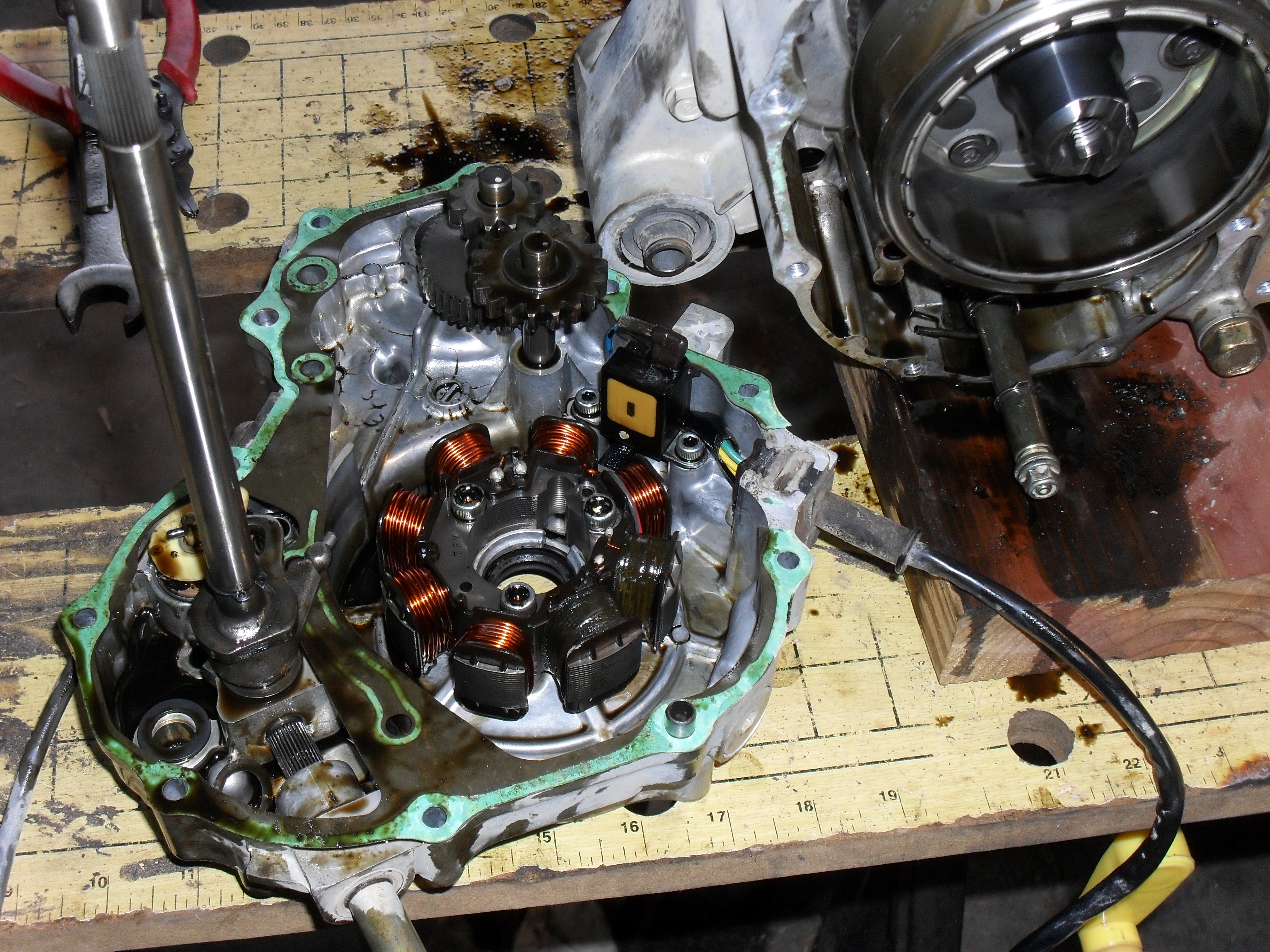
Next I popped the rear cover off after unbolting it. The magnets in the alternator will make it feel like it is sticking together so be careful.

In these lat 2 pics for the day you can see the alternator parts, the stator is in the top one and the rotor is in the bottom picture. Next time we’ll split the cases!


Peace Y’all