67 Honda CL77 Scrambler

A few weeks ago I attended a small but but high quality motorcycle show hosted by the VJMC (Vintage Japanese Motorcycle Club) of which I am a member. It was nice to see the other folks in the club at this meet which was held in conjunction with the Squealing on the Square barbeque festival in Laurens S.C.

<1967 Honda CL77 Scrambler Right>

Fantastic 1967 Honda CL77 Scrambler

One of our state field reps and one finest gentlemen you could ever hope to meet brought a portion of his collection. One of the bike he brought was this most excellent 67 Honda CL77 Scrambler. Since I have a soft spot in my heart (or is that in my head?) for this style of motorcycle no matter what it’s country of origin, year of manufacture, or even it’s condition I decided to take a few extra shots of this one and do a bike feature on it.

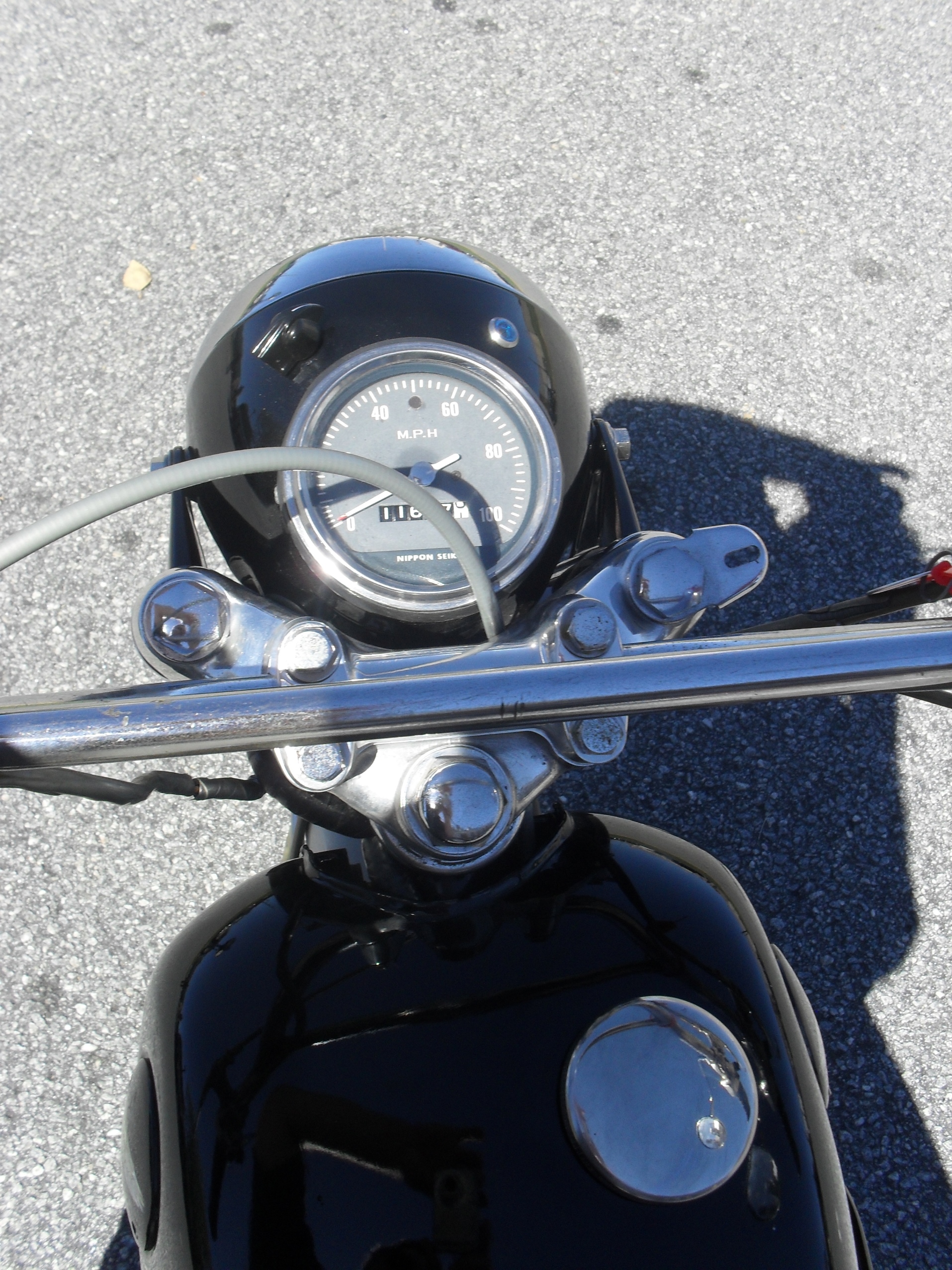
<all the gauges you really need>

all the gauges you really need

Need some parts for your Scrambler? Click here!
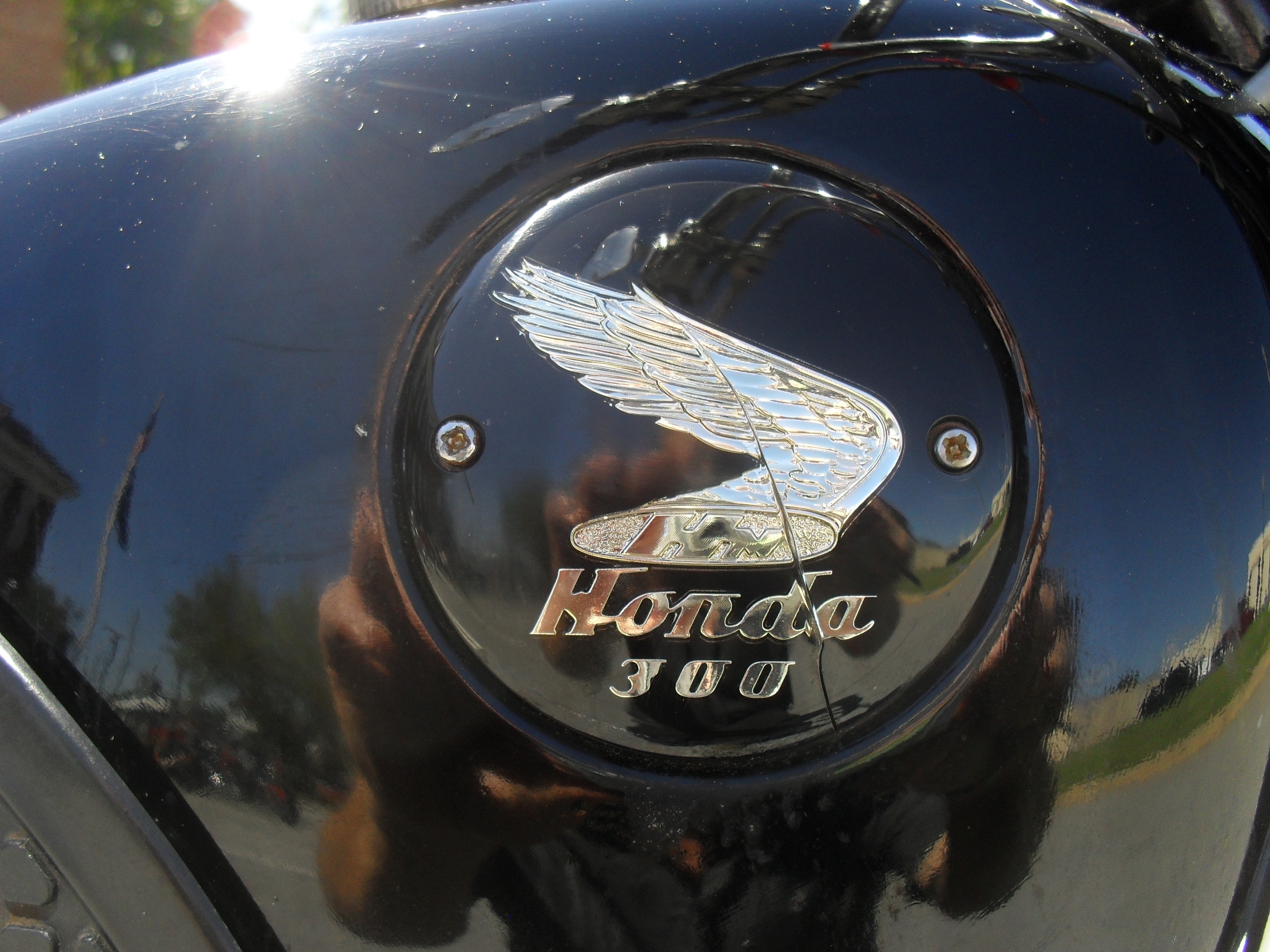
Even though they are all commonly called 305s today you can see that the original tank badges on this one call it out as a 300 cc. This badge is completely authentic but it is exactly the same engine.

<CL77 300 tank badge>

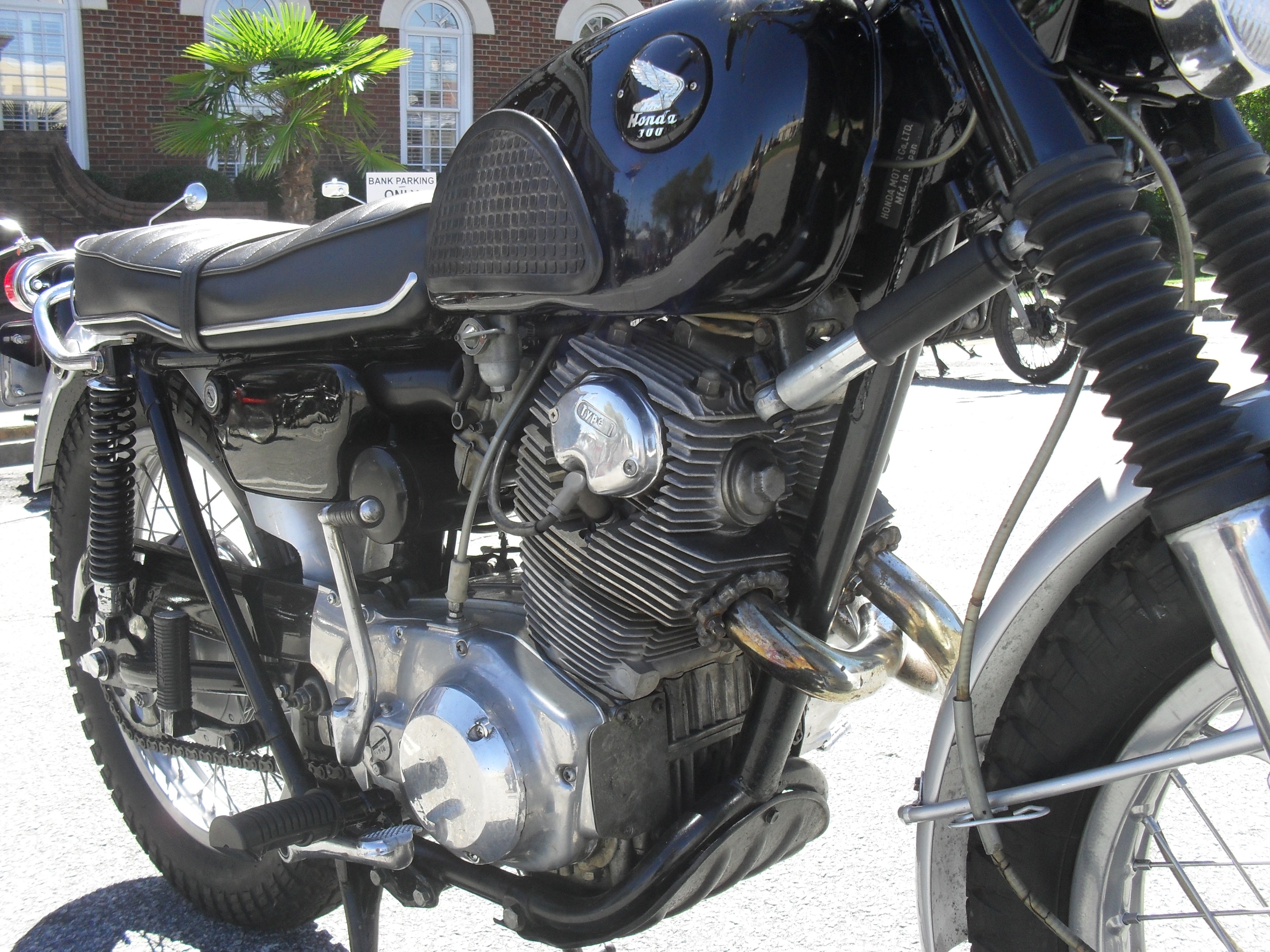
<Honda 305 Scrambler Engine>

Note the steering damper in the above photo. To me the early Honda twins like this are some of the finest looking engines ever built. The fact that nearly every surface on the cylinder and the head, except for the points cover are covered in cooling fins really sets it off from later machines.

<Honda Type 1 points cover>

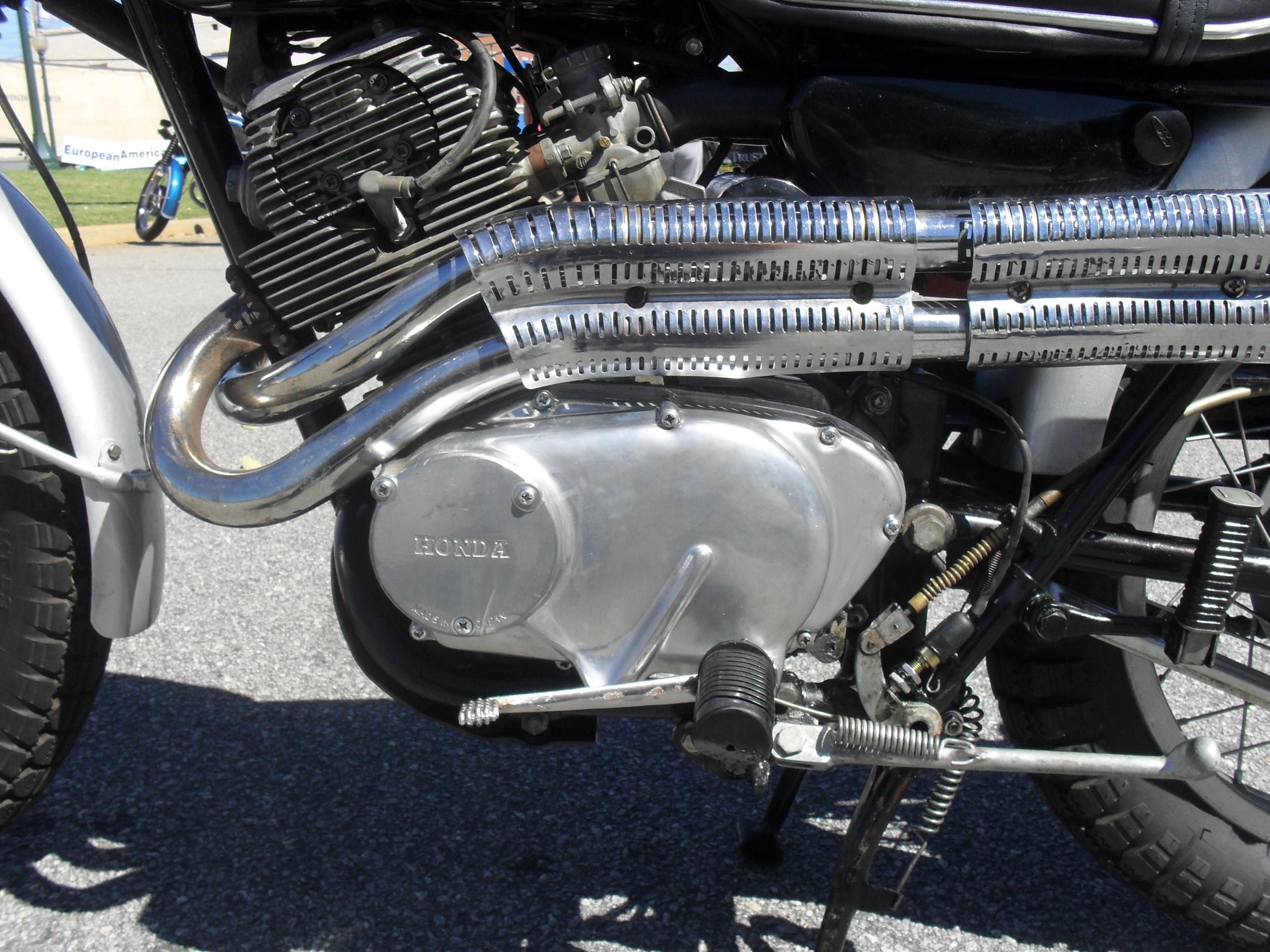
Of course we can’t forget one of the coolest looking features of these old scramblers, the high pipes.

<Honda Scrambler High Pipes>

High Pipes Baby!

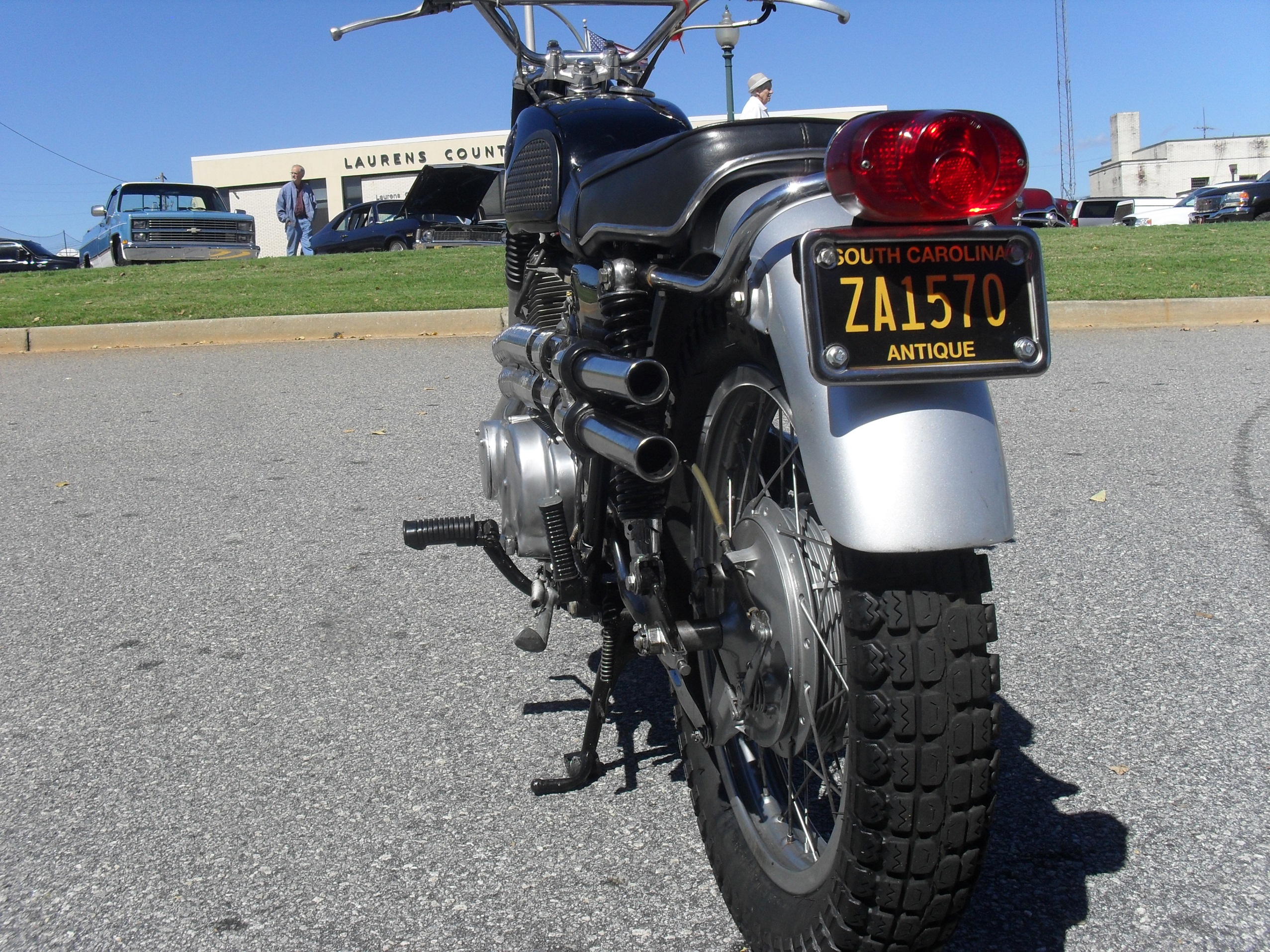
An interesting feature of these early scramblers is that the mufflers are not an integrated part of the exhaust system but were actually an add on that the owner could choose to install and remove at will depending upon where they were riding.

<more cl77 high pipes>

So when you see one out in the wild and it looks like this remember the muffler isn’t missing, it was optional.

Twin leading shoe drum brakes brakes on both ends were state of the art back in the 1960s, and are still reasonably safe & effective on lightweight machines like this for today’s traffic when set up properly.

<vintage honda twin leading shoe brakes>

Truly a handsome old bike from all angles so I am going to close out this post with a head on shot that I really liked.

<The 1967 Honda CL77>

The 67 Honda CL77

Peace Y’all

P.S. I am going to be accepting submissions and suggestions from other motorcyclists for this feature, please click here to reach the contact form on my about page, and let me know what you have, and if I think it is cool and/or oddball enough to suit my tastes it will be featured here..

Attention Deficit Project Disorder!

Well it was another rough week at that thankless job that I go to everyday of every week to keep the lights on around here until my web store catches fire & I can sell enough products to retire from everything but blogging. (go buy something, click on any ad here and help a brother break free!) My original plan for the evening was to go climb up in a tree  & try to shoot Bambi’s father, but it was starting to rain kinda hard when I got home so instead I decided to grab a beer, & carry the forks that the mail carrier just dropped off from the house out to the shop and maybe work on fitting them to the CM400 bobber that I’ve been tinkering with for the last few months, but decided that the shop really needed cleaning up a little before proceeding so I pushed some of the junk bikes out into the rain for more room.

<honda bobber frame & seat>

What’s under your desk?

Then I moved the two portable work benches back to the sides of the shop to clear up floor space. Then I decided to go ahead & start soaking my new to me,old pile of junk Suzuki with penetrating oil so that it would come apart easier when I go to replace the rear inner tube and the 40 or 50 other parts it probably needs to be trail worthy. Of course it’s a lot easier for an old fart to work on a motorcycle if he doesn’t have to bend over so I grab the old furniture truck ramp from the yard and dig through my lumber pile for a couple of timbers to set it up on since my motorcycle lift table is loaded down with my CB360T restoration project. For some reason as I was digging through my scrap lumber pile, a misshapen piece of wood that was left over from some long forgotten construction project jumped into my hand and said, “hey look at me, wouldn’t I make the perfect Plains Indian gunstock war club?” But by this time I had enough of a buzz going that there was no way you could ever get me near the bandsaw so I threw it back on  the pile, got the timbers and headed back inside to prop up the dirtbike. Hopefully I can find it again when I am sober & have some time on my hands as it would go so well with my Hawken,  powder horn etc. In fact it would look really sweet hanging up next to my black powder shotgun if I ever finish building it….

Can you see the pattern here? It’s a serious disease that afflicts middle age men. ADPD Attention Deficit Project Disorder It’s incredibly dangerous, because the problem just gets bigger & bigger. You become an addict scanning Ebay & Craigslist for just the right item at the right bargain basement price. The problem is that you don’t need it, there are a dozen projects, plus your honey-do list ahead of it, and just as sure as hell your boss will start demanding extra overtime on top of what you already work, so your discretionary income is temporarily enlarged while your time to enjoy it is diminished, this leads to more shopping & less doing until your place starts to look like a salvage yard, and your neighbors start calling you Fred G. Of course this is also the time when everything in your house will break down too, so you have to take care of those things first. Sure you could pay someone to fix the plumbing or the light fixture but for two things 1; the guy you call can’t do it any better than you can & maybe not even as good. 2; You just scored the deal of the century on another old piece of shit motorcycle, gun, car, jeep, boat, plane or what ever your addiction is & spent the money already.

<1980 Suzuki TS185>

At any rate I got the TS185 up on the ramp so I can work on it, but since the weather is supposed to be nearly perfect for riding tomorrow, it was time to give the old CB650 a good going over & adjust the chain so I stopped to do that instead. Hey you got to look after your main squeeze if you want her to look after you! Well it’s been fun blogging with a little buzz going on, but right now I need to find a carb kit & battery for the 1969 CJ5 under the carport & figure out when I’m going to get time to fix my tractor so I can keep the wood lot clean & get the garden ready for next year. Then maybe I can relax, watch a little television while checking out the crack-list on my tablet.

Peace Y’all
//

Oops I Did It Again. A Junkyard Dog Double Feature. (updated w/ video)

I went prospecting for rusty gold again. Brought home a couple of early 80’s Suzukis.

image

One is an RM 80 condition unknown, some parts missing,  in fact I am not even sure what year it is. This one is truly a junkyard dog and it is for sale right now as is where is, to the first person willing to give me $50

image

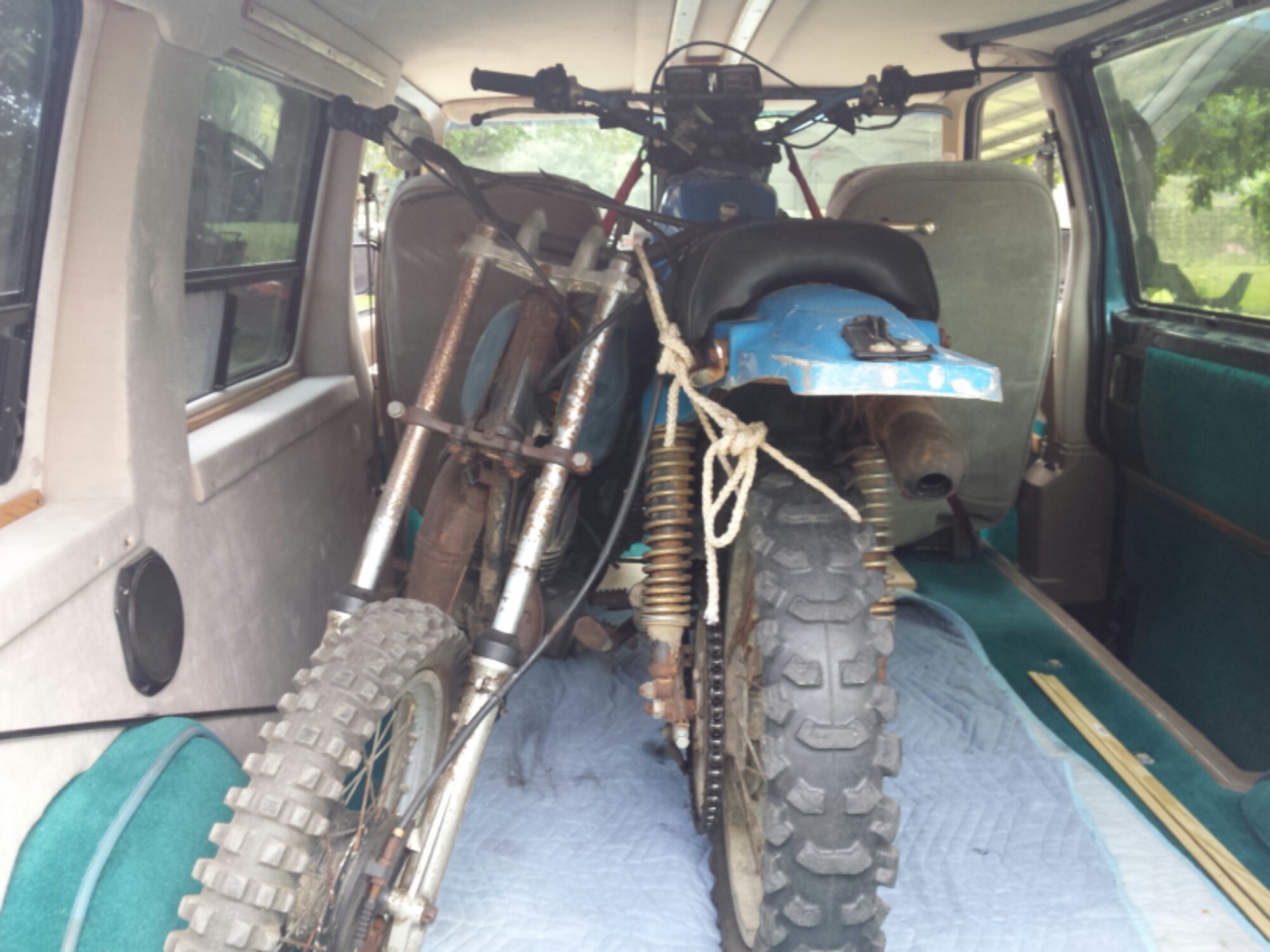
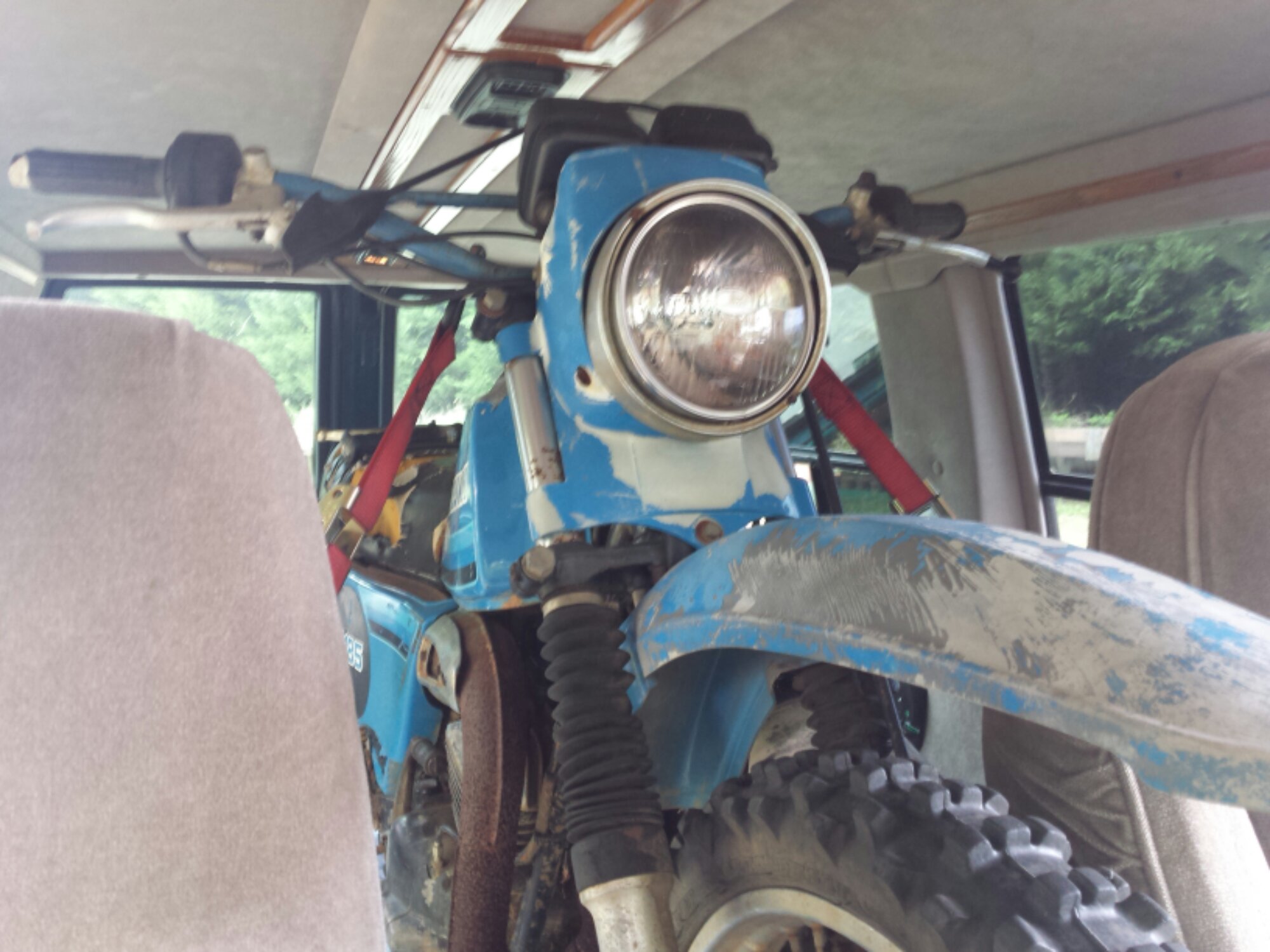
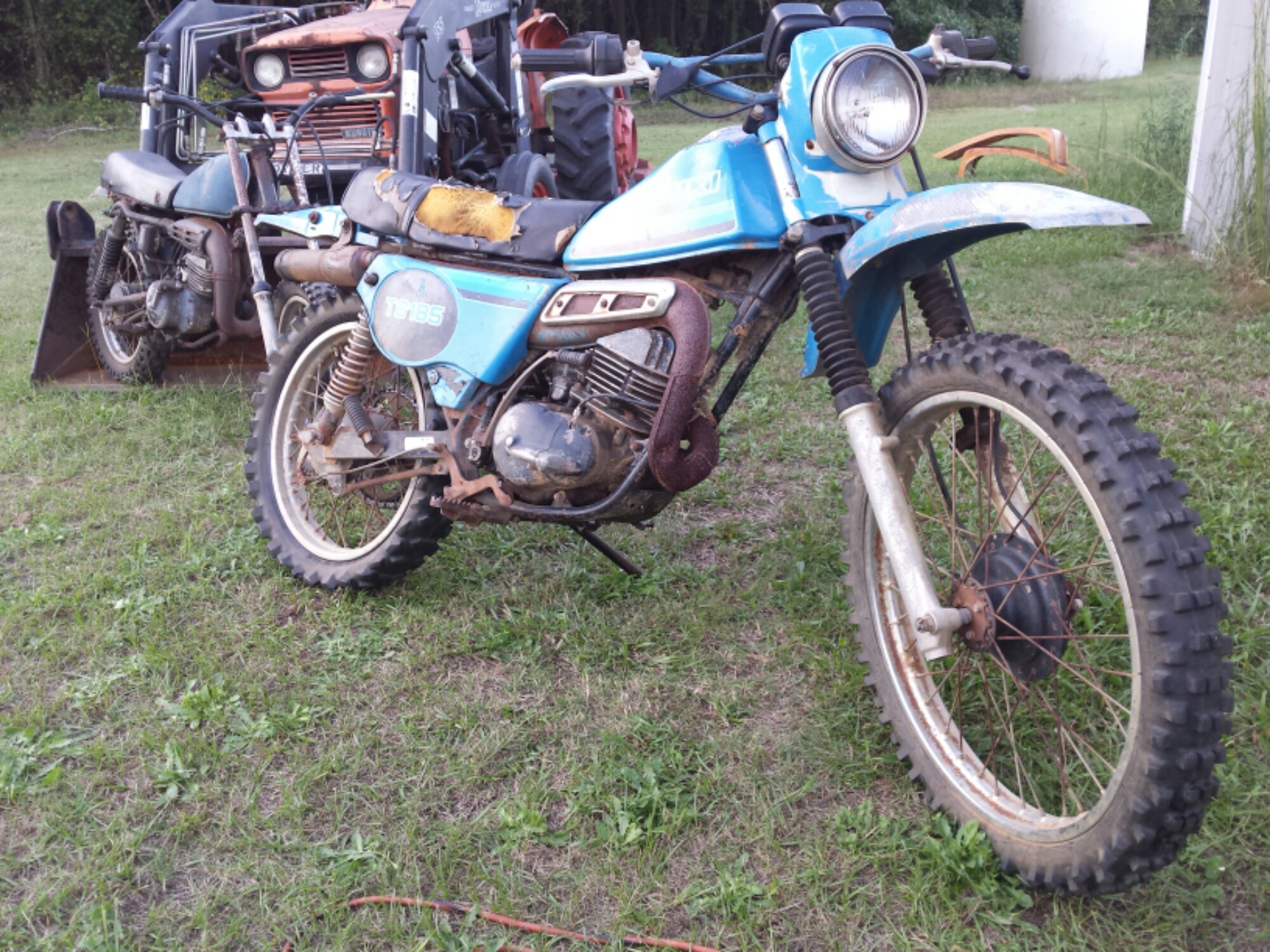
The second one is a 1980 Suzuki TS185. It’s rough but will start and idle.

image

I really like the headlight assembly.

image

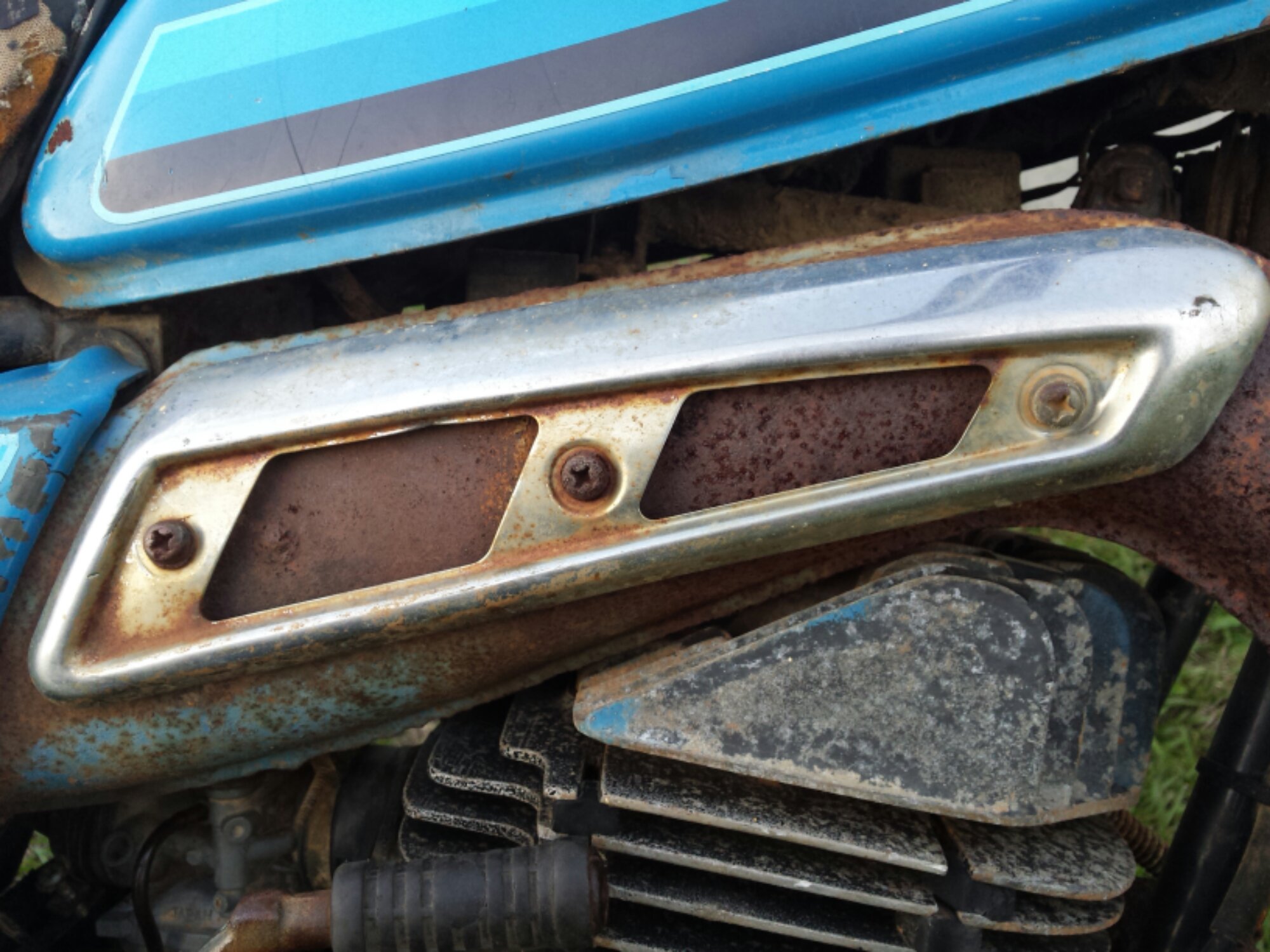
There are plenty of interesting crusty bits on this one.

image

image

Overall this old cycle is not the worst I I have ever tried to restore.  At this point my plan is for a basic restomod as a woods bike, but if too many of the parts needed for that are not available, it may become a “brat style” custom scrambler.

image

Peace Y’all

Ton Up NC Blog The July 2014 Website of the Month

I first heard of the Ton Up Club during a visit to the International Motorcycle Show in 2013, they had a cool display setup with a bunch of neat vintage motorcycles and flyers for their upcoming shows. Last September I visited the Bull City Rumble and saw just what a great show (and party) these fine people over in NC can throw & I’ve been keeping up with them ever since.

About a month ago they published a really cool post, “After the Flood, The BSA That Refused to Die.” After reading it I immediately hit them up for permission to link to it. No I’m not going to give you the details, click on the link and go read the post for yourself.

<bsa motorcycle survivor>

In the last few weeks that annoying as hell real life that pays the bills got in the way & I am just now getting around to sharing this post and decided just to make

Ton Up NC the website of the month, so go check them out and let them know that the old ‘Psyco sent you.

Of course if you are not in the great South-land but are really into vintage style Cafe Racer customs you might want to check out the site of Ton Up North America to see what is going on near you, the home page itself seems out of date but there are links to the local chapters, that can probably get you up to speed an what they are doing.

Peace Y’all

Just a few more interesting things.

In my last post I showed you a nice old Harley service-car, now here’s the bones of one.

image

While we’re looking at basket cases check out this Mobylette.

image

image

There was actually a pretty good selection of offbeat European project bikes available.

image

image

image

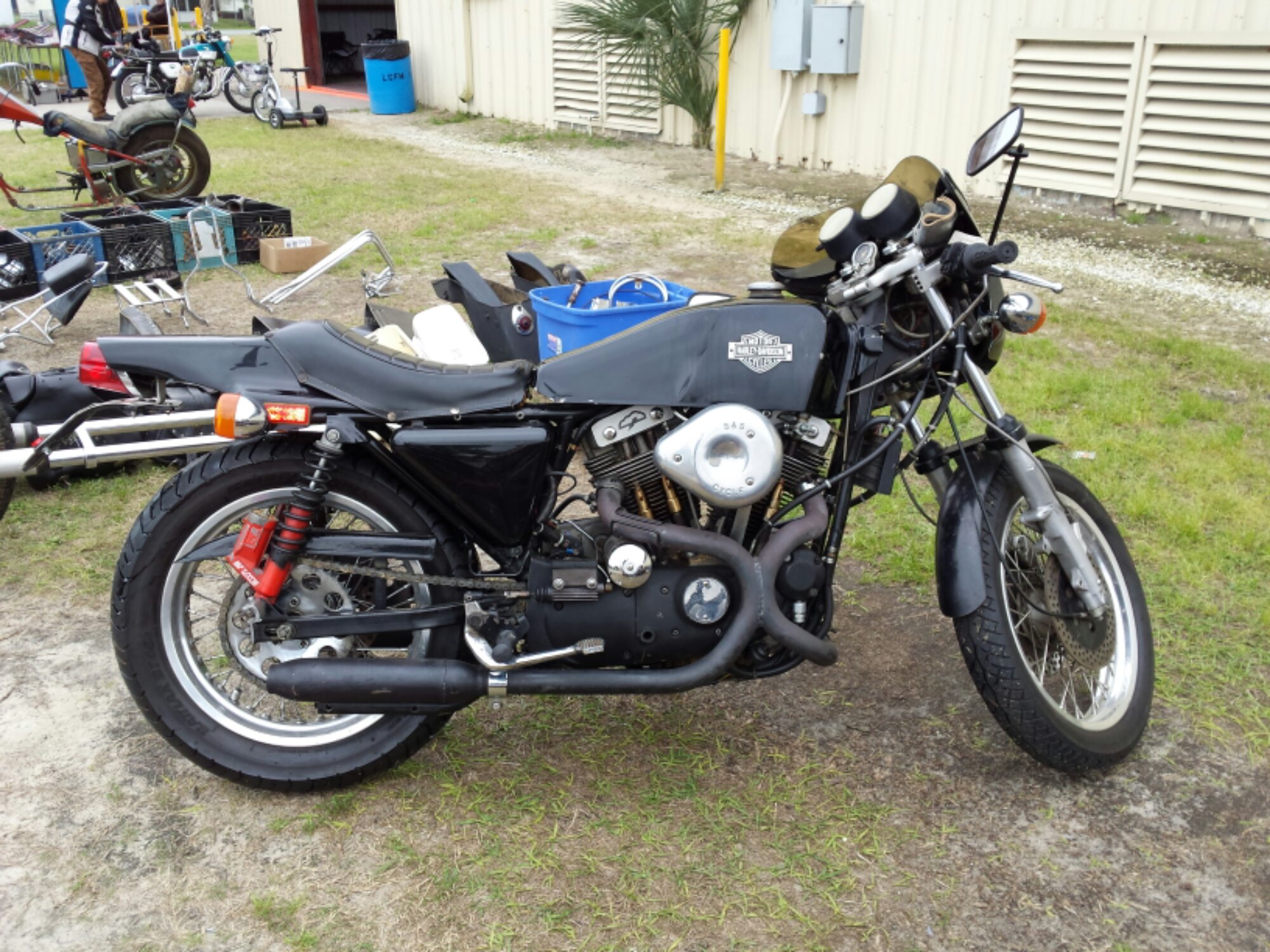
And my personal favorite Harley Davidson model, the XLCR.

image

image

It is been a long day but we’ve had a really good time. Good night to all.

Getting ready to go!

Hello everyone the van is all packed, motorcycle washed, the parts sorted and priced and I can’t wait get out of this cold place and get into some warm Florida sunshine.

Over the course of the weekend I will be experimenting with live blogging using the
Wordpress app on my phone. I will be posting random, reports, thoughts and
pictures as I spot interesting things. It may be messy and disoriented at
times, but there can be a great deal of fun in the unexpected. Since this will
be my first time attempting this be prepared for mistakes, bad grammar &
spelling, along with the possible WTF & SMH moments. Hopefully when it is
over we all will have had a great deal of fun. Be sure to check back frequently
this Friday – Sunday to catch all of the action.

Gords Garage Blog The February 2014 Website Of The Month

Gords Garage Blog has one of the best subtitles I have ever read, “I am not a professional and I try things at home.” The is probably one of the most mechanically inspirational blogs I follow. If you are into metal working and motorcycles you need to go check this guy out. At the time of this writing he is just putting the finishing touches on a fantastic looking CB160 cafe racer. Gord has a well equipped home shop including machine tools and welding equipment along with a lot of talent & imagination so you are sure to find some good ideas for your next project if you look. Click here to visit Gord’s Garage.


Google+

The Old Biker Speaks. A Parable for the Modern Motorcycle Lover

Warning; When I wasn’t looking someone slipped a couple of naughty words into this one. No f-bombs, gratuitous sex, or boob pictures though, sorry.


Imagine that you are gathered with a group of your fellow motorcyclists, be you a group of yuppie cruisers, hipsters on retro style bobbers &café racers, hardcore chopperheads, or restoration junkies. Everyone is standing around, taking a breather, checking out each other’s bikes, telling interesting half-truths & just generally having a great time in the way that only a bunch of bikers can. The sun is bright; the beer is cold, and the ladies beautiful. It is truly a perfect day as long as no asshole decides to ruin it for you.

Somehow there is just one brief moment of silence and I heard it, far away in the distance the howl of an ancient four banger breathing out through a quartet of totally baffle free drag pipes. The exhaust note is raspy & uneven, and you catch the whirring sound of a loose cam chain, all obvious signs of deferred maintenance that would kill a lesser engine, but as we all know, some of these old SOHC 750’s will never die no matter how ratty they get.

By now the whole encampment has heard the sound and is looking up the winding road coming down the mountain to see what matter of machine is headed towards them. Some are commenting about how rough it sounds, others somehow seem to be watching in fear as if it may be some kind of hipster/yuppie/brand loyal purist eating dragon coming to consume them.

<old school Hipster eating Chopper>

It finally flashes into sight coming around the curve, a creature from another time, impossibly long, the rear wheel bouncing up & down in an ancient Amen Savior plunger frame. The front tire too bounces up, down, left and right as the rusty peeling girder front end rattles and shakes with each imperfection in the road surface. The bushings in the girder are shot & so are the steering head bearings. There is no way this thing should be moving so fast, especially on this twisty road, but it is.

As it approaches our group the rider lets off the throttle and downshifts, causing the engine to backfire on the overrun, blam! blam! blam! as flames pop out the ends of the exhaust pipes, that appear to have been fabricated from metal conduit 40 years ago. Small animals & nervous people immediately begin plotting escape routes, after all sensible people are afraid of folks who ride deathtraps like this.

The paint job was obviously gorgeous a long time ago, in a galaxy far, far, away but has now suffered several decades of weather beating and a million miles of hard riding. Every top surface was chalky, and crazed with cracks, looking as though hundreds of overlapping cobwebs had been deposited on the tops of the frame, tank, & rear fender.

On the sides you could still see the remains of a gold base coat topped with green & red kandy paints, sprayed through chicken wire to simulate scales. Back in the day a pretty good 70’s air brush artist had written the letters FYYFF on the sides of the tank in black and purple colors, tee shirt lettering style. Modern day neo rat riders immediately snapped pictures in hope of finding a way to re-create this patina on their next project. The engine side covers had been chromed at some point but had become sand blasted & peeling, as were the rims. Most of the spokes, bolt heads, & all four exhaust pipes where coated with rust. A fantastically ornate king and queen seat that is a work of art in its own right, despite being threadbare & worn reclined against a 3 foot high trident shaped sissy bar with 3 rusty spear points aimed at the sky.

Rattling to a complete stop and switching off the engine and the fuel tap, the grizzled old rider swung out the side stand and leaned the bike over to park it. Looking on as open mouthed & slack jawed as the rest of the crowd I couldn’t help but notice a tiny golden trickle of gasoline dribble down to the edge of the oxidized velocity stack on the number one carburetor forming just enough of a droplet to catch the sun’s rays like a tiny jewel in a rusty can, but not a big enough dribble to actually leak out onto the ground.

The rider himself, was a fascinating creature, he rode helmetless without gloves, with just a leather club vest covering his torso. Of course this caused a great murmur of disapproval amongst the safety nazis in the group. Although when astride his magnificent steed he seemed much larger than life, standing on the ground before me he was just man of just below average size. Bald on top with 2 foot of long grey hair on the sides, he sported the pointiest goatee I had ever seen and a finely waxed handlebar mustache. His bald spot was covered with a tattoo of a spider web, & a POW-MIA flag graced his right shoulder.  Despite his diminutive physical stature, he gives out the overwhelming sense of confidence that only a man on a mission that knows he’s doing the right thing can posses.

Next our mysterious stranger unstraps a wooden box from the sissy bar of his motorcycle, throws it on the ground in front of us, steps up on it, and in the most corn fed southern accent you ever heard in your life says, “Hey y’all we need to talk about some of the crazy shit going down in the motorcycle business sometimes.”

I’m sure that most of you younger folk have heard of this newfangled thing called the internet and that giant worldwide marketplace called ebay. It seems that a man can find almost anything he might need to survive, motorcycle parts, vinyl records, silver, gold, knives, heavy metal posters etc. In fact about the only necessities you can’t get there are guns and ammunition because the owners are a bunch of politically correct pussies that don’t see the necessity of such things like we do, but I digress let me get back on track here. Lately I’ve noticed an alarming tendency of people to put things up for sale at what is called a “no reserve auction.” But when the item sells for less than they expected they just don’t ship it, or if the item doesn’t get up to a certain price by the last day they cancel it. I’ve actually had both of these things happen to me lately and it left a very bad taste in my mouth. I was actually planning to bid on one original vintage European motorcycle but passed it by for a different motorcycle only to have the shop that was selling it cancel the auction in the last 5 hours. If I’d known the sum-bitches was lying about the no reserve auction I would be the proud owner of a 75 Jawa right now. Instead I got a pocket full of pissed off & another shop on my list of places not to buy anything from.

Now all of you know more about the workings of the internet than I do, but apparently not everyone understands how an auction works. First off if you have a certain dollar amount that you have to have for something, you should never ever use a low starting bid, no reserve auction to sell it, never. Either you pay the fee for a reserve auction or set your starting bid at your bottom dollar price & let it go up from there. If you do screw up, use a no reserve auction and sell something for far less than you thought, man up, take the beating, & learn from your mistake. I’ve done it a time or two before I learn’t better. Also all dealers selling bikes should disclose all fees & taxes up front in the auction listing. The same goes for dealers craigslist ads too.

Now let’s speak about selling motorcycles without titles. Decent honest people know that in most places you can’t register a bike without a title. Now if you live in a place where you can register an old bike without a title I am genuinely happy for you, but in all honesty the only way you can get any money for it will be to sell it locally. Even if I lived in one of these states, for any bike that was less than 25 years old and/or worth more than 3 or 4 thousand bucks you should still insist on enough paperwork to ensure that the current owner is the legal owner.

In the rest of the states stop trying to get full price for them, without the proper legal paperwork they are either just a pile of parts, or if dilapidated or unwanted enough just plain old scrap metal, and should be priced accordingly. People constantly say, “You can get a title.” Well that is an expensive maybe at best. In my home state of South Carolina there is a process you can go through for vehicles over 25 years old. You fill out forms, send in pictures & money including sales tax for the purchase price, then you take it to the DMV office where they inspect it to be sure the serial number matches what is on your paperwork. They then run it through the database and if there is no current title for it in existence & it has not been reported stolen, they will issue you a title. If the vehicle is not running at the time you will be given an off road use only title no matter what kind of bike it is. So once you get it restored you have to trailer it back to the DMV for a second inspection, and pay a second title fee to get the off road brand removed. When you count the time off from work this can run several hundred dollars. So to me, even a good running fair looking bike without a title is only worth ¼ to ½ as much as the same bike with a title. It’s gotta be cheap enough that I can take the chance. A rusty, locked up, old rice grinder that has no visible good parts on it or is of no collectible value should be weighed and sold by the pound at your local scrap yard. A number of you don’t even have the options that I have here in S.C. As for the title service companies there are many reputable ones out there, but even so you are still looking at hundreds of dollars in some cases to get paperwork. The last quote I got from one was ten or twelve years ago and it was nearly $300 then, and I am sure the price has not gone down any. Some states may have laws against using out of state title services so be careful and find out if yours is one of them.

The most dangerous thing I have ever seen in an ad is a seller whom actually said that he would not provide a bill of sale for a motorcycle he had with no title. His price was actually reasonable enough, that I might have bought it to part out, but there is no way I am ever going to bring home any motorcycle frame of any kind without either a title or a bill of sale to prove that it was purchased legally. The same goes for a Harley engine because some states will issue a title on the engine. If you won’t give me any paperwork to prove I bought it, well FYYFF I’m not going to buy it. Big Bubba down at the grey bar hotel ain’t near as fun to snuggle with as my old lady. Remember kiddos if you can’t at least get a bill of sale or receipt to show the man if he asks for it, walk away.

And finally, I guess we (myself included) should quit picking on the hipsters so much. Yes I know with their funky brakeless one speed bicycles & queer eye for the straight lumberjack style of clothing, they do make easy targets. But come on; give them some credit for their role in the current café racer, old school skinny tire chopper & bobber revival. They have dusted off a bunch of cool stuff from the past & are helping to insure its future. Plus without them, Pabst Blue Ribbon beer might have disappeared for good.

<bikers and hipsters too>

Then the old timer stepped down off of his soap box and the crowd cheered, although I don’t know if it’s because they enjoyed the lesson or just because the old man finally shut up. After he strapped the box back to his sissy bar, a rosy cheeked young man, with a long beard, in a flannel shirt handed him a cold PBR that he sipped on while chatting with the curious bikers who wanted to take a look at his ancient steed. When he had polished off the brew he crushed the can between his hand and his forehead and tossed it in the general direction of the nearest trash can, straddled his old chopper, twisted the grip three times and with a mighty heave on the kick starter fired it up. Once again the crowd turned to see and just as he rolled out of the exit, they all raised a cold one in a salute as the prophet sped away to the next gathering to preach his message of honesty, fair dealing, staying out of jail & caring for your fellow man.


Happy Trails Y’all


My Interview With the NHProequip blog

Last week I did an interview with Amy Carmosino, a pro blogger who writes for the Clark Heintz Tools blog. If you are interested you can go check it out here;

Interview With Floyd Finch, Motorcycle Restoration Hobbyist

Vintage Piston Valve Keihin Carburetor Overhaul

Hello again everyone, Lets restore a set of carbs for this old Honda! Yes I had already turned them over one time & popped all of the bowls off and blew them out with some carburetor cleaner and put them back on to test run the old bike & see how it sounded, but it was a running a little lean with the pod air filters, plus I was installing a new exhaust  system and needed to re-jet anyway. But the single best reason I have found to go to this extreme is that there is almost nothing else that will make an old motorcycle run like new again the way a complete carburetor refurbishment will. In fact the only thing better is a new set of carbs, which if you pull your old ones apart & find severe damage or wear to the castings, is your only choice.

Here you see the four carburetors, along with a flathead screwdriver, a JIS screwdriver, a set of mini wrenches and a ratchet with a socket. This is not everything you need to completely disassemble them but it’s a good start. The patient is my own 1980 Honda CB650 Custom with a set of Keihin PD mechanically operated carburetors. Although these a very similar to the piston valve or round slide carbs used on a number vintage motorcycles these do have a few differences from the older ones. This will not be a complete step by step guide to restoring every single piece. If need to learn the basics of carburetor repair I suggest that you start by clicking here.

Instead I will focus on how to disassemble the set of carbs, and point out some of the different features along the way, along with a few tips and tricks to make the job more successful. Please note that successful does not mean easier. This is not rocket science but there are no shortcuts either.

The first step in getting a set of carburetors apart is to remove everything you can from the choke & throttle shafts. Here I am using a JIS screwdriver to remove the choke butterflies. What the heck is a JIS screwdriver you ask? Just click here to find out!

Please note that these screws are often punched from the backside at the factory to spread them out & keep them from coming loose & falling into a running engine. This often makes them a pain in the butt to remove.

Next take the tops off and remove the long screws that connect the slide lifters to the throttle shaft.

Be sure to inspect the shafts for damage like this before you start pulling the unit apart. At some point a previous owner had used a pair of pliers to move a sticky slide. To avoid damage to the bushings etc. use a strip of sand paper or emery cloth to remove anything you find like this prior to dis-assembly.

Once you have everything loosened or removed from the shafts it’s time to remove the brackets that hold the rack together. On this set there is one large bracket on the engine side & two small braces on the air cleaner side.

Then you can slide the two outer carburetors off the shafts and lay them out along with all of the parts that go between each carb. Lay everything out on your workbench in the order that it comes apart with everything facing the direction that it goes back together correctly. It just makes life so much easier. In fact if you have never done this before I suggest taking a copious amount of pictures at each stage of dis-assembly to help you remember if the doohickey is pointed toward the watcha-ma-callit or the thinga-ma-bob.

Here’s a shot of the two middle carbs with the vent hoses in the foreground  and everything else behind them.

On this motorcycle the throttle return spring is fitted between this bracket and the number three carburetor. Carefully drive out this rolled pin to remove the return spring  and remove the shaft completely from all the carbs.

Here is a shot of all the major components laid out on the bench more or less in order. Always keep the parts from each individual carburetor together, never mix them up because there are some small differences in every set even if it just wear patterns. Some machines (but not this one) may even have different jetting between different cylinders so just play it safe and don’t mix your parts.

At this point instead of a big complicated looking rack of carbs, you are now just rebuilding 4 individual carbs with only a few differences from you average

dirt-bike carburetor.

This is one thing that is found on the early emission controlled Hondas (late 70s & early 80s) is this pilot mixture screw with the tab on it to prevent it from being rotated too far in on direction or another. The float bowl must be removed first to remove these screws. Of course if you doing this for an off road, race only machine 😉 you can carefully grind the tab off before re-assembly.

Another big difference on some machines is the presence of an air cut off valve often found under a cover like this. The purpose of this valve is to temporarily restrict the flow of air through idle air circuit when the throttle is suddenly snapped shut. This helps prevent that lean backfire that occurs on some motorcycles when you suddenly let off of the gas.

These valves were later eliminated from some models but the side cover is still there, but it’s just blank. Some folks will actually remove these and solder the holes closed, then re-jet the carbs extra rich to run without them but IMHO that is not the way to go. Yes I know that at 30 to 40 dollars & up each this is a damn expensive little part, but take my word for it if you replace them you will notice difference.

One nasty little surprise is the presence of pressed in pilot / slow / idle jets. pick your terminology but all three words refer to the little brass tube you see in the picture above. If you are restoring a completely stock bike with stock mufflers and airbox then I will recommend you do everything in your power to clean it without removing it. But if you cant get it clean or if you’re like me & think stock sucks don’t fret it can be changed. As far as I know there is only one source for the pressed in jets and that is Sirius Consolidated, one of my favorite purveyors of all things for motorcycle & powersport carburetors. Click here to check them out.

If you’re planning to change them out anyway grab them with a set of pliers, twist a little to break them free & pull them out.

I finally decided to break down and try ultrasonic cleaning. This is a cheapie from Harbor Freight. For my cleaning solution I am using 1 to 1 mixture of Simple Green & water. The only real drawback to this one is that you can only get 1 carburetor in it at the time, and even then the entire carb is not submerged. I just ran every one for the maximum cleaning cycle of 480 seconds and the flipped it over and ran it for the max cycle again. Be sure to put all of the parts for each carburetor in the cleaner, including all of the internal parts, along with the fuel & air vent tubes that run between the carbs.

Being the meticulous and detailed asshole that I am even after the ultrasonic cleaning I blow everything out good with an air gun and rinse well with aerosol carb cleaner. I also use Simple Green in my parts washer & have discovered that if you don’t rinse the parts afterwards they sometimes have soap residue on them. Plus I just like to be sure that all passages are clear.

Here’s a fresh clean carburetor ready to be re-assembled with all new jets. FYI with the K&N pod filters and the Mac Exhaust I am using #42 pilot jets and #120 main jets. and put my initial pilot mixture screw setting at 2 turns out. This set up turned out to work very well with only minor adjustments after starting the engine. I actually arrived at these numbers for my initial set up after perusing hundreds of posts at the HondaCB650.com & the SOHC4.net forums taking notes and basically picking out the jet sizes most commonly reported to be working successfully in these carbs on this bike with pod filters & aftermarket exhaust. Internet research is such a great time saver but remember to put your ego aside & your bullshit detector on high. You’ll have to wade through a river of fiction to get a few drops worth of facts.

Even armed with these numbers I was prepared to pull the whole thing back apart several times to get it right, but I got lucky this time. That does not mean these jet sizes and settings will work for you & your CB650, but they are as good a starting point as any. Back in the pre-internet days I was re-jetting a moderately modified DOHC CB750F and wound up pulling the carbs off and putting them back on a dozen times before I found the perfect combination of performance and street-ability. If you are modifying your motorcycle you should be prepared to do the same.

This was not a cheap process either, I replaced every single piece of rubber & all of the jets in this set of carbs. The cost just for parts set me back over $300 bucks plus shipping. The jets, air cut off valves & the accelerator pump, all came from Sirius Consolidated, everything else is genuine Honda OEM parts, even the o-rings on the crossover pipes.

This is how the air cut off valve diaphragm, spring & o-ring fit into the body.

I preach a lot about service manuals, and yes I usually try to practice what I preach. This allowed me to verify that the float height really was supposed to be 12.6 mm like most of the fine folks on the net were saying. Trust but verify!

Lets talk about that accelerator pump thingy a little bit. It is usually mounted on the #2 carb like this one. It’s purpose is to squirt a little extra fuel into the engine if you suddenly yank the throttle open. Even though it only enriches one cylinder it helps to reduce the lean stumble that results from a sudden inrush of air when you twist the throttle as fast as you can. It’s also great to squirt a little extra fuel into the intake before starting a cold engine if needed.

It  lives under this little cover on the bottom of this carburetor.

Here it is laid out on the bench so you can see how it comes apart.

This shot is just to show you the differences in the #2 float bowl & the rest. These differences are there for the accelerator pump circuit.

At the time of this writing I have found no source for exact replacement parts for the CB650 accelerator pumps. I think this one is for a CL/CB450. The diaphragm is the same but the shaft is longer. so it will have to be cut to match the stock length.

I marked it and then clamped it into a vise with rubber jaws & then filed it to the correct length. Just remember if you get over excited & cut too much off that you have just screwed yourself out of the price of 18 bottles of Guinness Extra Stout.

Modifications are always a pain in the rear. These air filters don’t clear the choke linkage so even more modifications are required. It’s a vicious cycle I tell ya, and not for the faint of heart or the flat of wallet. Modifications beget more modifications & before you know it you have a complete custom motorcycle that will hopefully run at least as well as a stocker. ;0

Just a few more tips for you, re-assembly is pretty much the reverse of dis-assembly. Make sure you wind the throttle return spring up enough to close the slides when released, and always use some form of top quality name brand thread locker on these little screws holding the butterflies in place. If these come loose they can turn your fine running engine into junk if they get into the cylinder.

This picture shows how the spring connects the left & right choke shafts together. Once you have it all back together you should try to “bench Sync” the carbs. Basically you want to get it adjusted so that it appears the all of the slides are lifting at the same time & closing the same distance. A picture of the synchronization adjuster is shown somewhere further down in this post.

Now make sure all of the clamps are on the intake boots loosely, hook up your cables, & then lube the carb spigots & the inside of the rubber boots on the head.

Now push, pull, cuss, twist, shove & pray. If you are reusing the old boots they may be hardened and make this process a little harder. sometimes heating the rubber with a heat gun helps. Just remember that if they are damaged in any way and do not seal properly you must replace them.

Here I am clamping everything down getting ready for the initial start up. I actually started the engine and let it warm up a bit before moving on the vacuum synchronization process.

Once I was satisfied that the engine was basically running okay & that there were no fuel or air leaks I shut off the engine & temporarily installed these adapters in place of the plugs on the engine side of each carburetor. Then each adapter gets a hose between it and this set of gauges.

Before you get started with this procedure it is usually a good idea to have a fan pointed at your engine & running. Sometimes this can take awhile & you don’t want to risk engine damage.

This picture shows the location of the adjuster screw in each carb. Make sure that you always tighten the lock nut securely when you are done adjusting the carbs. The number two carburetor does not have this adjustment on it, it is the baseline and you want to match the other 3 carbs to it. When you get it done all of the needles on all four vacuum gauges should rise & fall at the same time and to the same readings. Now you can put all the tops back on the carbs & begin road testing. Most run just fine, perhaps with a little tweaking of the pilot mixture screws and idle speed if needed. Just make sure that everything else, especially the ignition system is working properly too before road testing the carbs.

Ride as safe as you can & still have fun!

Peace Y’all