Project Honda SL100K2 Update

Honda Sl100K2

This little Honda is perhaps the ultimate junker to jewel story that I’ve ever been a character in. When I first brought it home  it didn’t seem that bad, a rolling frame, couple of boxes of parts and an engine that I assumed was stuck from sitting but should’ve been easy to get freed up with a new set of rings. Initially I planned to do a top end job, reassemble it and flip it to someone else as a running restoration project. I still don’t know what the hell happened. Now my quick and easy 1972 Honda SL100K2 flip has become a full on high level restoration that I can never hope to ever sell for enough money to recuperate the dough that I have in it.

1972 Honda SL100K2 before
as purchased, the rest of it is in boxes inside

It started with the fuel tank which looked really great until I started sanding the paint off of it and discovered that although there was no rust visible rust that I could see through the filler neck, the entire lower rear end of the tank was full of pinholes that took a few hours and a couple of brazing rods to fix. Oh well the stupid gas tank looks okay now and I’ll be putting the paint on it soon.

The engine was another complete nightmare. What I had hoped was a simple case of an old engine stuck from sitting turned out to be a case of one left out in the weather for decades with no sparkplug in the head to keep the water out. To make matters even worse the piston was at exactly top dead center. Finally I turned the entire engine upside down on top of a bucket of Evaporust with the cylinder submerged for about a week before it loosened up enough that I could beat it out of the bore with my big fucking hammer. Thankfully I didn’t bust the connecting rod or ruin the crankshaft in the process.

At this point I was already spending a fortune so the decision was made to keep this motorcycle and turn it into a full on restoration project that looked as good as possible. The engine has a lot of new old stock parts including a new cylinder & piston, valves etc.

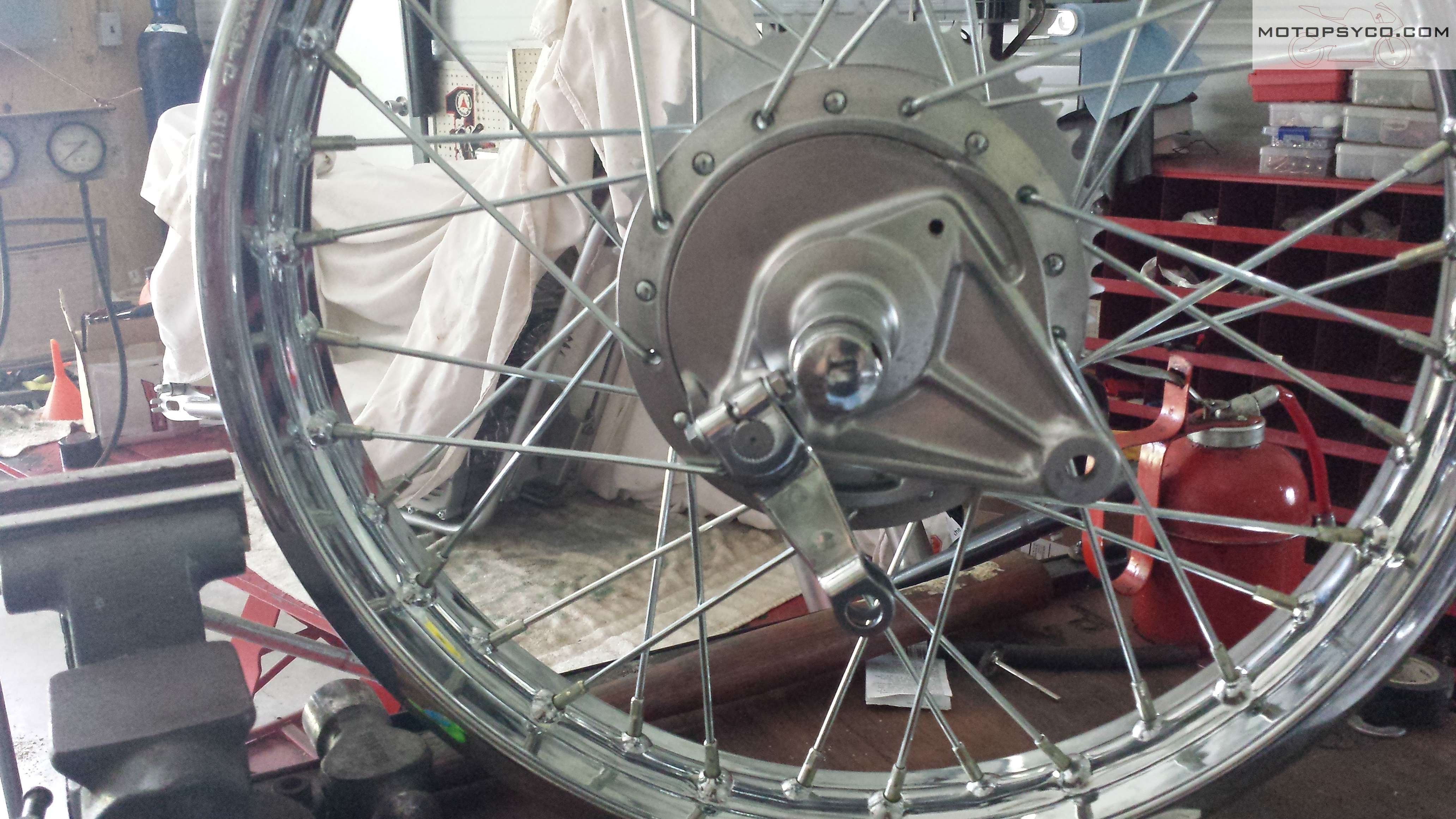
1972 Honda SL100K2  rear wheel before
Don’t forget I do vaporblasting! This is the brake panel that matches this hub.

1972 Honda SL100K2 rear wheel after
new rim new spokes lots of vaporblasting & polishing

Not going full into all details here but this has been one of the most frustrating projects I have ever done. It seems like every other bolt either broke or rounded out & had to be drilled out & replaced. Several replica replacement parts were sourced from overseas that turned out to be such crap that I threw them away and ponied up the cash for real Honda NOS parts. As many original parts as possible have been refurbished and are the subjects of several previous posts here. I’ve even fired up the engine and it runs like a new one.

It really does run as good as it looks!

Last week I put it all together so that I could see what parts and hardware still needed to be ordered. This week I took it back apart so that I can block sand all the sheet metal again and finally get around to spraying the metallic green paint. You’ll see it here first when it’s done.

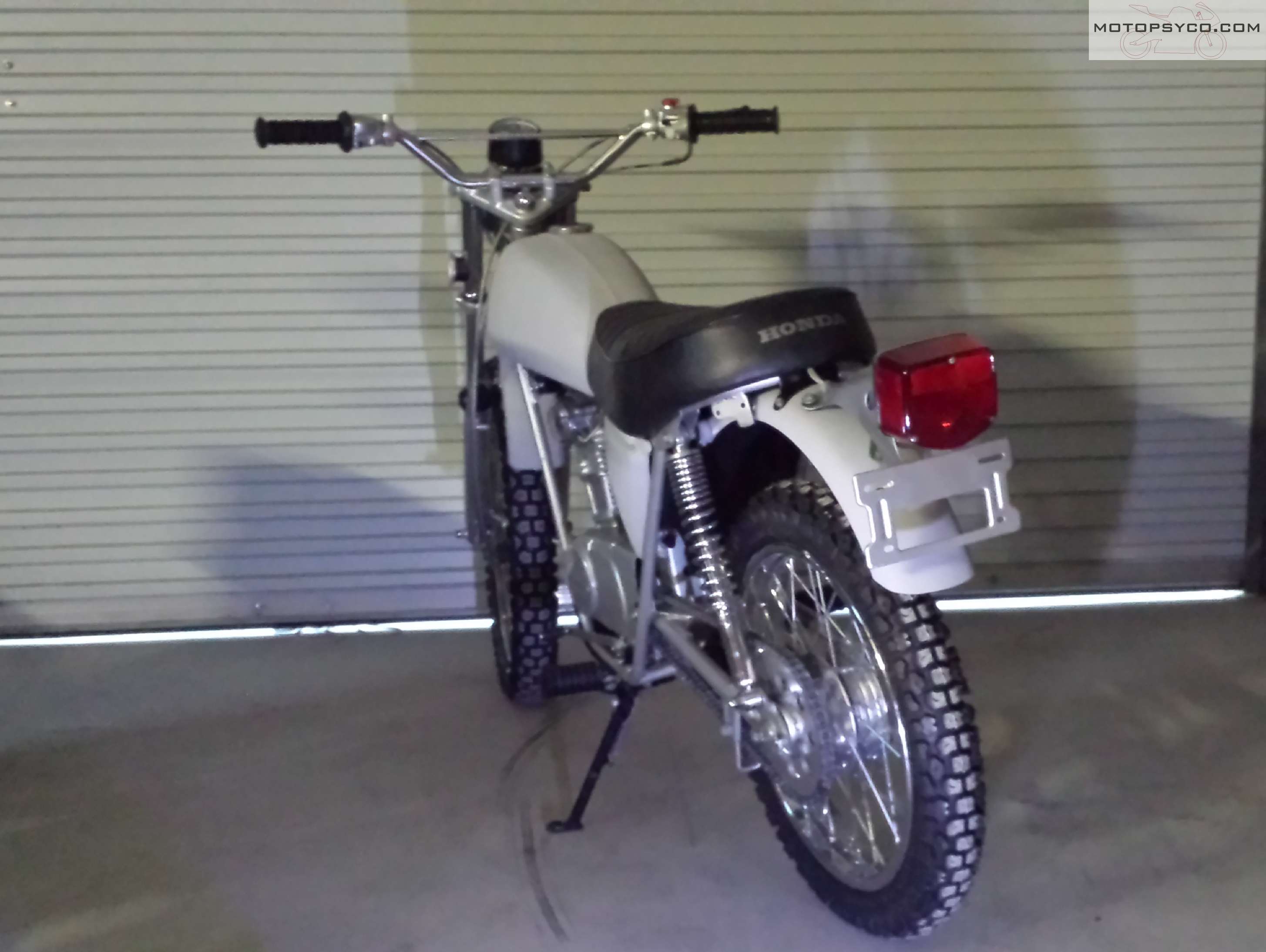
Honda SL100K2 almost done.
Honda SL100K2 rear

Drilling Handlebars for Wiring

A lot of old motorcycles like my old 1972 Honda SL100K2 have their switch gear wiring inside of the handlebars for a nice neat clean appearance. I was actually able to locate a couple of sets of genuine Honda new old stock handlebars but the cheapest set I saw was over $150. Plus a lot of the NOS parts I find tend to have some shelf wear or corrosion on them so I just went ahead & bought a set of nice new reproduction bars without the wiring holes for $50. So this post is going to be about drilling handlebars for wiring. Whether you are try to do an authentic restoration or a sleek custom the basic procedure is the same

Drilling Handlebars for Wiring

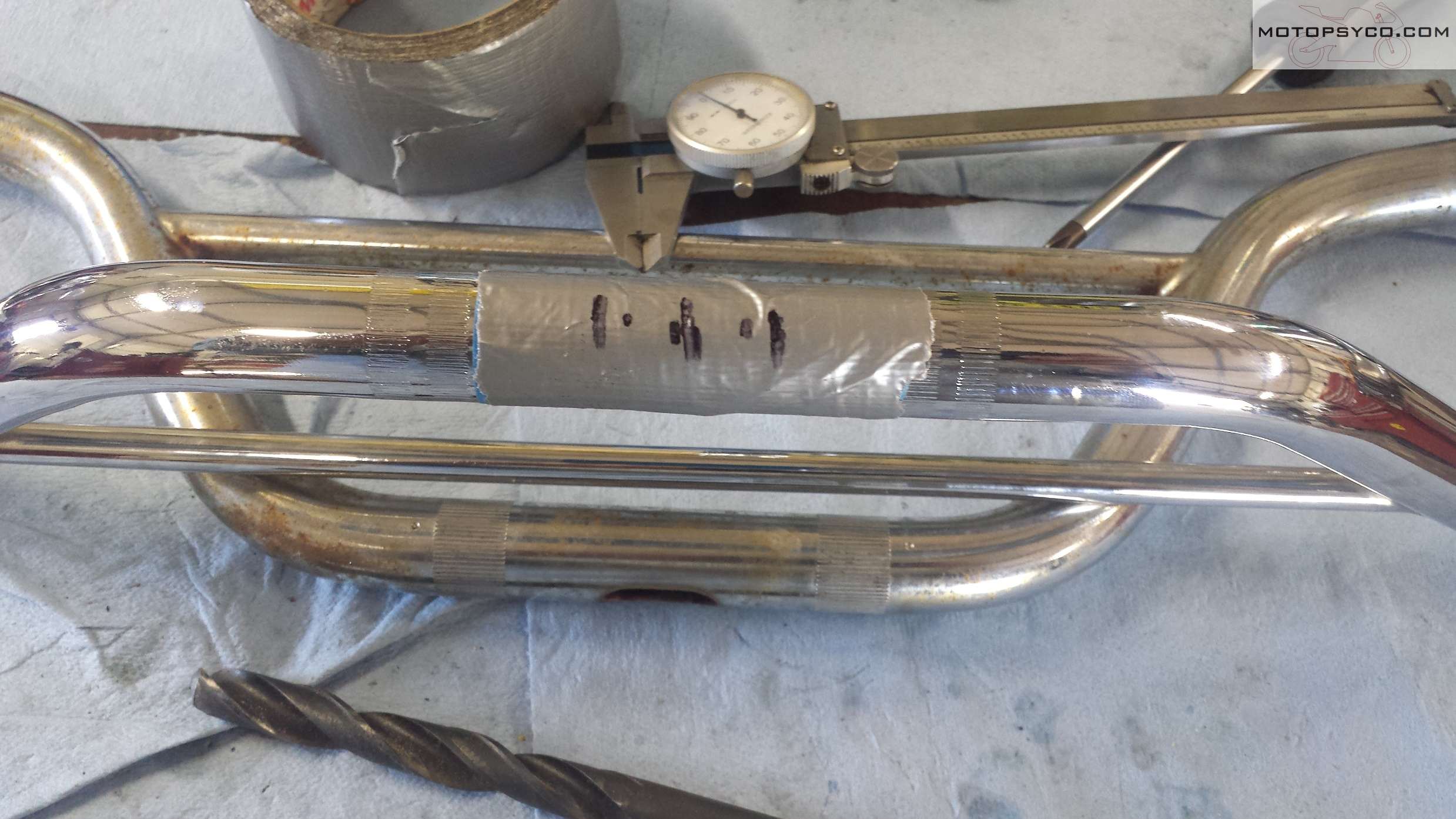
The first step is to determine where the holes & slots should be. These Thailand sourced bars had holes pre-drilled for the switch housing locating pins but they were in the wrong place. Since I was replacing the old but non-original bars I taped them together wile I measured and marked the locations for the new holes and slots. Pay attention to detail while doing this so that you don’t make any mistakes or remove excess metal from your handlebars. A prime example of this is visible on my old handlebars. The left side only needed a hole large enough for the single horn wire but whoever installed them cut a large slot instead. Watch for little things like that.

Drilling Handlebars for Wiring

I like to put a couple of layers or masking tape & duct tape on the areas to be slotted out. This does two things, it makes marking the hole & slot locations easier and protects the handlebar from inadvertent tool marks while you are cutting & grinding the slots.

Drilling Handlebars for Wiring

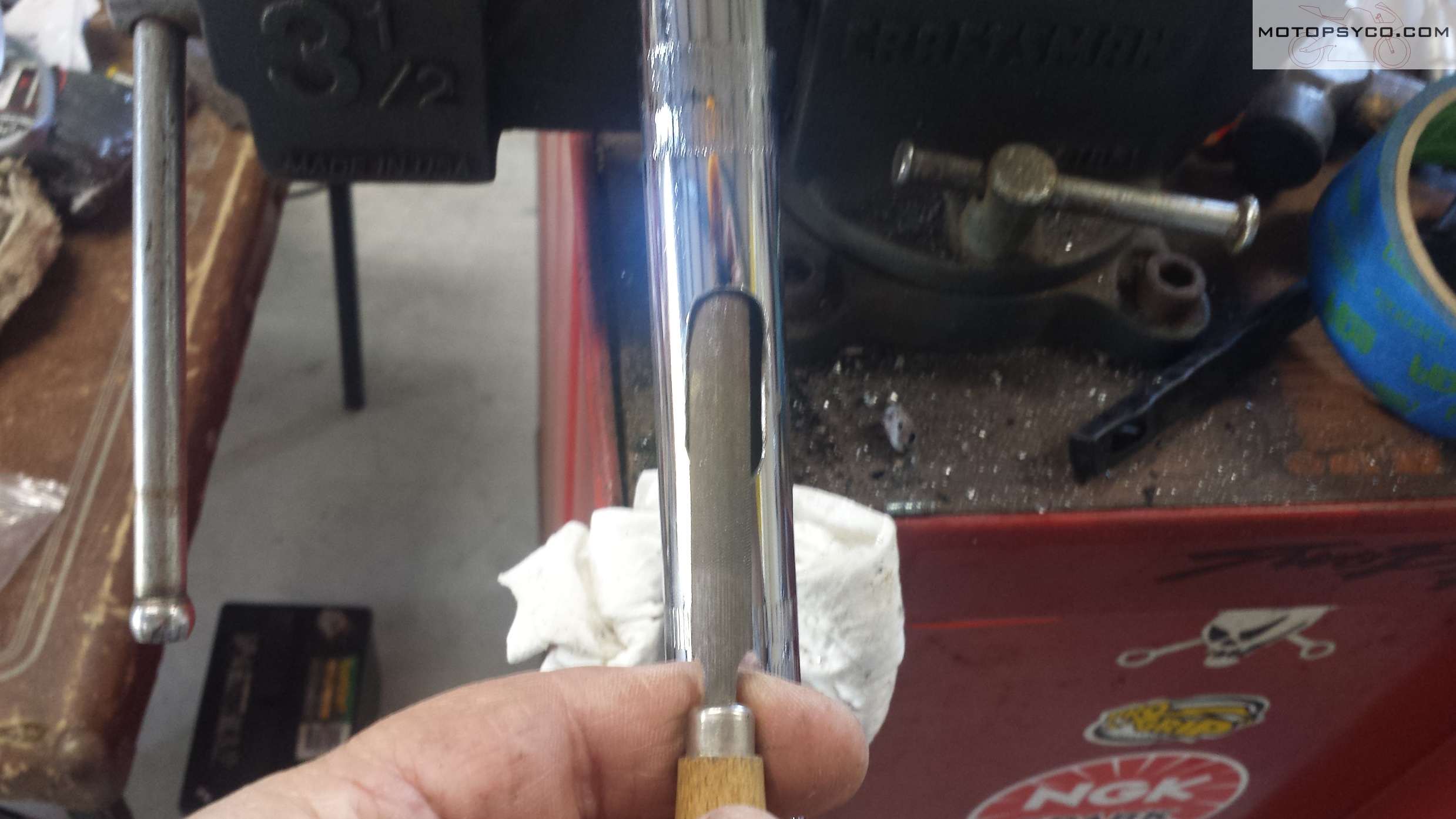
After you get it all laid out & are certain of where you need to drill be sure you use a center punch, otherwise it is nearly impossible to drill a hole straight into a piece of round tubing. For the slots drill a hole of the correct size at each end of the slot & then use a rotary tool or a die grinder with a cut off wheel to cut out the center section. Once that has been done put a small grinding stone or sanding drum on your tool to finish shaping and smoothing the slot. Don’t remove the tape until this step is complete.

Drilling Handlebars for Wiring

Now it’s time to remove the tape, clean up the tape residue & get all of the shavings out of the handlebar. Grab a small file that will fit into your cut outs and go over them one more time to be sure that all burrs & sharp edges that could damage the wires are removed.

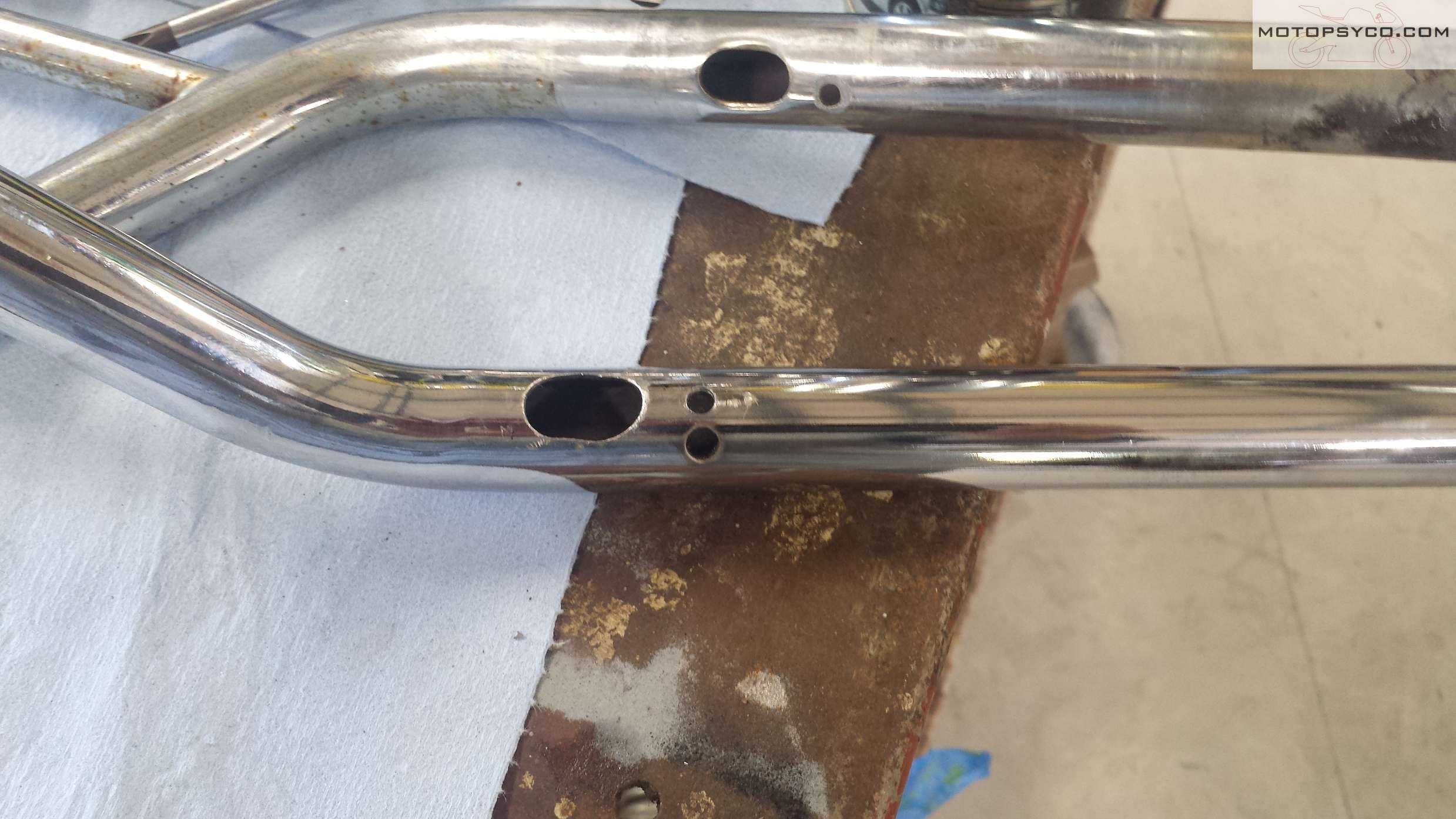
In these next two pictures you can see how I slotted & drilled the left and right ends of the bars.

Drilling Handlebars for Wiring
Right end
Drilling Handlebars for Wiring
left end

Before you pull the wiring through, if you have one piece clutch & brake lever perches be sure to put them back on first. I like to put a piece of string through the bars & tape the wire to it as it is much easier to feed the wiring through if you pull it and push it at the same time. Nonabrasive hand cleaner makes a great lubricant for pulling a thick bundle of wires through a small tube with multiple bends in it. The hand cleaner wipes off easily when you get done.

Drilling Handlebars for Wiring

Once you have it a done, reinstall the bars on your bike and admire your handiwork for a minute or two before you get back to work on the rest of your build. If you have ever thought about drilling handlebars for wiring now you have an idea of what is involved. Just work slowly and carefully so that when you finish it will be a job that you’re proud to say, “I did that myself.”

Drilling Handlebars for Wiring
Pardon the messy shop.

Vapor Blasting NOS Parts

Vapor Blasting NOS Parts

Confession time, on of my favorite things about the whole antique & vintage motorcycle restoration business is hunting down good deals on new old stock parts. It’s astounding what you can find for these old motorcycles sometimes. The  joy of finding these 30, 40, or even 50 plus year old gems is often dulled by the fact that when you get them, they look old. Now this may be fine if you’re replacing parts on an original machine with a bit of patina as they will blend right in. But if you are doing a full restoration this just wont do. Let me give you a couple of examples using some parts that I have recently purchased for my current personal project a 1972 Honda SL100 K2. These will illustrate why I recommend vapor blasting NOS parts. When I removed the fork top bridge from the bike, one of the fork tube clamps had broken completely off. A brand new one was sourced on Ebay for a reasonable price, and this is how it looked when I took it out of the box.

Vapor Blasting NOS Parts

NOS top bridge before vapor blasting.

It’s just a little dull & oxidized, plus it has a little bit of magic marker writing on it. Even though it’s obviously 100% new & unused it still looks old, so I put it through the vapor blaster. 15 minutes later it looked like this (below)

Vapor Blasting NOS Parts

NOS top bridge after vapor blasting.

Vapor blasting NOS parts does not give them a polished finish. What it does is restore the aluminum so that it looks like it was freshly cast. Because this process has a light peening effect it closes the pores on the aluminum so that it stays cleaner longer. No clear coat is needed just occasional cleaning.

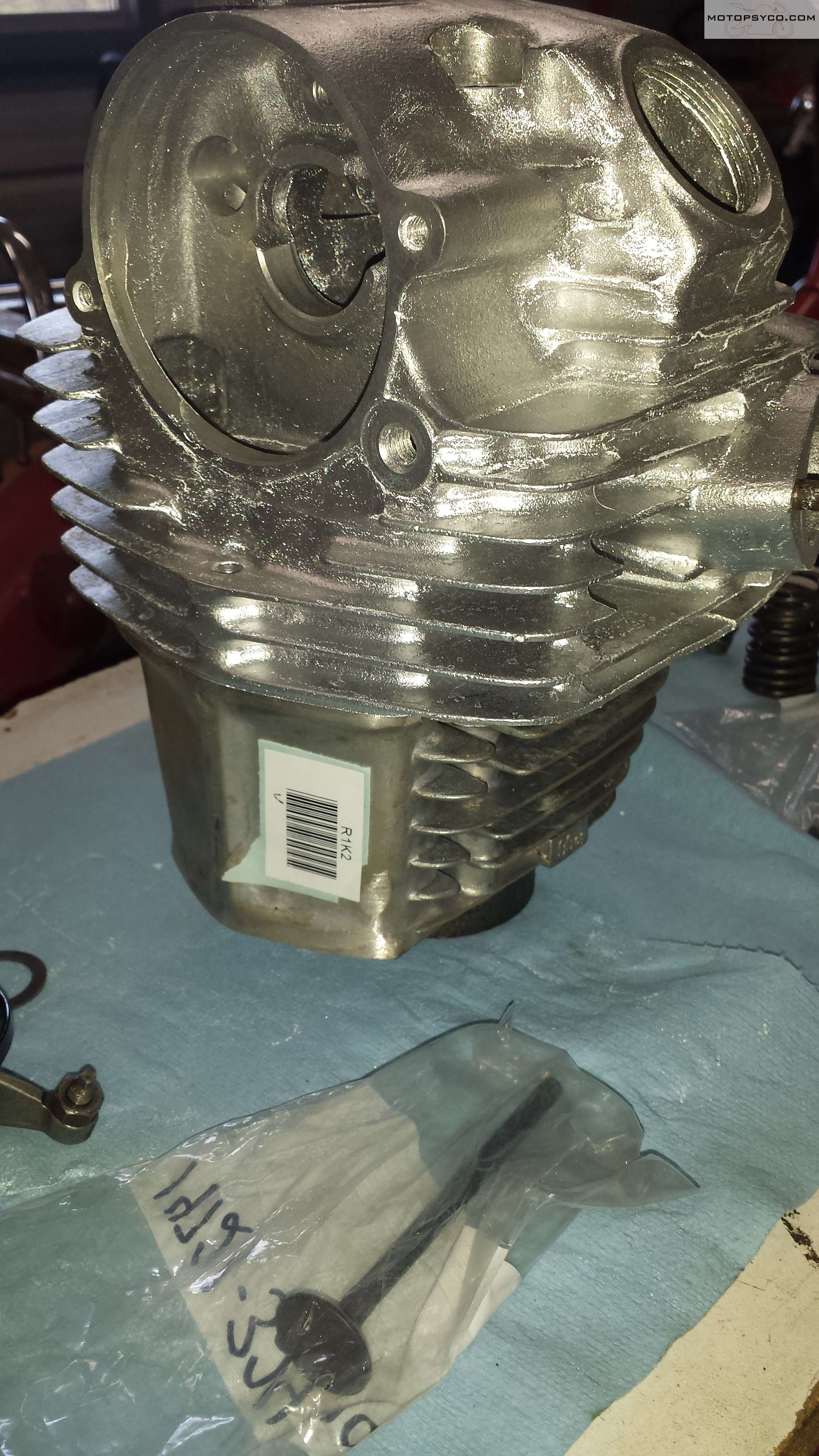
Here’s another example, a freshly vapor blasted cylinder head sitting on top of a brand new old stock cylinder. The new cylinder looks positively dull & dirty compared to the head, so after I finished all my clean up honing, ring gap checking etc. I ran the cylinder through my vapor blaster to clean up the appearance of it.

Vapor Blastin NOS Parts

NOS SL100 cylinder before vapor blasting.

If you look at the assembled engine below you can see how much better the cylinder looks and how well it matches the rest of the bare aluminum parts on this engine.

Vapor Blasting NOS Parts

Complete SL100 engine after vapor blasting.

Seriously if you’re performing a restoration on a motorcycle and you are not happy with the appearance of your new old stock aluminum parts find a shop near you that does vapor blasting.

Emblem & Badge Refurbishment

Author’s Note; Emblem & Badge Refurbishment originally appeared in the Vintage Japanese Motorcycle magazine earlier in 2017.

There are quite a few different methods you can use to restore motorcycle emblems that have paint that needs refinishing. You can repaint them by hand using small artist’s brushes. I have even spray painted tank badges using a solvent soaked rag on a sanding block to remove the paint from the high points of the lettering after spraying on the paint. Of course masking off the different colored areas was a pain.

Recently I learned of a much easier way to quickly and inexpensively refresh your tired looking motorcycle emblems & badges. To give credit where credit is due, I learned of this technique in a post to the Vintage Japanese Motorcycle Club’s Facebook page by Toby Jones in which he spoke of using paint markers from a welding supply house and posted a couple of examples that looked really good. I’d like to say thank you Toby for sharing.

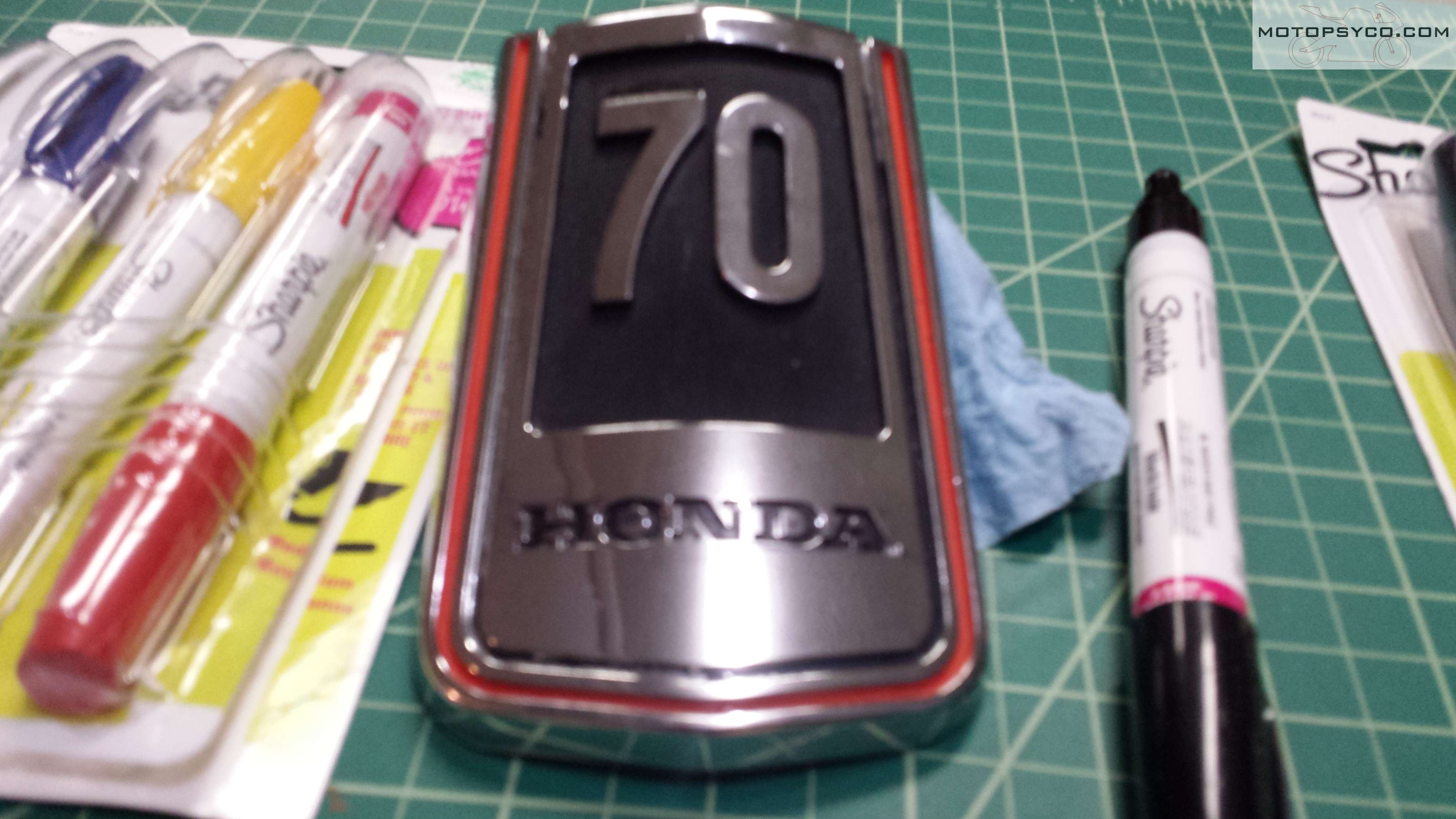
For this article I’m using the front cover badge of my C70 Passport as a Guinea pig to try this technique. The chrome on this part stilled looked good, but the long exposure to the elements had resulted in the paint flaking out of the lettering and accent lines.

C70 badges before

C70 badges before


Start by gathering up your supplies, you’ll need oil paint markers, a couple of shop towels, and little bit of odorless paint thinner. For this job I used artist paint markers but you can also get them from welding supply houses. My reason for using odorless paint thinner is that I did this in the house but if you’re working outside you can use whatever paint thinner you have.


Open up the marker and color in the areas that need paint just as if you were a kid playing with a coloring book. Have a shop towel handy with a small amount of thinner on it, not soaking wet, and every minute or so stop and wipe off any paint that has stuck to the chrome outside of the lettering.  Be sure to wipe frequently because it will make the paint harder to remove from the wrong places if you let it dry.

When completed, let it dry, and them wipe over the whole thing with a clean shop rag and reinstall it on your bike and enjoy the vast improvement in its looks.

After emblem & badge refurbishment

After emblem & badge refurbishment


Prime Day – Prime Membership $3 bounty

My Interview With the NHProequip blog

Last week I did an interview with Amy Carmosino, a pro blogger who writes for the Clark Heintz Tools blog. If you are interested you can go check it out here;

Interview With Floyd Finch, Motorcycle Restoration Hobbyist