Project 333 Epilogue

I apologize that I never came back with the finished pictures of Project 333 but I did finish it along with a few others that I haven’t told you about yet. When I started that project at the beginning of 2020 I had no clue of the craziness that was about to overtake the world in a few months.

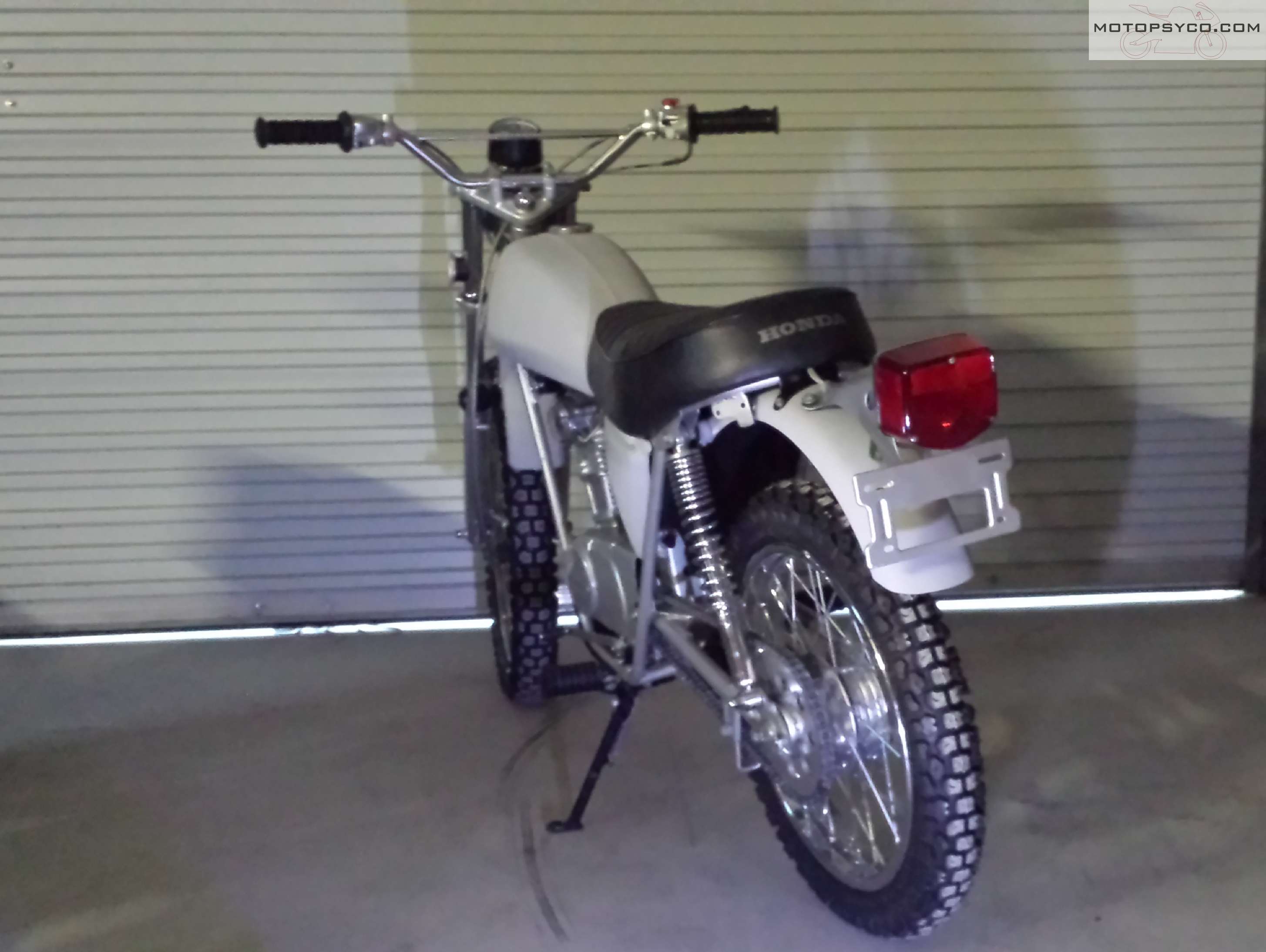
Custom 1964 Honda C200

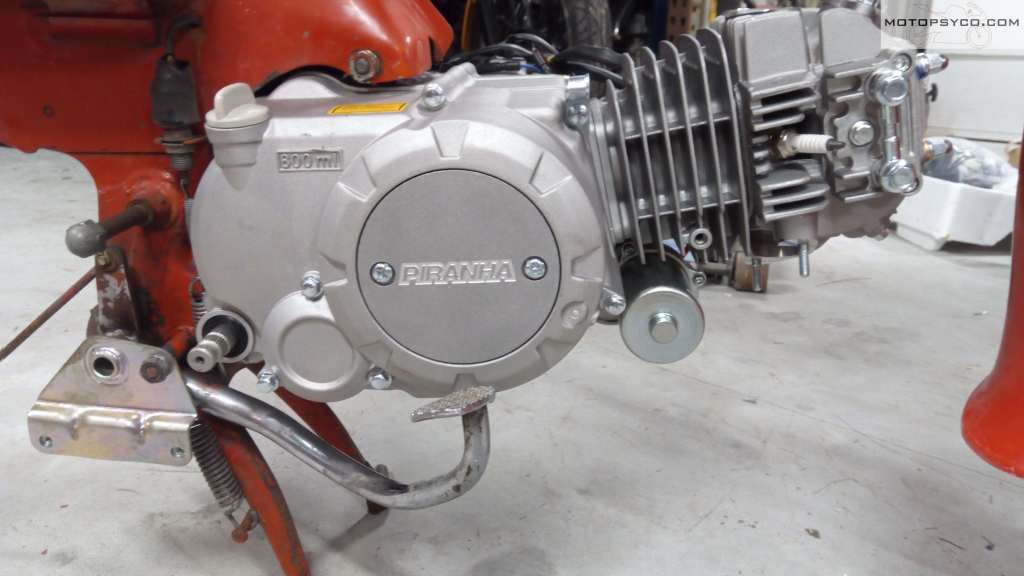
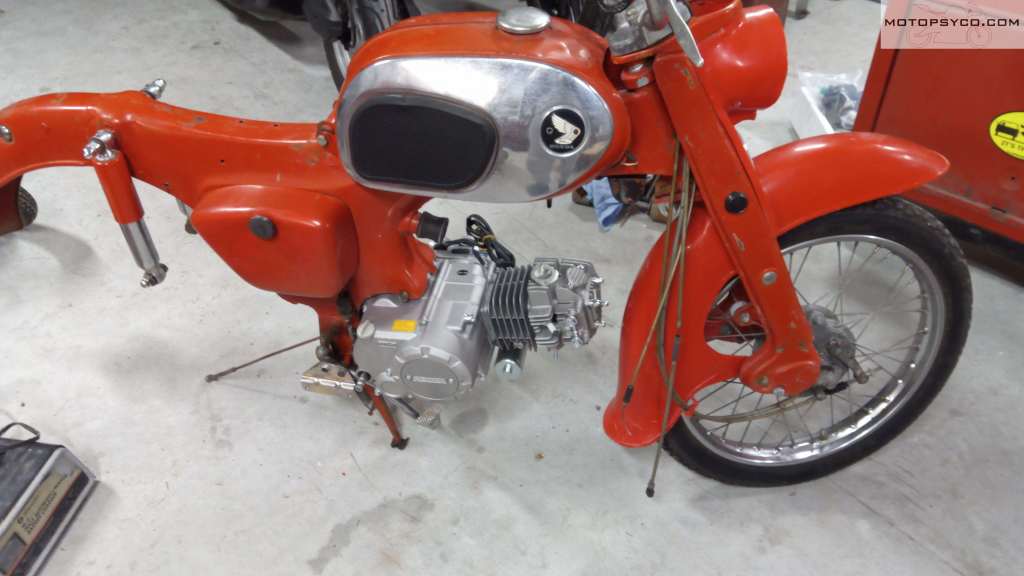
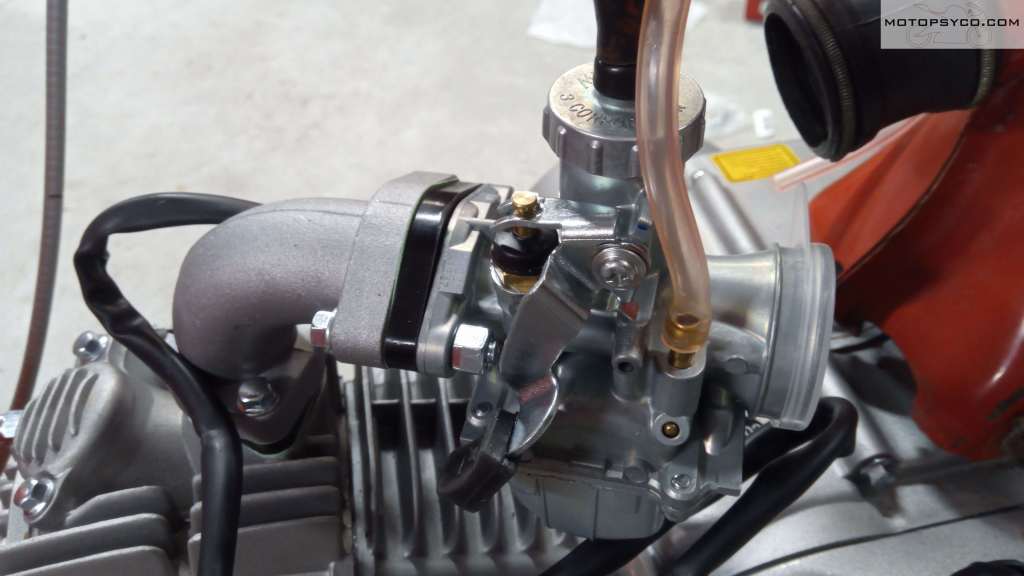
Let me say if you need an engine for a custom project like this I highly recommend the Piranha 140cc engines they’re powerful and reliable. It was very easy to install and wire up. The single biggest issue I had was that I wanted to feed the carburetor from the stock air intake so I had to purchase the correct adapter to orient the carburetor to reach the stock Honda C200 air intake. It wasn’t a perfect fit but it was good.

carburetor location

Here you can see how much I had to move the carb.

Some cheap control switches and a reasonably priced reproduction seat from Ebay worked out great. I just built a complete custom wiring harness and made the whole thing 12 volts dc so that I could run a lithium battery and LED lighting.

A drag pipe was sourced from Beatrice Cycle for a mean and meaty sound!

At the rear I added a hot rod “Model A” taillight.

custom 64 Honda C200

Hot Rod style taillight on 64 Honda Project 333

In the end this build ended up being a ton of fun to ride, and with it’s clean vintage looks really turned heads too. It was a great little neighborhood blaster that accelerated quickly up to it’s maximum speed of 45 mph. Some motorcycles just really do become more than the sum of their parts and this was one of them.

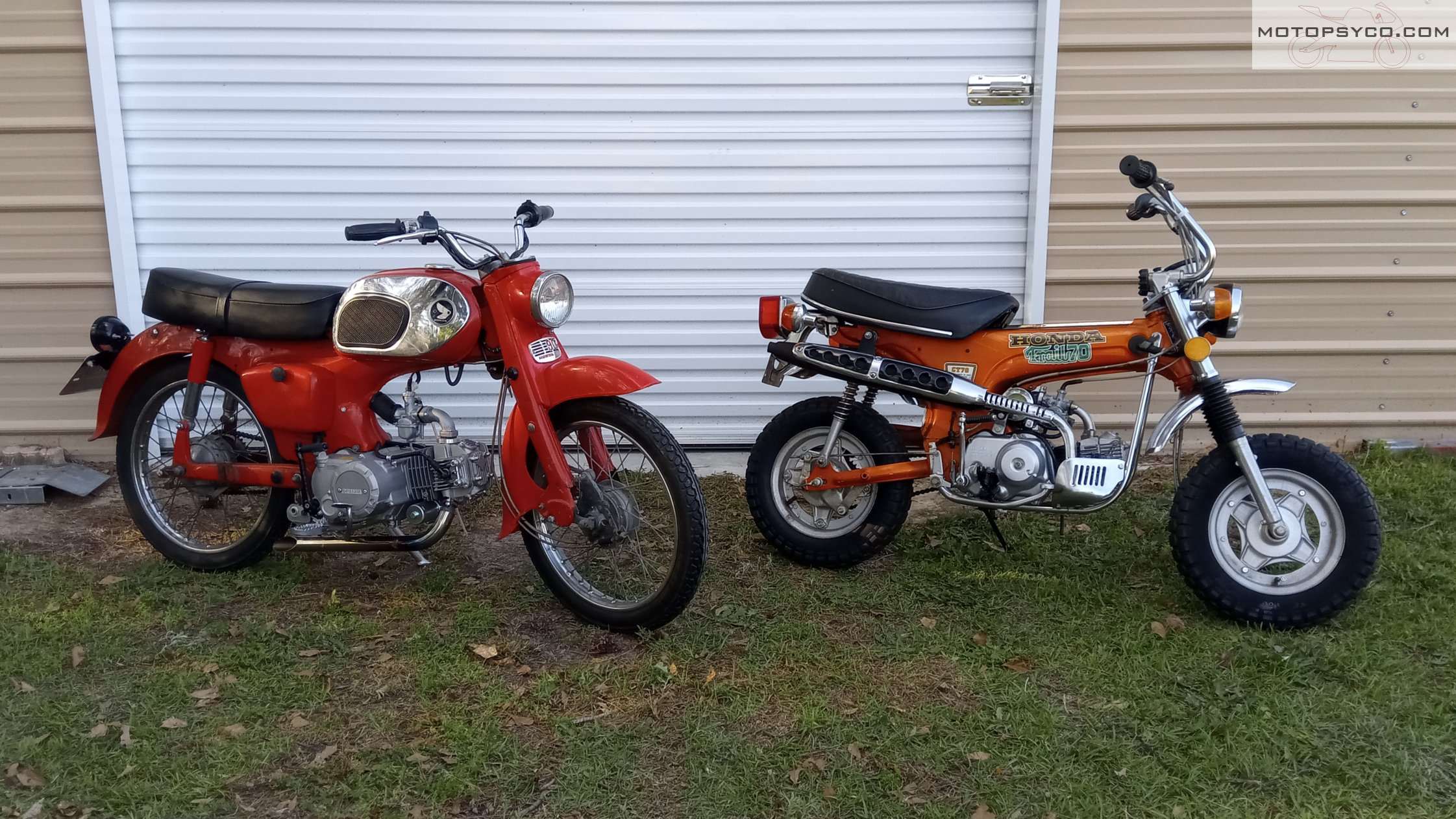
c200 & ct70

Project 333 next to a pure stock CT70 that I finished,

Too bad that the 2020 Barber Small Bore Festival was canceled. I was just going to save it for 2021 but wound up trading it for a 1998 Triumph Adventurer 900. More on that later.

Triumph Adventurer 900

1998 Triumph Adventurer future custom project.

The whole corona virus episode really threw everyone’s plans for everything for a loop. Unlike a lot of people my employment situation did not change, being employed in an essential industry I never missed a single day of work and was never told to work from home. Between that and working on other peoples motorcycles I’ve been busier than ever before.

Motopsyco World HQ

One great blessing is that we finally sold our previous home and moved into a new place that has a much bigger house and shop. So I’m writing my first blog post of 2022 from my new office in Hartsville, S.C. and look forward to the coming year.

Riding the Honda Rebel 1100 DCT!

Honda Rebel 1100 cover

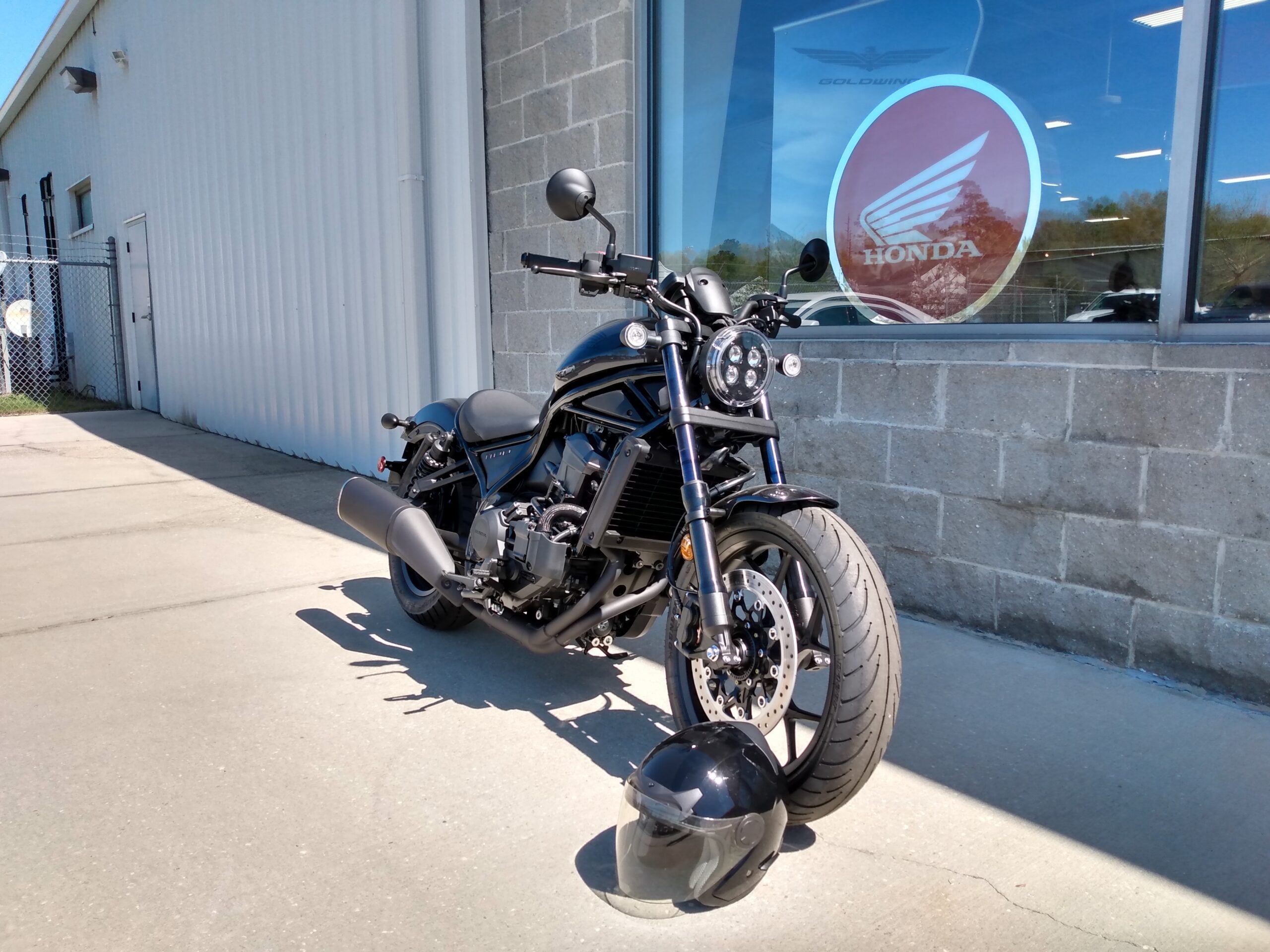
Honda Rebel 1100

It was a cool Friday morning, I was giving our 2001 Honda Helix a major tune up and oil change and needed to pick up a new spark plug plus order a few other parts so I ran over to my local dealer Generation 3 Powersports in Florence S.C. and that’s when I first saw the new Honda Rebel 1100 in real space.

Late last year Honda announced that they were going to be selling an 1100cc Rebel cruiser and I’ve started watching it with interest and immediately decided that if I got the chance to I was going to ride one. It turns out that my friends over at G3 had one in stock, better yet it was the DCT model. So I took a seat on it and the senior owner Don came over and held it up for me to put my feet up on the pegs and see how I fit on it. For me the fit was very good, with my 29” inseam my knees were right at a 90 degree angle and nestled up to the tank in a good location. When I mentioned that I have been wanting to ride one he informed me that he had this one set up for demo rides and I immediately jumped at the chance to take it out.

Honda Rebel 1100 DCT test ride

I’ve ridden several of the old Hondamatic motorcycles of the late 70’s and early 80’s and enjoyed them a lot, of course on that day, when I went to the dealer, I was getting parts for my 250cc scooter that has a CVT transmission so unlike a lot of people I have no problem with the thought of riding a motorcycle with an automatic transmission. Honda’s dual clutch transmission has been out for a while now and has proven to be a reliable system that works well in the NCT700, Goldwing and Africa Twin motorcycles. Unlike a CVT which uses a belt sliding between variable pulleys to infinitely adjust speed the DCT is an actual gearbox with the shifting controlled by an ECU that actually learns your riding style and adapts to it.

Honda Rebel 1100 dark

Let’s talk about the motorcycle and the riding experience for a bit. For a cruiser the styling of the current Rebels is unconventional, Honda chose to plot their own path with parallel twin engines and modern industrial styling. The 1100cc parallel twin engine is much better than any v-twin powerplant in terms of power per cc and smoothness. Plus it’s different, some might not like it but I prefer my Japanese cruisers to be distinctly Japanese and all of the newer Rebels fit the bill. The blacked out styling is distinctively different from the typical shiny cruiser style, but is definitely modern and contemporary.

Like every modern fuel injected motorcycle the engine fires right up and settles into a nice muted idle. The rhythm of the exhaust note is not a lumpy idle like a v-twin but a steady staccato beat. It’s a little quiet but not too quiet. The engine revs quickly and eagerly in a way no old school v-twin like my Shadow ACE 1100 can match. There are selectable ride modes but for my test I just left it in standard, my goal was to experience the motorcycle not the electronics. I do like the factory cruise control a feature normally found only on 900 pound luxury touring motorcycles. With a total weight of 505 U.S. pounds fully fueled for the DCT model, (slightly less for the manual transmission version), the Rebel 1100 is a pleasantly light weight motorcycle to have such features.

Honda Rebel 1100 headlight

Lifting it up off the kickstand the first impression is that Rebel 1100 feels much lighter than 500 pounds. The handlebars are just like the old superbike bars we all used to put on our bikes back in the eighties, you lean forward just a little bit to reach them, which is a super comfy position for me. I thumbed the button to put it in drive and made a couple of laps of the parking lot to see how the initial acceleration and braking felt before heading out on the road. It’s a bit of a weird sensation sitting on a motorcycle and not having a clutch handle. You can manually shift using push buttons on the left handlebar but I deliberately did not do that. The buttons are there if you want to play with them but much like the paddle shifters in my wife’s car I suspect most people will play with them a time or two and then never touch them again.

Honda Rebel 1100 foot controls

Styling foot controls

Pulling out onto the road and cruising felt great, kind of like riding an old CB400F but with a lower seat and triple the horsepower. Some test riders may not have liked it but under acceleration the DCT always picked the right shift points for me. While I didn’t do any performance testing once I got clear of town I did whack the throttle hard for a quick run from 35 to 70 mph and the gearbox responded exactly like it should have. The front end felt light and it accelerated hard. Now I understand why it has electronic wheelie control, the Rebel 1100 engine is that good. Many have criticized the fact that it lost a few horses compared to the Africa Twin that this engine was derived from, but in the real world you’ll never notice the difference.

I didn’t get to any real twisty roads just a few city street corners and a couple of nice two lane sweepers but that was enough to tell me that the Rebel 1100 handled much better than any other cruiser that I’ve ridden including the 2017 Guzzi V9 that I recently sold. A really good rider on a Rebel will spank an average rider on a sport-bike with no problem. I love my vintage motorcycles but I have to admit these modern machines are truly marvelous and I may have to give buying another new one some serious thought.

You might think that a bike with such a low seat height of 27 and ½ inches would be a rough ride but in this case you would be wrong. The Rebel 1100 and I rode through a few intersections with some seriously rippled pavement and horrible patchwork and the ride felt just fine. One of the things that has turned me off of new bikes is that the new ones I have purchased always seemed to need either a replacement seat and/or shocks to be comfortable. This one has nice suspension including Showa rear shocks with piggyback reservoirs that work very well just as they are.

Braking is good, the ABS system works unobtrusively and provides great stopping ability. Which will be reassuring for those times when the DCT system doesn’t downshift when you think it should, on up-shifts I always felt that the DCT shifted at the right time and held the right gear for the right length of time to match what I was trying to do. Once or twice the downshift didn’t occur when I wanted it to but after we got used to each other, things smoothed out. You should be aware of this little quirk but do not let it stop you from buying a Honda with a dual clutch transmission if you want one, once you get used to it, everything becomes seamless.

Badass Honda Rebel 1100

When you think of a Honda Rebel you probably think of the cute little 250 beginner bikes that were a staple of riding schools everywhere for decades. These were finally superseded by the current generation of 300 and 500 Rebels that the Rebel 1100 is descended from. Yet the Rebel 1100 is not really a beginners bike. With it’s light weight and low seat height it could be, but the power and handling it has are more than enough to keep an experienced rider happy. This is the maximum Rebel for the rider whose skill has outgrown the smaller Rebels but not their inseam. It’s a serious motorcycle for serious riders who just happen to have outgrown the smaller Rebels or who want a cruiser style ride but not another big, heavy and slow chrome plated v-twin motorcycle.

If I bought a Rebel 1100, which is a distinct possibility, it would get the touring accessories and passenger accommodations before it left the dealer. The first thing I’d do is take it out for a nice 2-300 mile ride just to get used to it. The next thing I’d do would be to strap it to my work table, take a few measurements and then fire up the Solidworks CAD software and design some cool one of a kind custom parts for it.

The Honda Rebel 1100 is one of those rare motorcycles that I can unconditionally recommend to everyone who is comfortable sitting on it, at my 5’-10” height, it is a great fit for me, rides well, handles great, has plenty of power and best of all is available with Honda’s dual clutch transmission if you want it.

Whether you opt for the 6 speed manual or the DCT automatic the Honda Rebel 1100 is a great real world motorcycle for real motorcyclists.

Honda Rebel 1100 rear

Moto Guzzi V9 Roamer

The three thousand mile good, bad & ugly review

Moto Guzzi V9 Roamer

Just got home from the very first ride!

In March of 2019 I took delivery of my Moto Guzzi V9 Roamer a leftover 2017 model in the color dubbed “Giallo Solare” (solar yellow) for years now I’ve wanted a Guzzi but have never bought one. Truth be told I really wanted an old Eldorado, Ambassador or even one of the old 850T models, but for some reasons the stars never aligned correctly for that to happen.

It started with a Honda CTX1300

That is correct, my path to owning a Moto Guzzi V9 Roamer began with me drooling over a used Honda CTX1300. To be honest with you there are times when I wish I had the Honda but this is not due to quality or reliability issues. For some reason my wife who is usually an agreeable soul put her foot down and insisted that I was not going to spend that much money on a used motorcycle, especially one she had never heard me mention before. Her words were, “if you’re going to do this why don’t you get something you’ve always wanted.”

Triumph Street Twin vs Moto Guzzi V9 Roamer

These were the two bikes that I was considering and in all honesty the choice really came down which one was the most unusual. Both the Triumph Street Twin and the Guzzi V9 were well regarded by most reviewers. The engine sizes are similar, both are considered retro standards and both of them are “tuned for torque.” I’ve always regarded the tuned for torque statement as bullshit marketing doublespeak for we cut the horsepower and we hope you don’t notice, but now that I’ve ridden the Guzzi  I really like it. Peak torque comes in way down low in the rpm range and it literally pulls like a freight train up to the redline. It’s really not fast like the screaming Japanese fours that I was used to, but it feels a lot more powerful than it is. Why would I pick the Roamer over the V9 Bobber? Because I like the bright colors and chrome look. It screams 1970’s whereas the Bobber with its fat tires on both ends and matte paint say modern day hipster. Nothing wrong with that if you like it but I’m an eccentric old fart and this is an eccentric gentleman’s motorcycle. Lots of people think it’s a restoration and are shocked to find out that it is nearly new.

Pitfalls of purchasing online from out of state

There were no dealers in my home state of South Carolina at the time when I purchased this one on Ebay, from a dealer in Wisconsin. Shipping was handled by Haulbikes.com and rates were reasonable. One thing I will mention is that shipping companies like this cannot come down to the cul de sac in your neighborhood you’ll need to make arrangements to meet them somewhere with a large enough parking lot to get the tractor trailer parked off the road so that your bike can be unloaded safely.

What turned out to be the biggest problem is the fact that I decided, instead of paying cash for it, that I’d let the dealer do financing for me. Unfortunately their home state of Wisconsin requires the dealerships to send all titles directly to the bank. Unfortunately the bank turned out to be incredibly incompetent and would not help me to get the bike registered for the road in S.C. Finally after 2 months of not being able to register my new bike I went ahead & paid off the loan, even then it took a complaint to the BBB to finally get my title sent to me. If you decide to go online to purchase a vehicle I suggest paying cash up front, or if you really need financing that you obtain it in your home state to avoid registration problems.

Let us praise the good (looks &handling)

Among  Guzzista the looks of the V9 series are polarizing with the vast majority preferring the sportier looks of the V7 lineup. The general public on the other hand thinks this bike is gorgeous, especially the non-riding people or even those who have ridden motorcycle but have never heard of Moto Guzzi. The styling is what I would call cruising standard. The shape of the tank sort of resembles the old 850 T3 of the 70s but is smaller in proportion to the rest of the motorcycle than the T3 tank is. The quality of the fit and finish of the visible parts is stunning. The yellow paint has a heavy orange tint to it that appears golden in dim light.

The size and weight of this bike are perfect to me with a wet weight of approximately 440 lbs (200 kg) the Moto Guzzi V9 Roamer is very easy to handle at low speeds in parking lots and garages. Despite its relatively light weight for a midsize modern motorcycle the Roamer is very resistant to the effects of crosswinds and rainstorms. My experience with new bikes is extremely limited but compared to all the old stuff I’ve ridden the V9 is very confidence inspiring when the rain starts. It is a very mild mannered motorcycle this combined with traction control and Brembo anti-lock brakes provide you with a stable planted feel when the road gets a little wet.
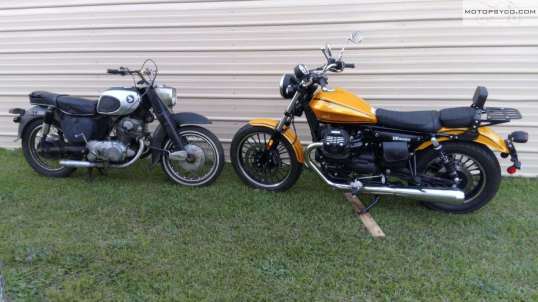
Dream and Guzzi

The Guzzi with my 64 Honda Dream

All the Ricky racer boys who write for the magazines were not enamored with the handling and I understand, if I were riding around on all the latest crotch rockets I would probably feel the same way. I was using a modified 1980 Honda CB650 as my main daily rider and the handling and braking of the Roamer are much better than any vintage bike or cruiser that I’ve ever ridden. That being said the little Japanese 650cc 4 banger will smoke the 850cc V-twin easily in both acceleration and top speed, it’s not even close. Speed is not what this bike is about though, it’s about having a vintage motorcycle experience without the vintage motorcycle headaches. A lot of people on the various Guzzi forums recommended dropping the triple clamps down on the forks by 20mm to quicken up the steering so I tried it at it did seem to help once I put some decent shocks on the rear & lifted the rear back up. One very impressive specification of the Moto Guzzi V9 Roamer is that in the owner’s manual, maximum carrying load is listed at 925.94 lbs (420 kg) for rider passenger & luggage. This was partially responsible for me choosing this motorcycle and for my delusion that I could at least modify it into a usable middleweight touring machine. Don’t laugh my wife & I routinely ride 2-300 miles a day on our Honda Helix CN250 scooter, so surely it should be possible on an 850cc motorcycle right?

Let’s get down to the bad

The handling was really good to me even with the 100% stock suspension as long as you were on smooth pavement that is. The front end seemed okay with decent travel & rebound but the rear suspension was incredibly harsh. I finally set the preload at the lowest setting possible but all this did was to lower the rear of the bike enough to negate the benefits of lowering the front end for quicker steering. It would still beat the living shit out of you even over mild bumps. I do not know about the latest models but if you buy an earlier model like I did you should go ahead & budget for a new set of shocks immediately. I purchased a set of Ikon shock absorbers and I am very happy with them. This smoothed out the ride over bumps and actually improved the handling and allowed me to set the preload back to its maximum setting, raising the rear of the bike back up to where I like it. Before I changed the shocks my wife actually refused to ride on the Roamer at all due to the intense pain she felt even over seemingly small bumps and potholes.
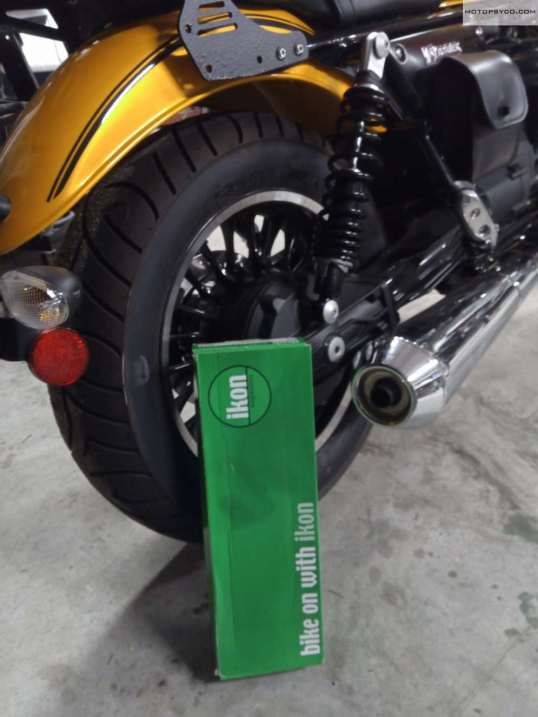
Moto Guzzi V9 Roamer Ikon

Ikon shocks work really well.

If you need dealer support for basic maintenance this might not be the bike for you unless you happen to live near a dealer. I’d have to drive 3 or 4 hours to reach a dealer, but I can do all of my own oil changes, valve adjustments and repairs myself. Other than needing some software & a set of cables to connect your laptop to diagnose the fuel injection this is an extremely easy motorcycle to work on. The fuel injection isn’t that complicated either just join the Wild Goose Chase forum and search for Guzzidiag software, it’s simple enough an old fart like me can use it. If worst comes to worst custom builder Craig Rodsmith has proven that you can make it run with carburetors.

I wish the fuel tank were a little bigger but that’s a minor niggle, the low fuel light comes on when you’ve used 2.5 gallons out of the 4 gallon tank. This is roughly 150 miles and you’ll probably be ready for a break by then.

The effin ugly
Moto Guzzi V9 Roamer

The original factory seats on these motorcycles are instruments of torture. It’s almost like when they were finalizing the design someone plopped a cheap old plastic 1980s skateboard deck on top of the frame and said that looks cool, we’ll just add 6mm worth of padding and cover it with Naugahyde and we have us a seat. It really does look cool but it’s an awful place to sit for more than 10 minutes and it’s way too short for two up riding even if your passenger is a tiny 108 lb. wisp of a person like mine is. My pre-purchase research had warned me about the seat before I bought the bike but I was still caught off guard by how bad it was in real life. I’m now running the Moto Guzzi two piece, two up comfort seat which is much more comfortable. Too bad that is not really good enough, even the accessory seat is only a 150 mile seat at best as our last 300 mile in one day trip proved to us. If I keep this bike much longer I’ll try a Corbin seat. Corbin doesn’t really list a seat for the Roamer but they do have one for the V9 Bobber and the factory seats are interchangeable so I don’t see why an aftermarket seat for one wouldn’t work on the other.

I love / hate this motorcycle

It looks good, it sounds good too, and even with the stock pipes I could sit in the garage and listen to it idle for hours. The small gas tank that so many complain about, allows the engine to take its place as the rightful star of the show. A guy at a gas station once commented, “it looks like its all motor!”  I agree it does have a very muscular look and sound for a 55 hp v-twin. Now that I’ve got the suspension sorted out to my liking nothing beats riding around on the back roads with it. The engine really is the greatest thing about this motorcycle. The six speed gear box is very smooth also and well matched to the engine. If you’re putting around in town between 30-45 mph just put it in fourth and leave it there, bombing around out in the country between 45 and 60 fifth gear is the one to be in. I won’t even put it in sixth gear at less than 60 mph. You don’t gain anything but a little more vibration on the handlebars, fuel mileage stays the same and you’re not in the meat of the engines torque curve if you need sudden acceleration for some reason. Torque is massive and acceleration is much better than the spec sheets would indicate.

Unfortunately I bought the wrong motorcycle. As far as I can tell this will never be a comfortable 2 -300 miles a day motorcycle without some major modifications. We just ride the Helix if our destination is more than an hour away. I guess I should have bought a touring bike but I really hate big heavy motorcycles and would give up riding if that was all that was available. Plus I know from experience that you can do very long rides on smaller motorcycles.
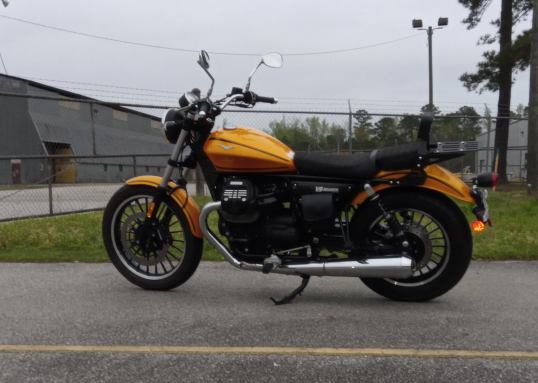
Moto Guzzi V9 Roamer

A fantastic commuter!

So what do I do with it now? With the previously mentioned seat & shock mods the Moto Guzzi V9 Roamer is a top notch commuter bike. You want a bike night attention getter that handles decently on the back roads, a bar hopper or just something to ride around locally? This is the bike for you and I’m enjoying it in all of these roles except for bar hopping because I don’t go to bars.
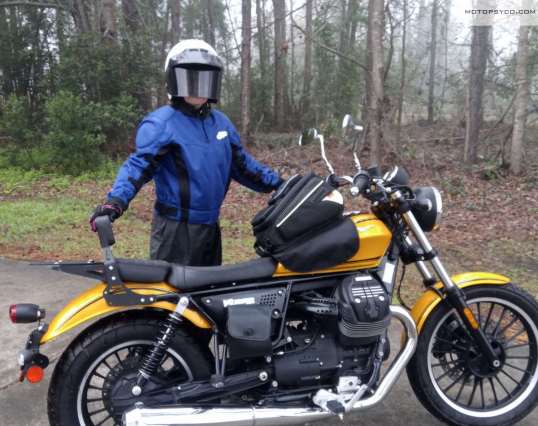
ready to tour?

Going out for a long ride on the Moto Guzzi V9 Roamer

Back in March of 2020 Mrs. Psyco & I took the Roamer on a 300 mile one day trip. The first half wasn’t too bad but even though we had a break for a couple of hours the ride home took its toll on us. Around the 225 mile mark my lower extremities were numb and I knew that neither one of us would be able to move when we got home. At this point I decided that this pile of shit was going on Ebay the minute I got home but then it saved our life.

We were buzzing down S.C.  Highway 34 between Newberry and Camden S.C.  at 6o mph or so, following behind a big black bro-dozer Chevy pickup, when suddenly the driver made a sudden right turn into a driveway and then without warning threw it into reverse and backed out in front of me without looking. There was no time to stop before hitting the huge four door mall terrain vehicle that had suddenly blocked both lanes of the 2 lane road we were on. Fortunately there was no oncoming traffic, road signs or mail boxes in the area so I twisted the throttle some more, banked hard to the left and was able to safely pass the rear bumper of this truck on the shoulder on the opposite side of the road from where I started. Thankfully no nasty surprises were lurking in the grass on the shoulder & I was able to slow down and safely merge back onto the road. When we stopped to steady our nerves my wife swore that she could feel the trailer hitch brush her pants leg as we went by. Thanks be to God that we didn’t get hurt that day. That was also when I decided to keep the Guzzi a little while longer. If we had been on any other bike in my collection, especially the scooter we would have been hamburger stuck to the side of that bro-dozer.
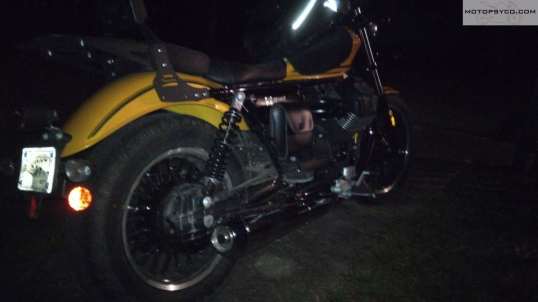
muddyMoto Guzzi

Filthy motorcycle at the end of a long day.

Even so it was about 2 weeks before I got back on it or even washed it (we ran through a few miles of red clay mud in the rain). It took a while after that for the sensitivity to the vibration through the seat to go away but eventually it did.

Where do we go from here?

Once the nation and my finances recover from the coronavirus pandemic and the stupid senseless outbreak of violence that is occurring, I’ll throw a few more dollars at it and try to make it more comfortable so that I can do with it what I bought it for which is to be able to ride 3-6 hours a day. If that fails I’ll get some loud pipes, an upgraded fuel injection map and customize the hell out of it. If it can’t be a road bike I’ll turn it into a show bike.

Would I sell it? Maybe but cash is not really what I want, barter is more of my style there are 2 very specific trades that I’d make for it and both would need to be straight up barter with no cash changing hands;

UPDATE 2022 I wound up selling this motorcycle & used the cash to buy something else.

1: a 1995-1996 Jaguar XJS 2+2 convertible in good driving condition. 4.0 6 cylinder engine.  Color is unimportant and needing some cosmetic work is okay as long as all electrical and top components are functional and I can drive it home from wherever you are.

2: I’d definitely be willing to trade for a nice looking ready to ride Honda CTX1300 preferably with a passenger backrest or top trunk installed.

Hope you all have a great day!
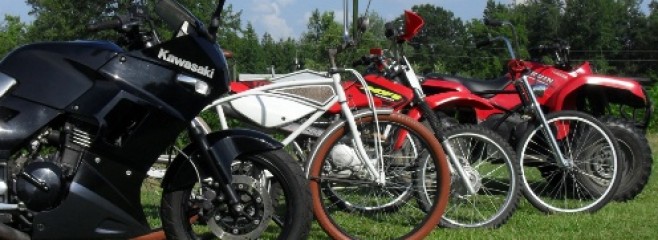
Project 333 Honda C200

It’s just a little evil.

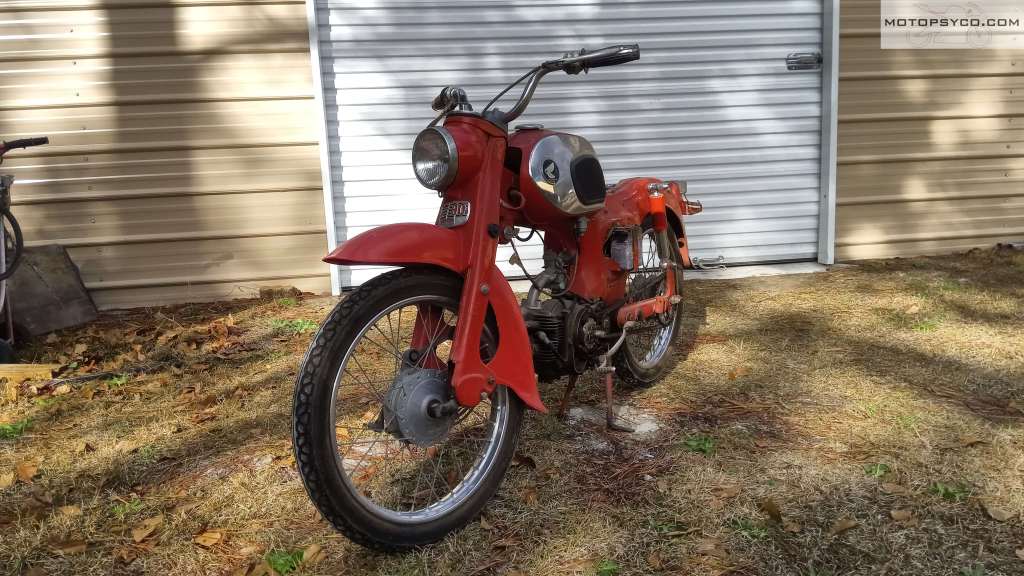
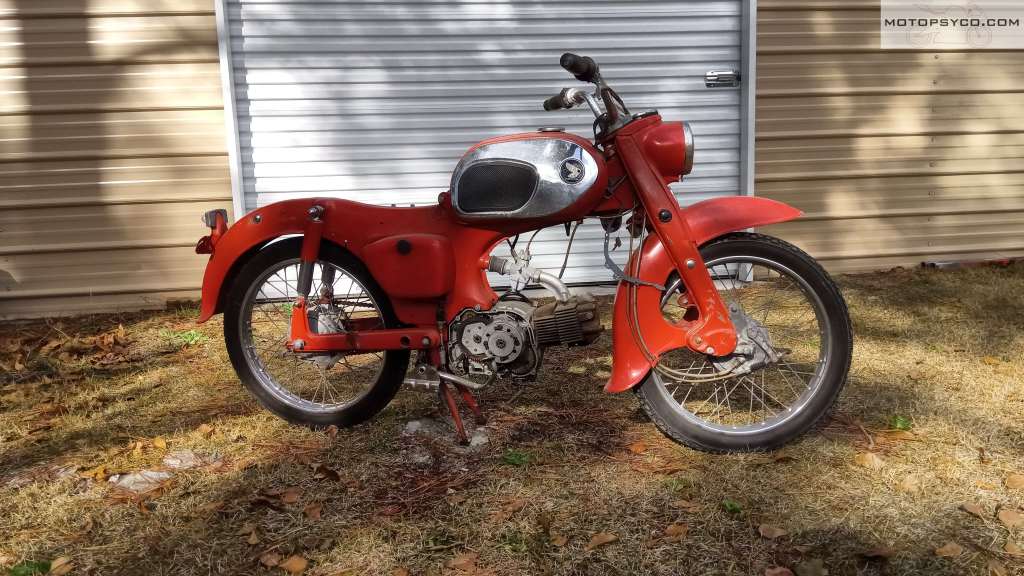
1964 Honda C200 Junkyard Dog
as found

In case you’re wondering dear reader, I have not stopped working on bikes but have been steadily cranking them out. Between my day job & a shop full of projects both mine & other peoples, there just hasn’t been time to sit down at the keyboard & document everything. That is about to change with this little Honda C200 . A lot of cool things have happened; including me purchasing the second brand new motorcycle I’ve ever owned a Moto Guzzi V9. On a sadder note the Suburban Assault Scrambler CB650 has gone on to its next owner but not before proving itself on the dyno by putting out the most horsepower per cc at a show last March. In case you’re wondering it cranked out an honest 50 rear wheel horsepower.

CB650

Sometime in all this there’s been a bare crankcases up rebuild on a CB400F Honda, a complete mechanical refurbishment of a Suzuki DR350 and a few others too numerous to write about. It’s all been a blast and there are plenty more on deck waiting for me to get started on them.

Honda CB400 jigsaw puzzle
3d jigsaw puzzle

This particular Honda C200 is one that I acquired from a friend; it’s in fair condition with nothing but light surface rust & dings but is missing a few parts and hasn’t been run in several years. Most importantly of all it came with a title. I generally don’t have much trouble getting titles for old bikes without one but it is an extra bit of expense & time.

Honda c200 ca200

Restoration is not in the cards for this particular 1964 Honda C200. I’ve proven that I can do a show winning 100% stock restorations and I will do a few more later but this build is going to be about me getting back to my rat bike roots. The goal for this one is to have it done & ready in time to cruise around at the Barber Small Bore Festival organized by MNNTHBX the first weekend in June.

The stock 90cc Honda C200 engine has been placed into my parts stash to make room for a Piranha YX140 engine. In addition to being much more powerful than the original pushrod engine it also has an electric start and a semi-auto clutch on the 4 speed transmission. This engine is available with a manual clutch if you want it but I didn’t for this build. You can probably go faster with the manual but I know how to build up the revs and launch a semi-auto so I’m not too concerned with that.  There’s a lot more to this little bikes new purpose in life than just blasting down the 1/32 mile drag strip.

Piranha 140cc engine
https://amzn.to/37z1jgZ click to get your own

I’ll tell you more about YX140 engine in my next post. The pushrod engines in the Honda C200, CA200, & CT200 engines have the same mounting bolt pattern as the later CT70s, Z50s, and other common pit bikes so you don’t need any special adapters & spacers to put them in like on a later overhead cam 90cc Honda. That being said you still have to modify your frame by grinding some clearance for the protrusions on the rear corners of the engine before it will bolt in.

Piranha 140 engine in 64 Honda C200 CA200

Goodbye for now, I’ve got to get my wiring run and fire this thing up. Once that is done I’ll come back and tell you all about it.

22mm Mikuni Carburetor
Pit bike Mikuni Carburehttps://amzn.to/37Ff7qator

The Honda SL100K2

Well I finished The Honda SL100K2. It looks really good and I’m very happy with the way all the cosmetics turned out. It really did wind up making me work much harder that I really wanted too but I wound up with a brand new looking old motorcycle that would start on the first kick.

Right hand view of the Honda SL100K2
<The Honda SL100K2 of 1972>

It fought me all the way to the bitter end, I thought I had it running perfectly but then the very last part that I had not replaced yet crapped out on me. The original stator worked well at first but after I let the bike sit for a month or two between the VJMC National Rally and the Vintage Honda Rally at the Copperhead Motorcycle Lodge it quit on me and killed the battery.

left side view of The Honda SL100K2 fully restored
<the Honda SL100K2 of 1972>

First I tried a reproduction stator from eBay but the wiring colors didn’t match and the appearance of the wiring plug and sheathing didn’t match the original so I put it on the shelf and ordered a N.O.S. replacement from David Silver Spares & put on it. If anyone in the Continental U.S. would like to buy the reproduction stator from me, I’ll take $50 shipped just to get rid of it.

In the end I accomplished my goal to perform an award winning restoration from one of the biggest turds to ever come into my workshop. This little Honda SL100K2 picked up an Award of Merit at the 2019 VJMC National Rally and another at the 2019 Vintage Honda Rally.

award wing restored Honda SL100K2
<award wing restored Honda SL100K2>

What’s next for this little machine? Well that’s up to the new owner as I sold it during the Barber Vintage Motorsports Festival in October of 2019. I’ve got several new projects in the works and needed some money for them. So keep your eyes open for the next Motopsycho project bike.

Project Honda SL100K2 Update

Honda Sl100K2

This little Honda is perhaps the ultimate junker to jewel story that I’ve ever been a character in. When I first brought it home  it didn’t seem that bad, a rolling frame, couple of boxes of parts and an engine that I assumed was stuck from sitting but should’ve been easy to get freed up with a new set of rings. Initially I planned to do a top end job, reassemble it and flip it to someone else as a running restoration project. I still don’t know what the hell happened. Now my quick and easy 1972 Honda SL100K2 flip has become a full on high level restoration that I can never hope to ever sell for enough money to recuperate the dough that I have in it.

1972 Honda SL100K2 before
as purchased, the rest of it is in boxes inside

It started with the fuel tank which looked really great until I started sanding the paint off of it and discovered that although there was no rust visible rust that I could see through the filler neck, the entire lower rear end of the tank was full of pinholes that took a few hours and a couple of brazing rods to fix. Oh well the stupid gas tank looks okay now and I’ll be putting the paint on it soon.

The engine was another complete nightmare. What I had hoped was a simple case of an old engine stuck from sitting turned out to be a case of one left out in the weather for decades with no sparkplug in the head to keep the water out. To make matters even worse the piston was at exactly top dead center. Finally I turned the entire engine upside down on top of a bucket of Evaporust with the cylinder submerged for about a week before it loosened up enough that I could beat it out of the bore with my big fucking hammer. Thankfully I didn’t bust the connecting rod or ruin the crankshaft in the process.

At this point I was already spending a fortune so the decision was made to keep this motorcycle and turn it into a full on restoration project that looked as good as possible. The engine has a lot of new old stock parts including a new cylinder & piston, valves etc.

1972 Honda SL100K2  rear wheel before
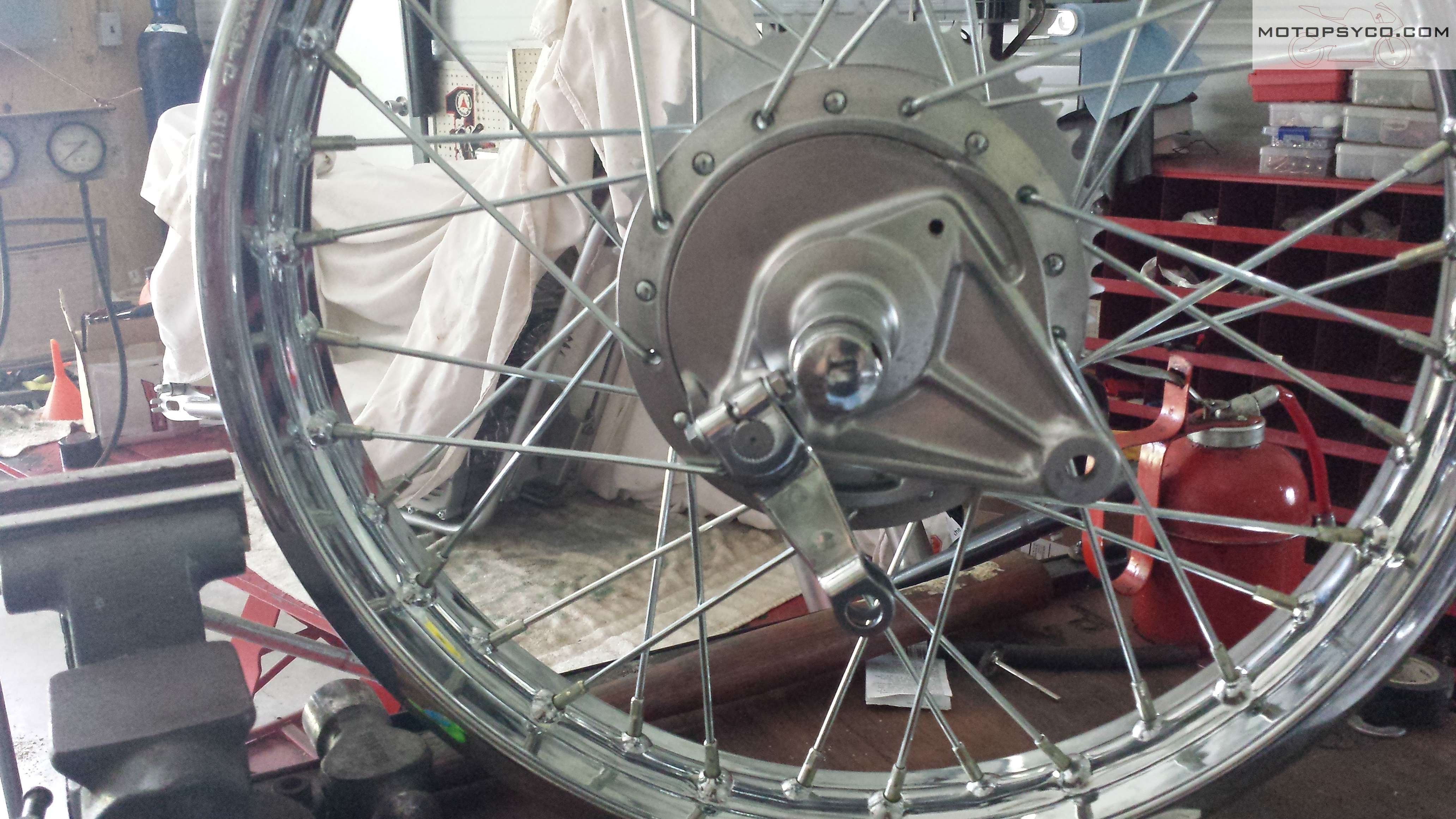
Don’t forget I do vaporblasting! This is the brake panel that matches this hub.

1972 Honda SL100K2 rear wheel after
new rim new spokes lots of vaporblasting & polishing

Not going full into all details here but this has been one of the most frustrating projects I have ever done. It seems like every other bolt either broke or rounded out & had to be drilled out & replaced. Several replica replacement parts were sourced from overseas that turned out to be such crap that I threw them away and ponied up the cash for real Honda NOS parts. As many original parts as possible have been refurbished and are the subjects of several previous posts here. I’ve even fired up the engine and it runs like a new one.

It really does run as good as it looks!

Last week I put it all together so that I could see what parts and hardware still needed to be ordered. This week I took it back apart so that I can block sand all the sheet metal again and finally get around to spraying the metallic green paint. You’ll see it here first when it’s done.

Honda SL100K2 almost done.
Honda SL100K2 rear

SL100 Speedometer Restoration

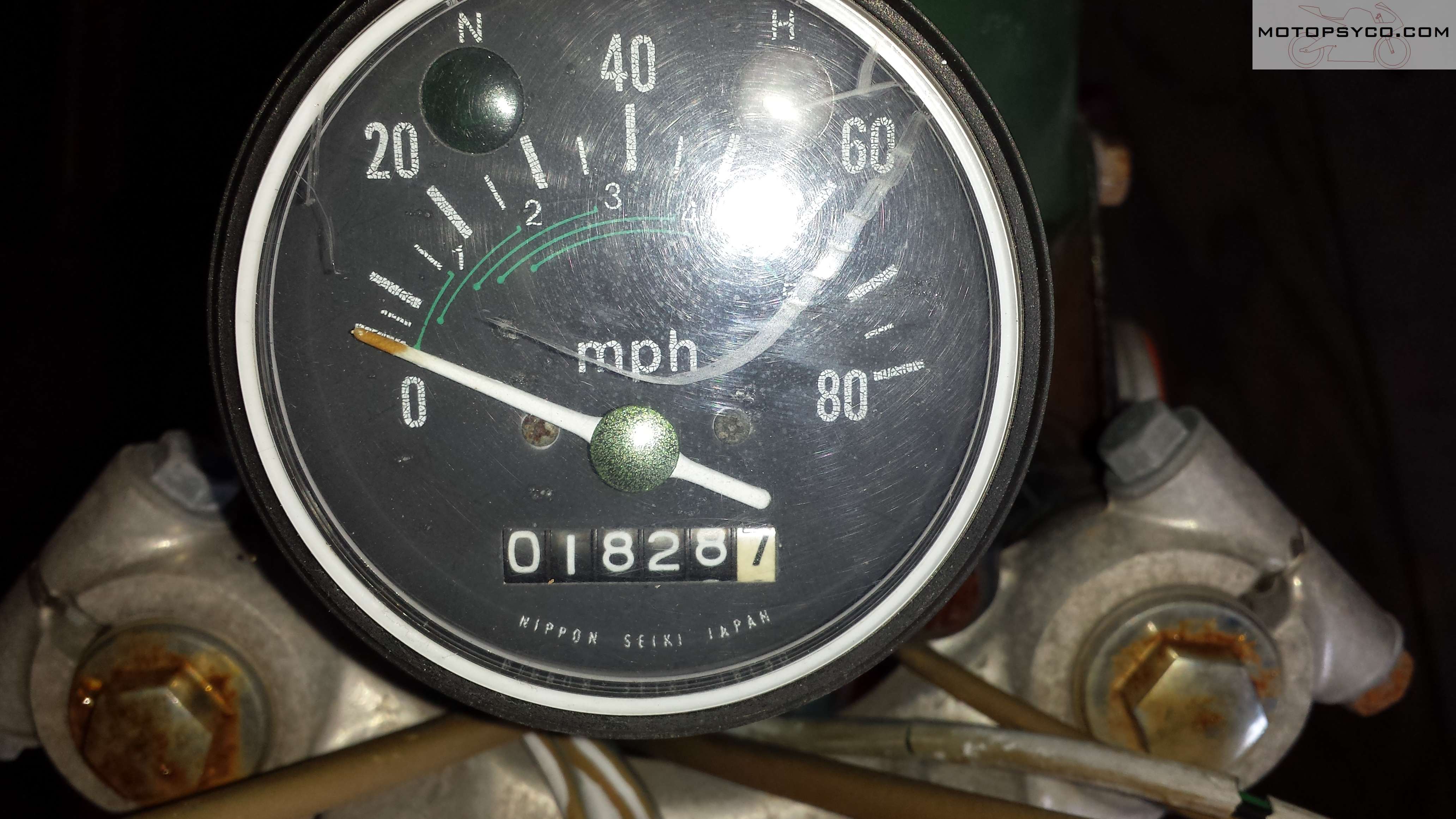
We’ve all seen it before, maybe even on our own bikes, beautiful paint, shiny new chrome, highly polished aluminum and dull faded out hazy looking gauges. Granted for custom bikes it’s pretty easy just to swap in a new speedometer, heck it might even be cheaper than fixing your original. I decided to perform this speedometer restoration for 2 reasons; to keep the original correct low odometer reading on this bike and I had never attempted speedometer restoration before and really wanted to try it. Sure I did make a couple of mistakes along the way but overall I am very pleased with the results. Next time I do this it’ll be even better.

Honda SL100 Speedometer Restoration

Disassembly

On some instruments the bezel that surrounds the face and mechanism is crimped to the base with a metal ring that has to be carefully removed & re installed to access the inside of the gauge.  On this little Honda the bezel was a one piece plastic part that appeared to have been either over-molded onto or permanently glued around the base of the mechanism. The first step after removing the chrome trim on the bottom is to cut away the plastic that is folded over the metal part of the gauge. Cut it all the way around so that you can carefully pull the gauge straight out of the housing. Initially I just tried cutting it part of the way around thinking that it would make it easier to re-seal when I put it back together, big mistake as I bent the thin aluminum gauge face when I tried to pull it out and had to carefully straighten it out. Slice it loose all the way around pull the gauge straight out so you don’t damage it.

Honda SL100 Speedometer Restoration

After getting it apart, carefully grasp the needle where it’s attached to the shaft & pull it straight up and off then set it aside in a safe place. On this particular bike 2 screws held the face plate on to the speedometer. There are also 2 tubes that the neutral & high beam lights shine through that have little rubber boots that are glued to the back of the face plate, cut these away carefully.

Cosmetic improvements

For some more popular motorcycles speedometer restoration is easier because ready-made gauge faces are available for them, what I did for this one was to visit my local screen printing & graphics shop and had them scan the old face in and print me a new one on a vinyl decal that was stuck into place over my dirty faded speedometer.

Honda SL100 Speedometer Restoration
The extra one is for sale $18 shipped in North America.

Since the speedometer needle was very faded I gave it a quick shot of white paint. After the white paint dried a little bit of red was applied to the tip of the speedometer needle. One very important thing to remember especially with magnetic drive speedometers & tachometers is that too much paint will make the needle heavier causing it to be slower to respond and affect the accuracy of the gauge. Use the absolute bare minimum of paint necessary to make the needle look good again.

Honda SL100 Speedometer Restoration

The clear plastic lens on this one was a little hazy & had a lot of scratches on it so I spent about 15-20 minutes polishing it with toothpaste & a damp paper towel. This removed the haze & a lot of the scratches. It’s not perfect but it looks really good.

Reassembly

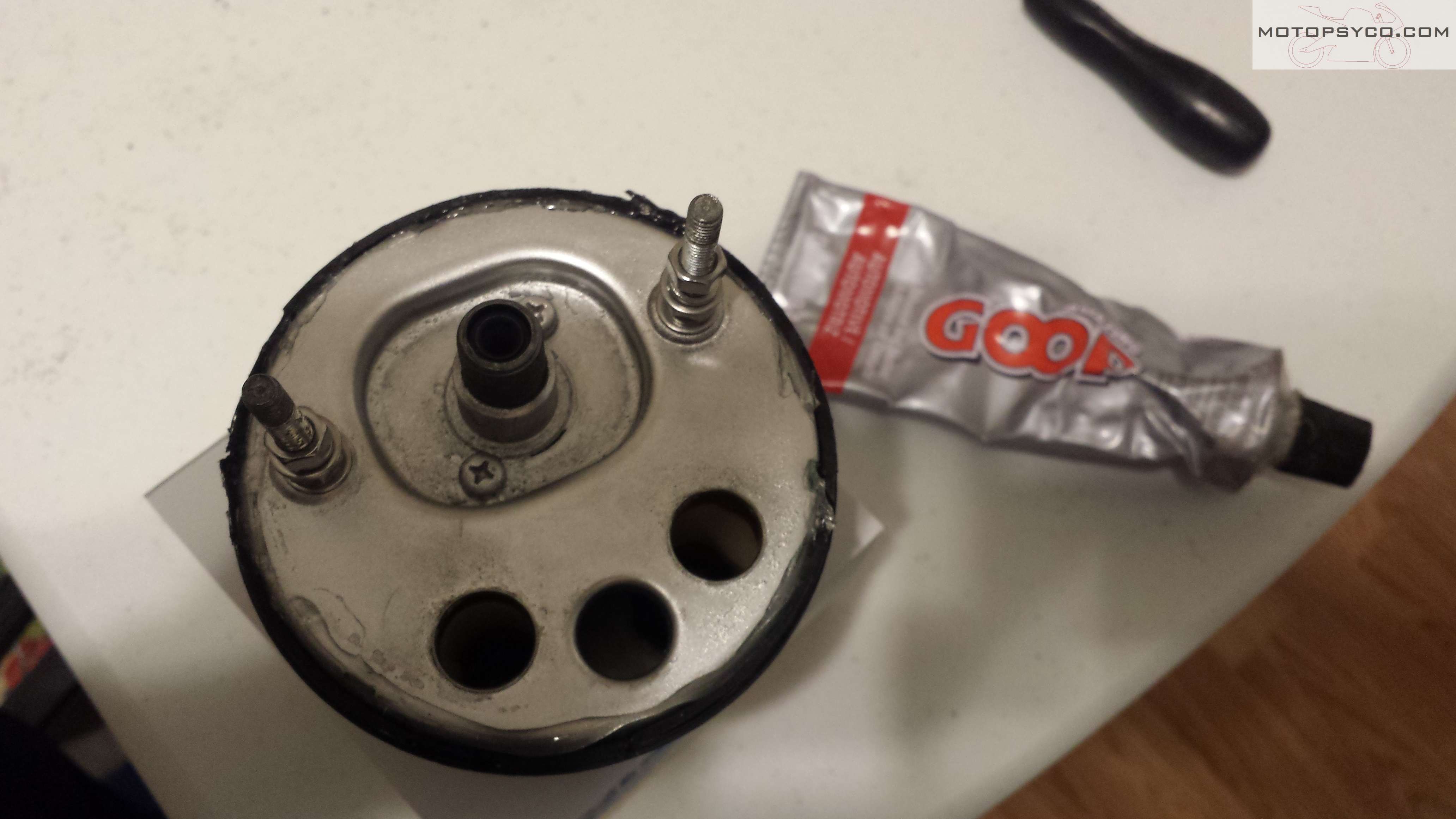
I assembled the face plate to the speedometer carefully lining up the light tubes to the back of their respective lenses sealing them in place with a small amount of my favorite adhesive/sealant, Automotive Goop. Since all of the existing nuts and washers were rusty they were replaced with new hardware at this time.

Honda SL100 Speedometer Restoration

With a little careful work, on the third try I was able to slide the speedometer needle back into place so that when viewed head on at rest the needle indicated exactly zero miles per hour. Just use a little patience and take your time when doing this and everything will be okay.

Honda SL100 Speedometer Restoration

Next I made sure everything was as clean & dust free as possible inside & out and dropped the speedometer into the bezel. When I cut it loose I left enough plastic so that it snapped back into place. Then I took a good look at it and since I was satisfied with the way everything looked it was time to pull the gauge back out of the bezel just enough so that I could run a thick bead of the Goop adhesive all the way around it and then snap it back into place for good, then it was time to reinstall the chrome beauty ring on the bottom.

Conclusion

Honda SL100 Speedometer Restoration

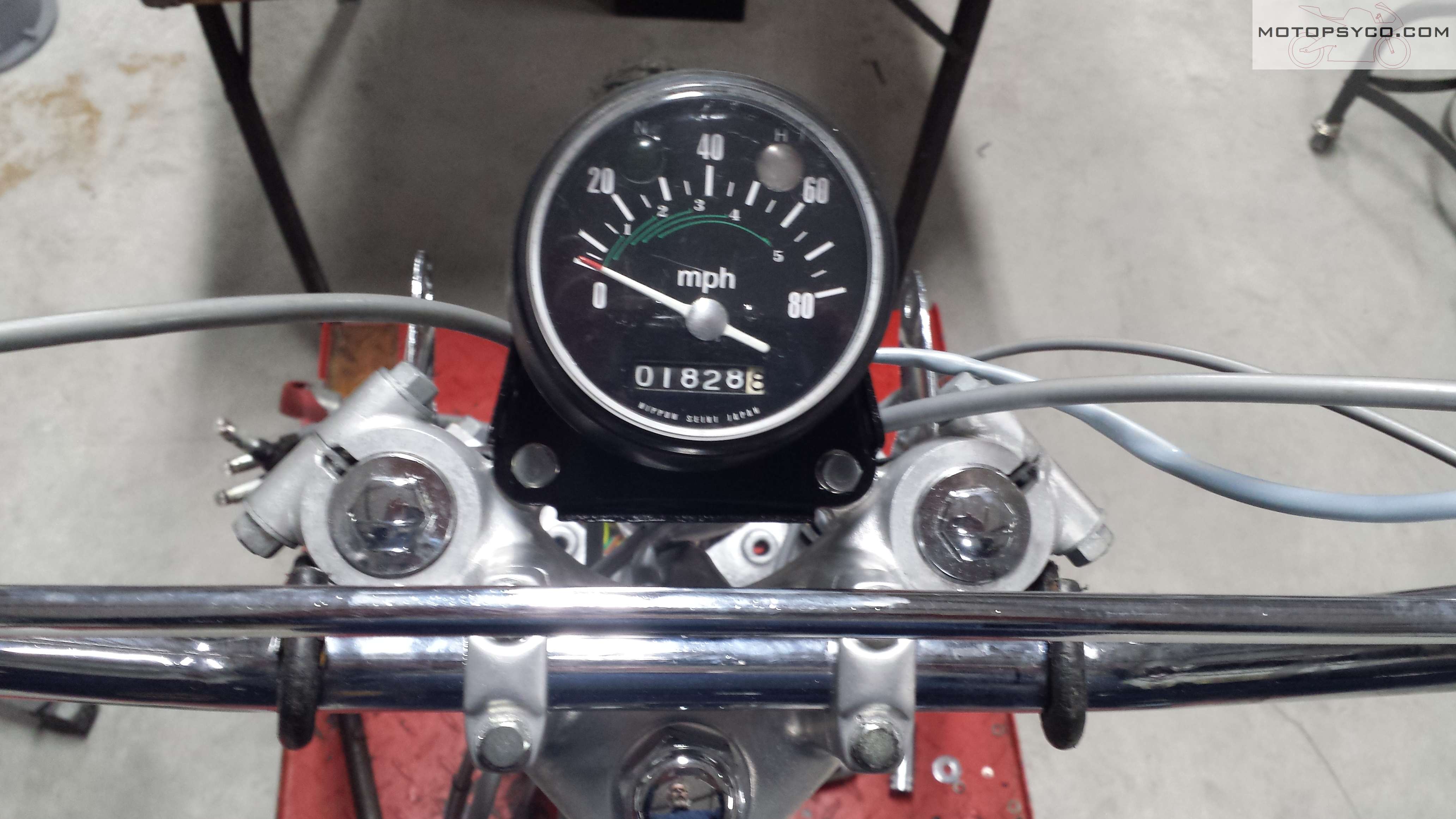
Here’s a picture of the finished assembly mounted on the bike. Even if you never plan to do speedometer restoration yourself at least you know how it can be done. There are a few specialist repair shops out there that do nothing but repair & rebuild gauges. In fact if your gauges are inoperable you should find one of them to do your repair & restoration for you. If they’re just faded & ugly you can do them yourself as I’ve shown here or you can send them to me and I’ll do it for you for a very reasonable price.

Bang the drum slowly

I’m sitting here at my desk listening to random old folk music, enjoying my favorites Guy Clark, Townes Van Zandt, Emmylou Harris, Allison Krauss etc. when Bang the Drum Slowly by Emmylou came on and sent me back down the primrose path of memories to one of my few early childhood experiences that I both remember and enjoy. Most of my early life is lost in a fog and I don’t really remember that much of it except for the exceptionally good times & the extremely traumatic events.

About 1971 while I was attending kindergarten at one of the many conformity factories that the government forces children into, we went to visit my father at the army base where he was having his annual National Guard training at the time. It was a terrific day for me; Daddy showed us around the base and introduced us to the guys in his unit. All the vehicles were on display and my brother and I were even allowed to touch them. My favorite was the tanks of course and it was the thrill of my life to climb up to the top of the turret for a look inside.

Another terrific thing that I remember was that he bought me my own little BDU uniform complete with a hat and an embroidered nametag with our last name on the chest just like his. I remember wearing it to school sometimes. It was kind of cool back then but I can’t help but wonder if a small child would even be allowed to wear such a thing to school today.

I remember his duffel bag being packed & ready but didn’t really think anything of it until years later when my mother mentioned that he had been on 24 hour notice to report for duty, and how thankful she was when Nixon finally brought that little war to a close.

Another favorite memory from that same time period was learning to shoot his old shotgun. Since I was physically too small to hold it up, he rolled down the window on his old 1966 Chevy II station wagon so little young me could prop the barrel on the windowsill while aiming at the target. Later that same rusty, off white station wagon would carry us and the dogs on many enjoyable bird hunting trips.

He taught me to ride a motorcycle on that wonderful Christmas morning when my brother & I got our first dirt bikes. If you read this blog you know what influence that had on me.

For a while he restored cars for people to pick up a little extra money on the side and I truly loved helping him with that. It made me proud to look at those beautiful Mustangs and that big old red Cadillac convertible & say to myself, “my daddy did that.”

My first car was a beat up pile of junk Mustang II with cracked heads & a slipping transmission. Over time we fixed it up even to the point of rebuilding the engine, which by the way we did sitting on the tail gate of his truck on a nice spring day. After we got it all back together & I finished hooking up all the wiring, driveshaft, etc. he had me fire it up and we set the timing. He slid behind the wheel and we rode around for a bit before he turned down the deserted country road where several generations of local street racers went to prove their machines & their mettle. Pulling up to the “starting line” he pulled the shift lever back to first and floored it, running it up to 5500 rpm in first & second on the 3 speed automatic and when he passed the finish line (approximately but not exactly a ¼ of a mile) I looked over at the speedometer & the needle was on 105 mph. After slowing down to a stop he checked all the gauges and listened to the engine a minute then he turned to me and said, “ You know that if I ever catch you doing this I’m gonna have to whip your ass.” Of course he was grinning like the Cheshire cat when he said it. To this day I’ve never been able to figure out how he got that little Ford up to 105 in that distance, because the best speed I could ever get up to in that same place was 100 mph.

Good memories of my dad.
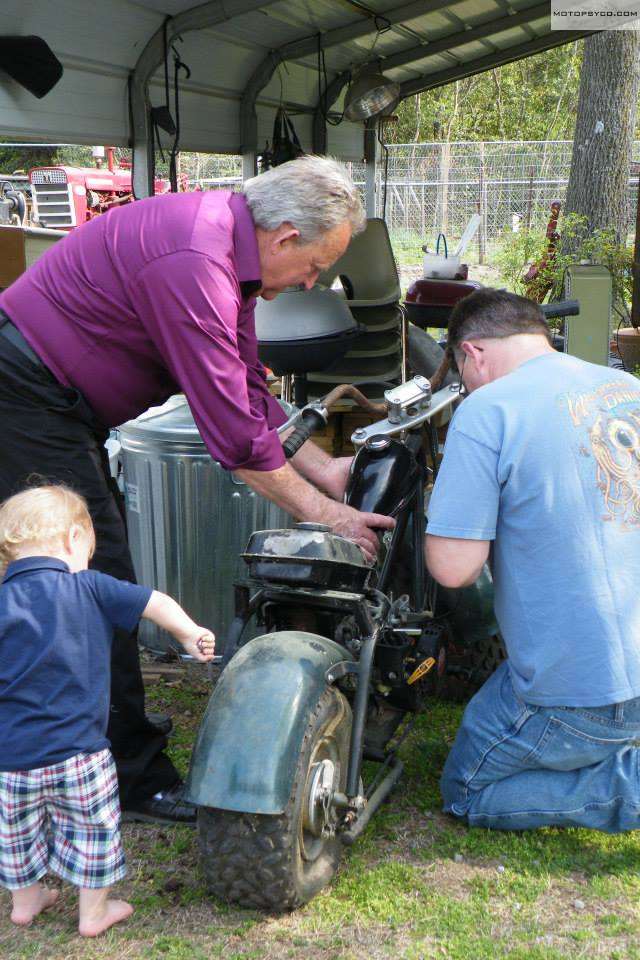
My dad, one of my grandchildren & myself doing what we seemed to enjoy the most, fixing something broken.

Later I watched as he became one fine grandpa & great grandpa for my daughters, nephews & their children. He wore the mellowness of his advancing years well, and I’m glad they got to experience that with him.

He fought through several bouts with cancer but seemed to pull through each time. When it was time for my mother & he to celebrate their 50th wedding anniversary he looked good and we fully expected to have him around a lot longer than we did. But the big C is a relentless enemy and after being banished from his prostate and his lungs it waited a while & the launched a massive counter attack on his lymph nodes. While in the process of treatment he had a simultaneous stroke & heart attack and was gone by the next morning. I still have a hard time processing it but writing and sharing this with you helps, so does good music.

As the angelic voice of Emmylou Harris fills my head with this song my eyes began to water up and I am very thankful to have a private office so that no one could see me cry. No my dad was not a fighter pilot who was laid to rest in Arlington like hers, he was medic in the National Guard and he was cremated & the family scattered his ashes in the waters of his favorite place on this earth, Murrells Inlet SC, but her song takes me back to all my memories of him.

Through all the good & bad, he was my greatest teacher, he wasn’t perfect but he was my Daddy.

“I meant to ask you how to plow that field
I meant to bring you water from the well
And be the one beside you when you fell
Could you tell.”   Emmylou Harris & Guy Clark

Drilling Handlebars for Wiring

A lot of old motorcycles like my old 1972 Honda SL100K2 have their switch gear wiring inside of the handlebars for a nice neat clean appearance. I was actually able to locate a couple of sets of genuine Honda new old stock handlebars but the cheapest set I saw was over $150. Plus a lot of the NOS parts I find tend to have some shelf wear or corrosion on them so I just went ahead & bought a set of nice new reproduction bars without the wiring holes for $50. So this post is going to be about drilling handlebars for wiring. Whether you are try to do an authentic restoration or a sleek custom the basic procedure is the same

Drilling Handlebars for Wiring

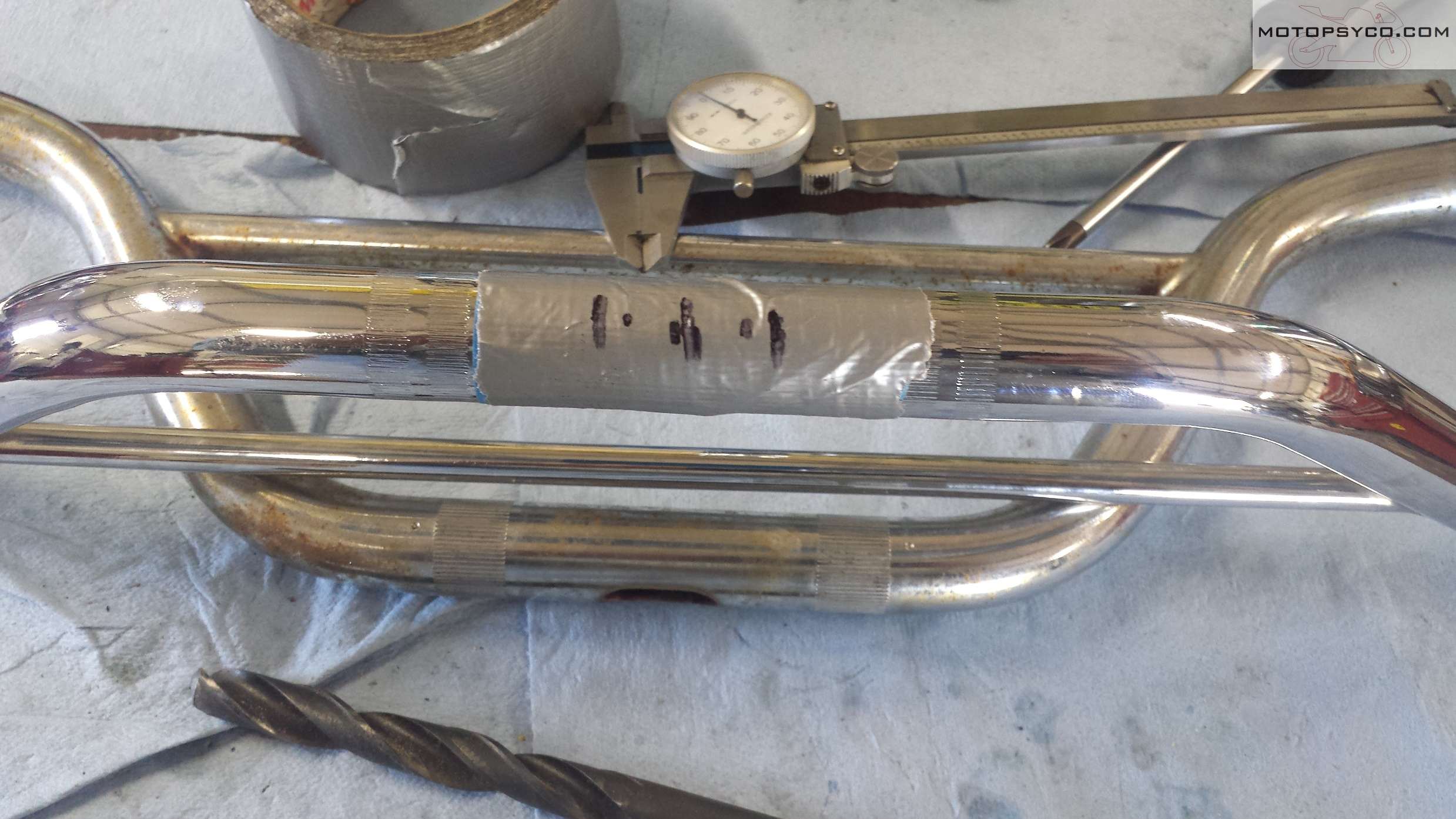
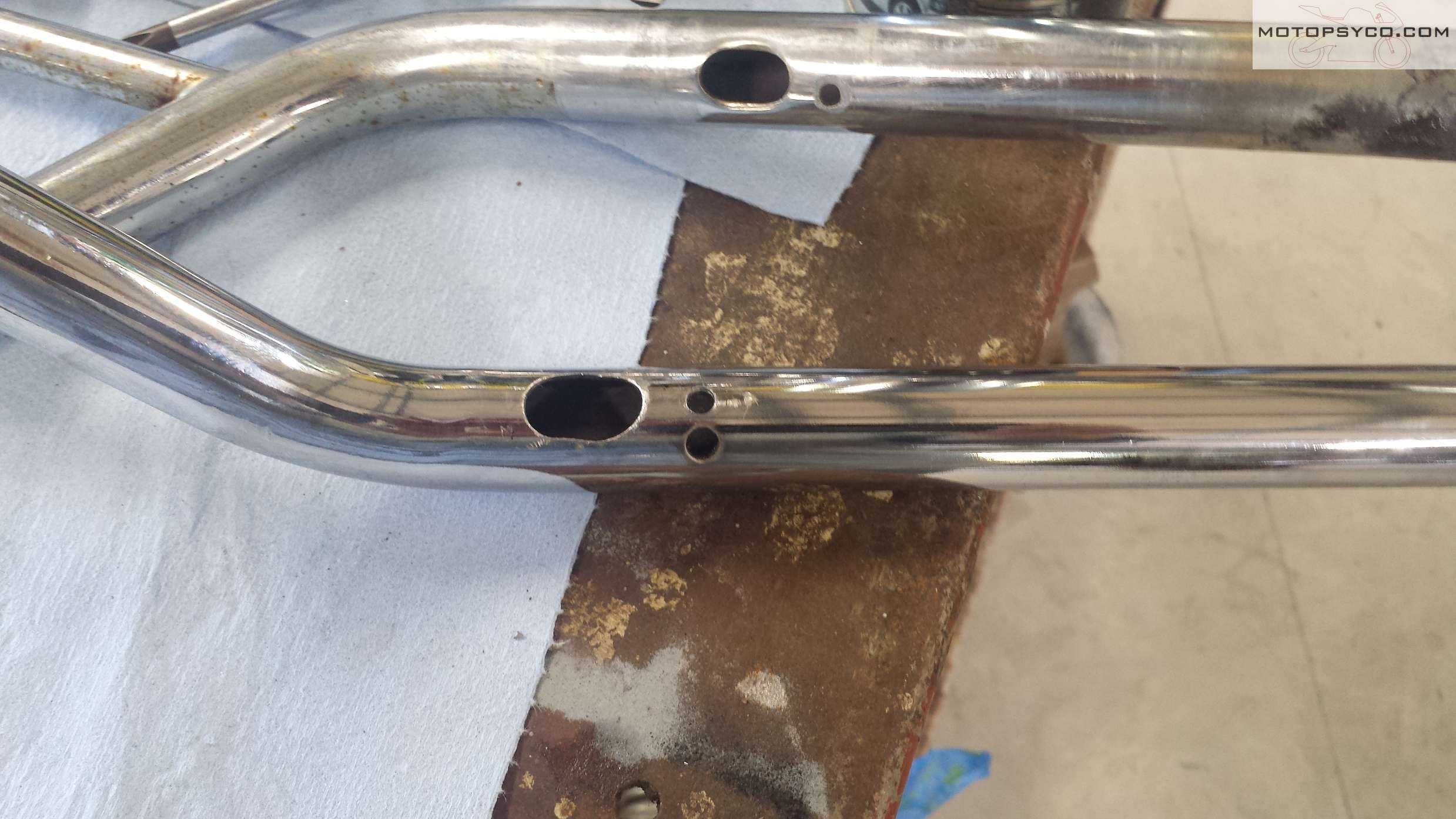
The first step is to determine where the holes & slots should be. These Thailand sourced bars had holes pre-drilled for the switch housing locating pins but they were in the wrong place. Since I was replacing the old but non-original bars I taped them together wile I measured and marked the locations for the new holes and slots. Pay attention to detail while doing this so that you don’t make any mistakes or remove excess metal from your handlebars. A prime example of this is visible on my old handlebars. The left side only needed a hole large enough for the single horn wire but whoever installed them cut a large slot instead. Watch for little things like that.

Drilling Handlebars for Wiring

I like to put a couple of layers or masking tape & duct tape on the areas to be slotted out. This does two things, it makes marking the hole & slot locations easier and protects the handlebar from inadvertent tool marks while you are cutting & grinding the slots.

Drilling Handlebars for Wiring

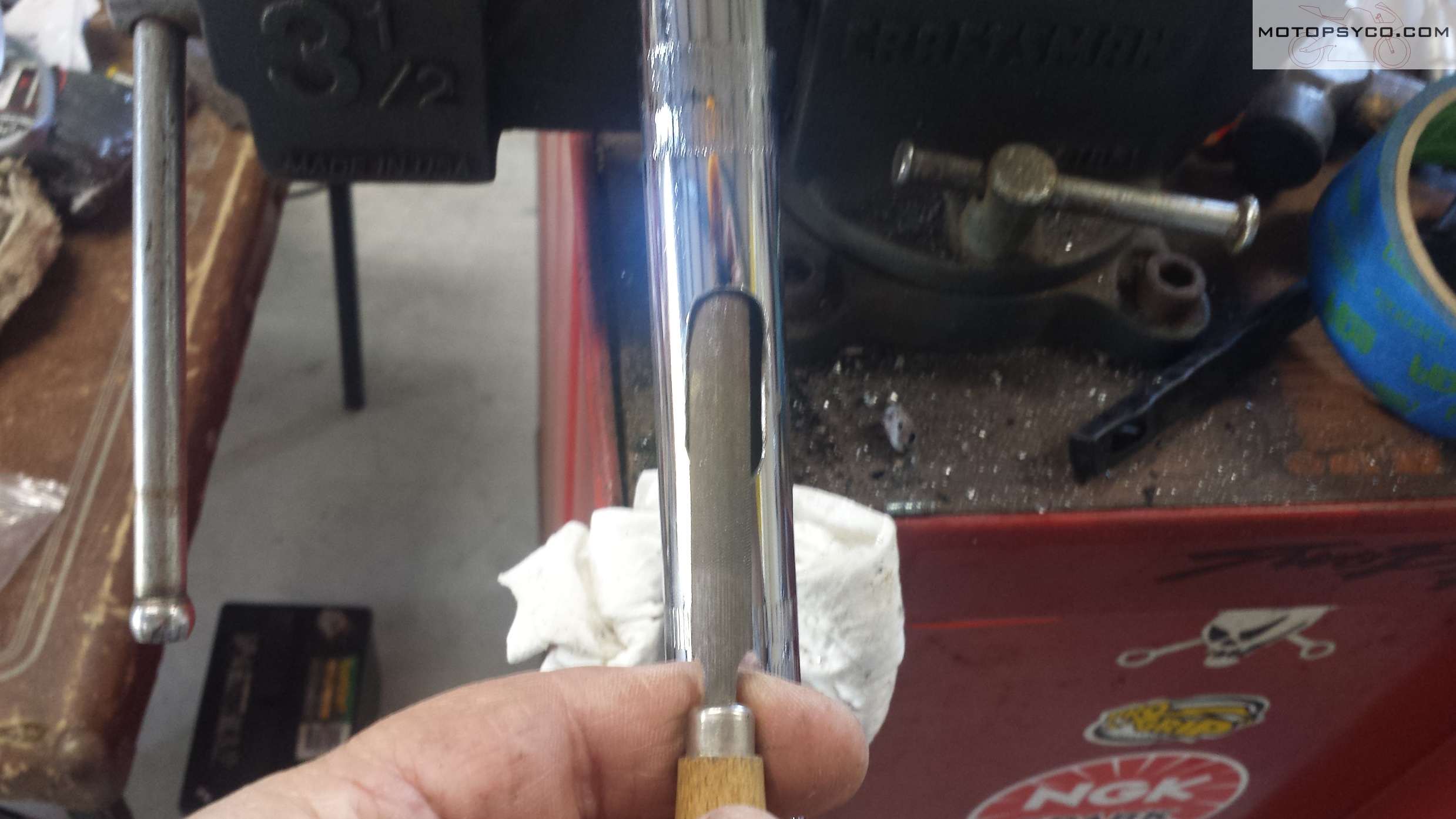
After you get it all laid out & are certain of where you need to drill be sure you use a center punch, otherwise it is nearly impossible to drill a hole straight into a piece of round tubing. For the slots drill a hole of the correct size at each end of the slot & then use a rotary tool or a die grinder with a cut off wheel to cut out the center section. Once that has been done put a small grinding stone or sanding drum on your tool to finish shaping and smoothing the slot. Don’t remove the tape until this step is complete.

Drilling Handlebars for Wiring

Now it’s time to remove the tape, clean up the tape residue & get all of the shavings out of the handlebar. Grab a small file that will fit into your cut outs and go over them one more time to be sure that all burrs & sharp edges that could damage the wires are removed.

In these next two pictures you can see how I slotted & drilled the left and right ends of the bars.

Drilling Handlebars for Wiring
Right end
Drilling Handlebars for Wiring
left end

Before you pull the wiring through, if you have one piece clutch & brake lever perches be sure to put them back on first. I like to put a piece of string through the bars & tape the wire to it as it is much easier to feed the wiring through if you pull it and push it at the same time. Nonabrasive hand cleaner makes a great lubricant for pulling a thick bundle of wires through a small tube with multiple bends in it. The hand cleaner wipes off easily when you get done.

Drilling Handlebars for Wiring

Once you have it a done, reinstall the bars on your bike and admire your handiwork for a minute or two before you get back to work on the rest of your build. If you have ever thought about drilling handlebars for wiring now you have an idea of what is involved. Just work slowly and carefully so that when you finish it will be a job that you’re proud to say, “I did that myself.”

Drilling Handlebars for Wiring
Pardon the messy shop.

Handlebar switch restoration

If you look at a lot of restored vintage bikes, you may notice that even some very nicely restored bikes have switch gear that looks okay but you can tell that the switches were not fully refurbished to the same level as the rest of the bike. I plead guilty to doing this myself because the switches are full of little tiny springs, detent balls, delicate soldered connections etc. and if a single piece gets lost or broken your switches are ruined. Since I am putting so much effort into my current 1972 Honda SL100 project I could not settle for anything less than a full on handlebar switch restoration to make the whole bike look as new as possible. If something had gone wrong I was prepared to spend the money on a set of new old stock switches to replace them.

Handlebar Switch Restoration

Before beginning your handlebar switch restoration clean off your workbench and the floor around it & under it, so that if any of the tiny parts fall out or go flying you at least have a chance of finding them.  Keep a magnet close by in case you need it. Also remember that sometimes the old plastic knobs & buttons often become fragile with age so be careful handling them.

Handlebar Switch Restoration

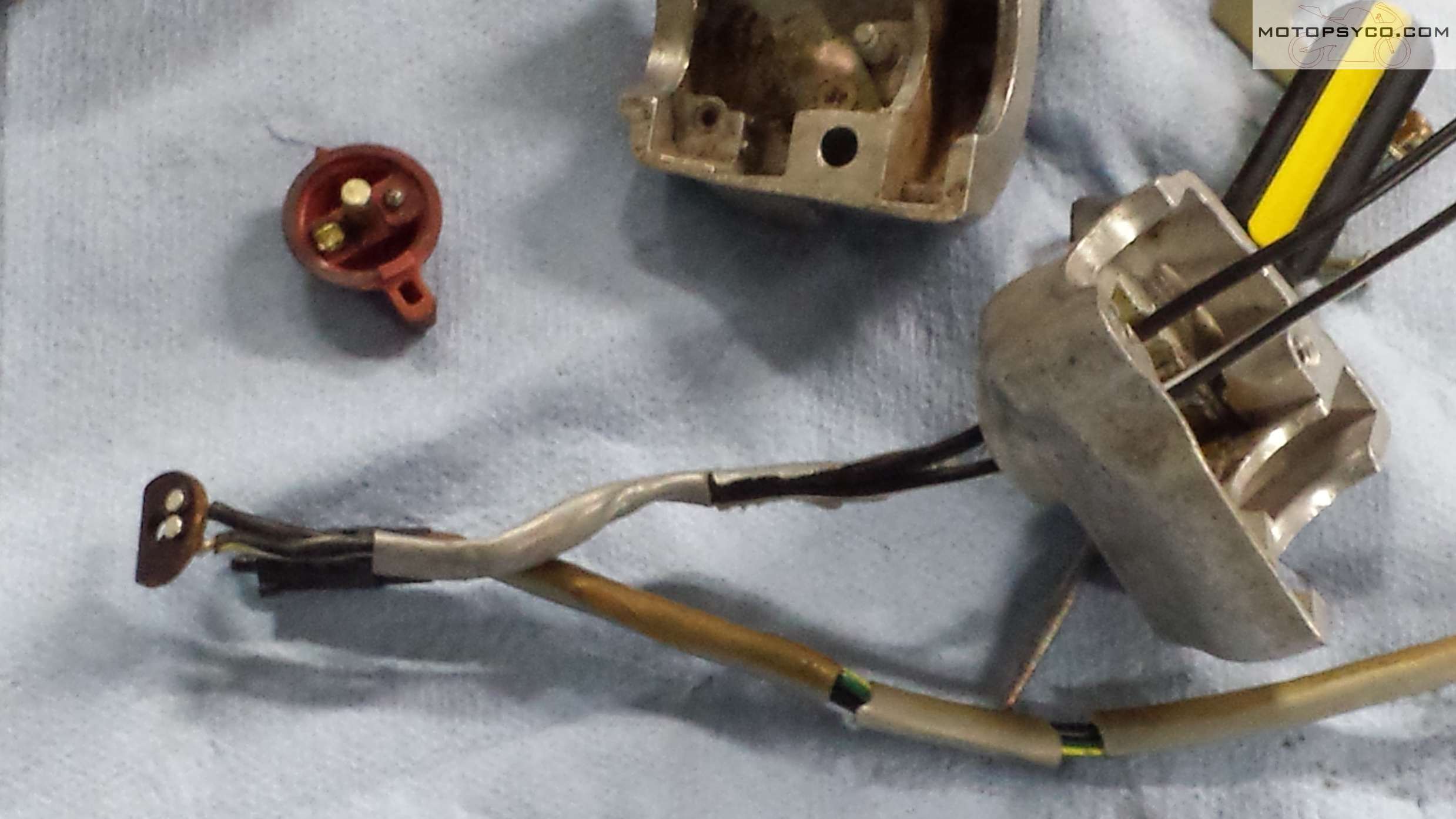
Take a few minutes to study how the wires & switches are placed & secured in the housing, and then remove the retaining screws & plates. You should also look at and remember how any tape or sleeves are applied to the wires in the housing to protect them from chafing.

In the picture below you can see a detent ball sitting on top of the black slider for the headlight controls, there is a spring under this ball that can (and did) send it flying so use caution to be sure you don’t lose any parts.

Handlebar Switch Restoration

Once I pulled the e-clip off of it, the engine stop switch and its wiring could be removed through the top of the housing. Go ahead and completely remove all of the switches, wiring, & clips from the housings.

Handlebar Switch Restoration

If you have any damaged threads or broken screws in the housings now is the time to deal with that. In this case the throttle stop screw was snapped off in the bottom of the housing so I had to drill it out and tap the hole. You’ll notice that there are magnetic rubber vise jaws attached to my vise. These are an absolute necessity for doing this kind of work without damaging your parts.

Handlebar Switch Restoration
click here for padded jaws for your vise

With your switch housings stripped bare & all repairs made now is the time to clean them up. I use my vapor blasting machine because no other method I know can restore a factory new appearance to old aluminum the way vapor blasting can. If you don’t have access to a vapor blaster you can send your parts to me & I can do it for you. See my vapor blasting page for rates & information.

vapor blasting & Handlebar Switch Restoration

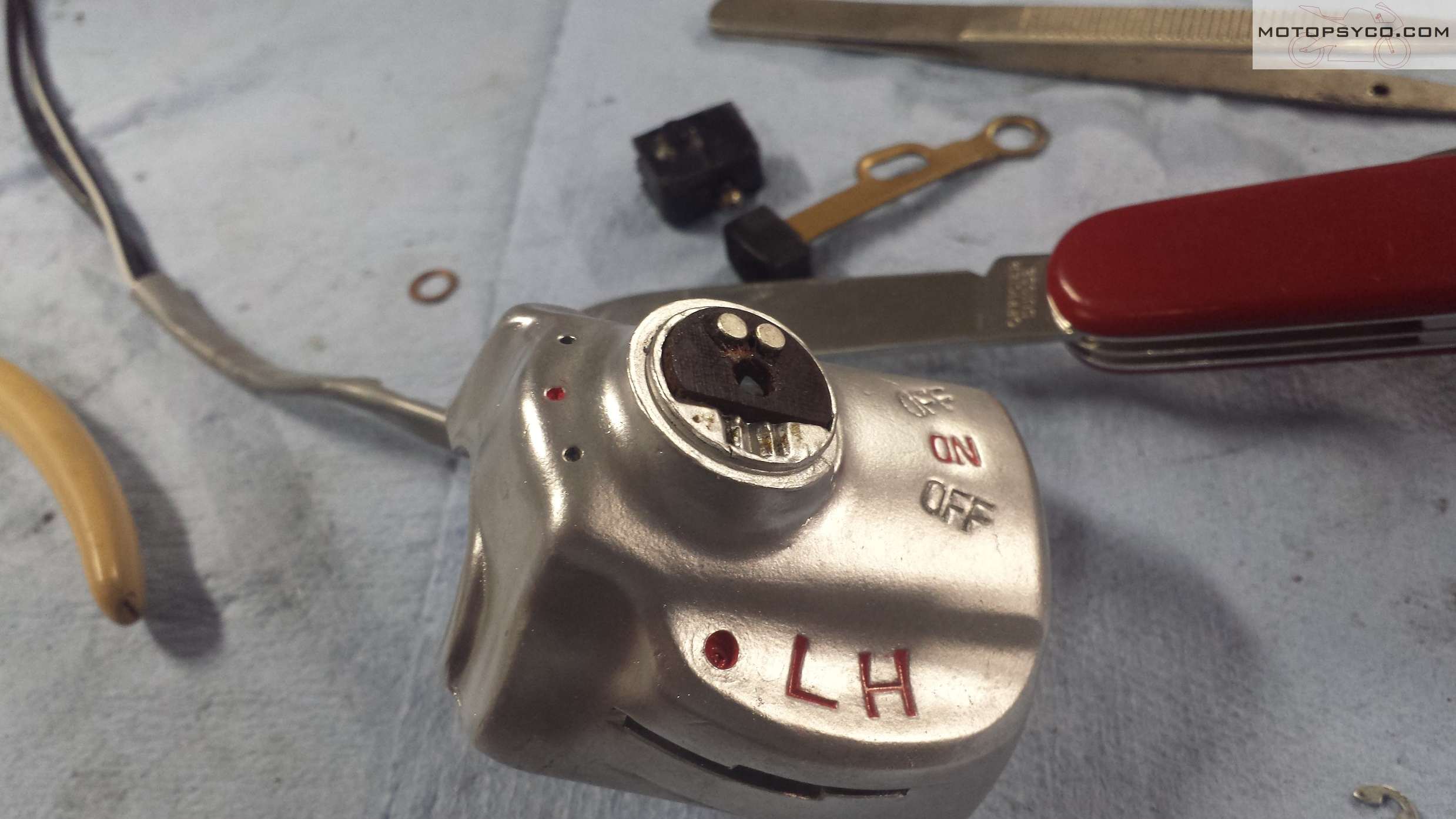
After everything was repaired & cleaned I painted the stop switch with a little spray paint and used an oil paint marker to paint the red lettering & dots as you can see below. For more information on this technique click this link to see my previous post on emblem & badge refurbishment.

Handlebar Switch Restoration

Now that everything is clean & new looking gather up the supplies & tools you need for reassembly. At the least you’ll need some new wire sleeves, tape to match the sleeve, JIS screwdriver, a small pick, some grease, the finest point needlenose pliers that you own, some tweezers, a sharp knife and a multimeter. Depending on what you are working on you may need more or less tools than these, for example if you have a broken wire connection a soldering iron might be needed.

tools for Handlebar Switch Restoration

Carefully reinstall all of the parts in reverse of the order you removed them. Take time to tape & sleeve wires as needed because you might not be able to after everything is back together. Be sure to watch out for flying springs etc. during reassembly, it’d be a shame to get this far and lose a critical part. Work slowly & stay as relaxed as possible when doing delicate work like this.

Handlebar Switch Restoration

The final step of handlebar switch restoration is to test the function of all of the switches using either the ohmmeter or diode tester function of your multimeter.  If everything is working great you are ready to reinstall the switch gear to your motorcycle. If not, it’s a whole lot easier to fix it now than after putting the bike back together.  This is especially if the wires are going to be inside of the handlebars.

test the Handlebar Switch Restoration

I hope that you’ve enjoyed following along while I completed my handlebar switch restoration. The next post that I have planned will show how I measured & drilled the holes in my handlebars for the wiring to pass through.

completed Handlebar Switch Restoration
Ready to install!

Until then, Peace Y’all