A Wammo Update

Just thought I’d share what’s going on around the barn a little bit. Getting the fender, seat and battery box figured out now means that it is time for the real work to begin.

<custom Honda bobber>

A few days ago I dropped the engine out but since then most of my spare time has been spent elbows deep in the severely damaged engine of some guys atv. Today I caught a little break since I have to order more parts for the Brute Force, it gave me a chance to finish tearing this one down to a bare frame.

<bobbed honda 400 frame>

<CM400 rigid frame>

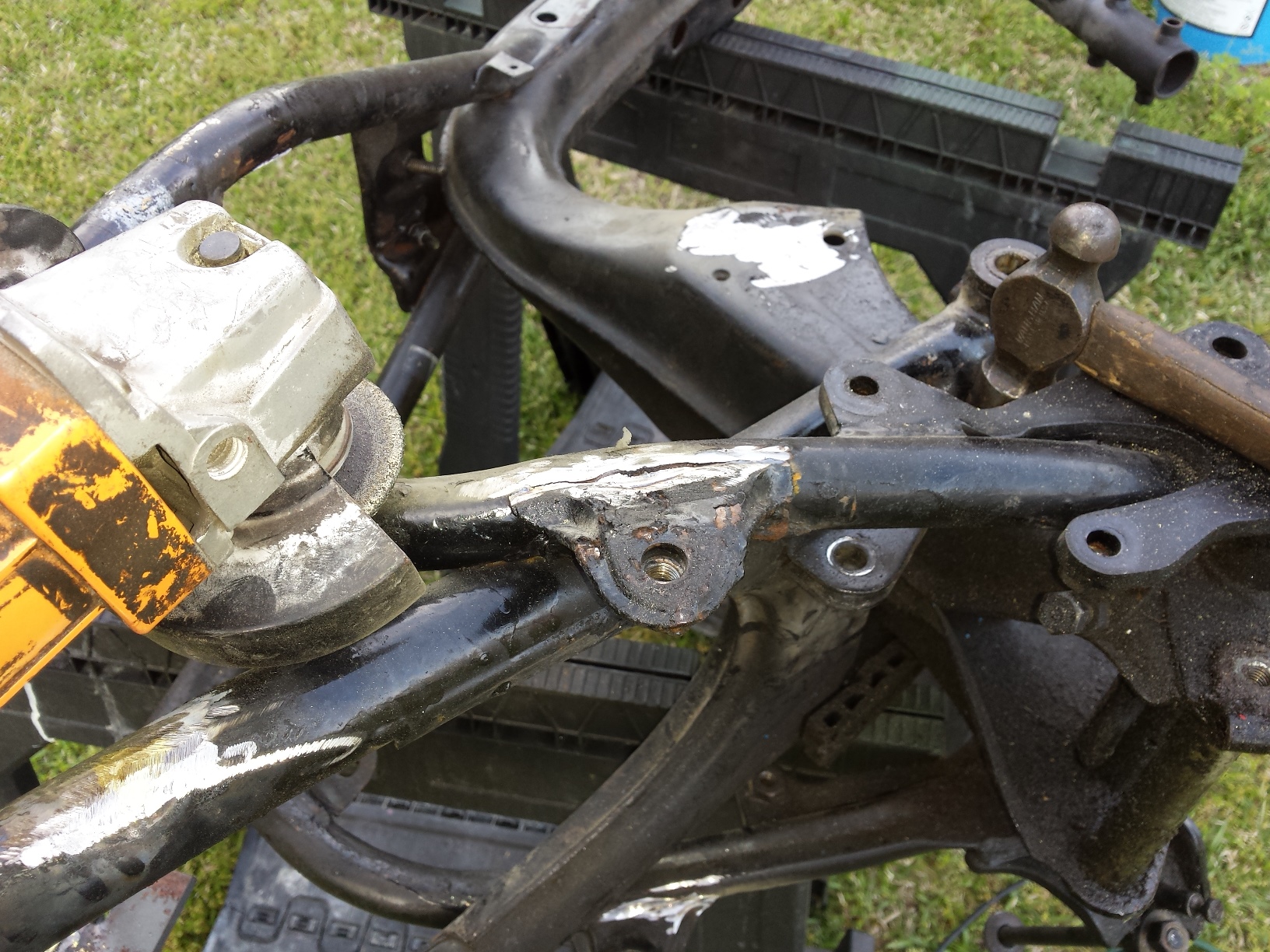
Now the previous owner of this fine mosheen was a true rat biker and whenever he felt the need to attach something else to it that could not be tied or glued on he resorted to that favorite motorcycling custom trick of using self drilling screws to tack shit to his motorcycle. So I spent a couple of hours brazing up small holes in the frame, before it was time to break out the angle grinder and safety glasses and remove all of the unwanted tabs from this frame.

Some of the tabs were saved and will be reused on this and other projects, but most of them were tossed into the scrap bin to be recycled. Now its time to soak it down with oven cleaner and get it completely clean so I can do a little more welding then clean it all up and prep for paint.

<oven cleaner motorcycle frame>

By the way, I have been documenting the crankshaft replacement of the Kawasaki Brute Force 750 and will be posting a ton of pictures in the days to come so stick around.

Peace Y’all

The Virginia Tech Transportation Institute Motorcycle Safety Study – The April WOTM

Virginia Tech Motorcycle Safety Study

<seen not hurt>

1981 was a long time ago; 33 years ago in fact that’s when Dr. Harry Hurt and his team published the now famous Hurt Report study of motorcycle accidents. This author is not personally aware of any large scale studies done prior to this. Dr. Hurt & his team conducted in depth analysis of several hundred motorcycle accidents in and around Los Angeles, California in 1976 & 77. This study is still the basic benchmark for most motorcycle related safety regulation & recommendations in America today.
This was fantastic work but by the time the report was published in 81 the data was already 4 years old and the state of the motorcycle industry was in the midst of serious change starting into the 1980s. In 1977 the most powerful “normal production” motorcycles on the street were air cooled inline fours from Japan, or modified Sportsters. (Yes youngsters at one time the XLCH was actually a badass motorcycle and not an overweight beginner’s cruiser.) The new decade saw a revolution in the power levels and handling of the Japanese sport bikes, and legendary machines like the Interceptor, FZR, Ninja, and the almighty GSXR. These motorcycles in box stock trim had power and handling undreamed of even in professional racing machines in 1977.
At the other end of the industry, the cruiser revolution was taking off. Jump started by the Reagan administrations bailout and swept along on a proud current of patriotic fever, Americans who had never in their life considered owning a motorcycle, rushed out to buy new Harleys powered by the reliable new Evolution engine. Millions of beginners took to the highways on brand new 1340cc machines. It was a glorious time. Even the big four got in on the act producing similar machines for those still dis-trustful of H-D quality.
The late ‘70s & early ‘80s had been slow times for motorcycle sales but by 1985 things were busting out all over, but it was a completely different scene. Today there’s good sized “retro” market for vintage styled machines resembling their ’60s & ‘70s counterparts, but with modern fuel injection, brakes & materials. A 2014 Ninja is as far advanced from a 1984 GPZ900R as the GPZ was from a ’69 Triumph Bonneville. Here in 2014 1300cc is considered to be a midsized cruiser. The greatest change of all is that there were no cell phones back in 1977. Things have changed so much. Ten years from now it will be different from what it is today, count on it.
In 1999 in Europe the MAIDS report was released. The Motorcycle Accident In Depth Study was yet another study of accident reports focused on all powered two wheel vehicles, including the moped class machines. In 2009 the organization released MAIDS 2.0 which I am certain was based on the same data set (please correct me if I am wrong) but segregated the 50cc mopeds from the larger motorcycles because the smaller machines tended to have much higher accident rates, skewing the results of the study.
Both of these studies are cause & effect studies based on accident reports. They broke the accidents and their causes various logical groups, and really did help to sort out what things were done wrong by those involved in motorcycle crashes. But to me the best way to improve safety is to find out what those who do not crash are doing right. This brings me to the current studies being conducted by the Virginia Tech Transportation Institute. First I would like to thank one of their research associates a talented young engineer by the name of Cameron Rainey for making me aware of it, and helping me to better understand the focus of it. This is a series of naturalistic studies, involving real motorcyclists who agree to have their motorcycles outfitted with telemetry equipment & cameras. The motorcycles and riders are monitored, speed, position & conditions tracked for set time periods. In order to get true results from the study participants are given immunity from prosecution. I have no doubt that knowing that they were being observed caused some people to alter their riding some, but without this immunity allowing riders to behave as they normally would without fear of prosecution, this study would be completely useless. Let’s be honest here, how many of us don’t at least speed, or filter through traffic every once in a while. Okay put your hands down, all three of you

You can’t help but wonder how many of our pre-conceived notions will be challenged when the results of this new study are published. For example I always run my high beam headlight during daylight hours, does this really make me more visible or just piss people off? Another unproven belief of mine is that it is always better to stay out of a pack of cars whenever possible even if it means speeding through them or driving below the speed limit to get away from them. I do think that unless the traffic is traveling at ludicrous speed it is better to go a little faster than them, going slower than the posted speed will get you treated as an obstacle like a moped or a bicycle & tempt others to pass you in a dangerous matter. Plus I would die of shame if I were on a motorcycle and holding up a line of cars behind me.


One thing that I hope is still true from the Hurt report is that deliberate hostile action by drivers of other vehicles against motorcyclists is still a negligible, inconsequential percentage of the causes for crashes today. At this time my personal belief is that deliberate hostile intimidating action by other drivers has increased greatly no matter what you are driving. I hope they prove me wrong.
Please go check out their website, and don’t just glance at the homepage, take time to dig through it, sign up to volunteer in case they decide to do a study in your area. It will be interesting to see the completed report and compare it to past studies and to our beliefs, instincts, and gut feelings. It would also be interesting to hear from you dear reader, what are some of your beliefs about safety on the road? If you find out you are wrong about something will you be willing to adjust your riding style? Please tell me in the comments section below. (First comments are moderated so please allow time for them to be posted)

Peace Y’all
Relevant links used for research.
Virginia Tech Motorcycle Safety Study
The Hurt Report Summary
The Motorcycle Accident In Depth Study

See Me Save Me Motorcycle Awareness

Custom ABS Plastic Battery Box

When I last posted the last picture was of sheet of plastic with my cardboard pattern lying on it. After tracing around it with a marker I used my bandsaw and a Dremel to cut it out to shape. Be certain when cutting plastic with any high speed rotary tool the you use either a saw blade or the router attachment. Do not under any circumstances try to use a metal cutoff wheel for plastic and of course always wear eye protection.

<custom abs plastic battery box>

This next step involves extremely high heat, possible hot metal & molten plastic. It is your responsibility to take all reasonable precautions to see that you don’t get hurt.

The first piece to get bent is the lower brace. It will get reshaped even more later but for now let’s just bend it to a nice 90 degree angle. First you clamp it into a vise sandwiched between a couple of metal angles and start heating it.

<heat forming abs plastic>

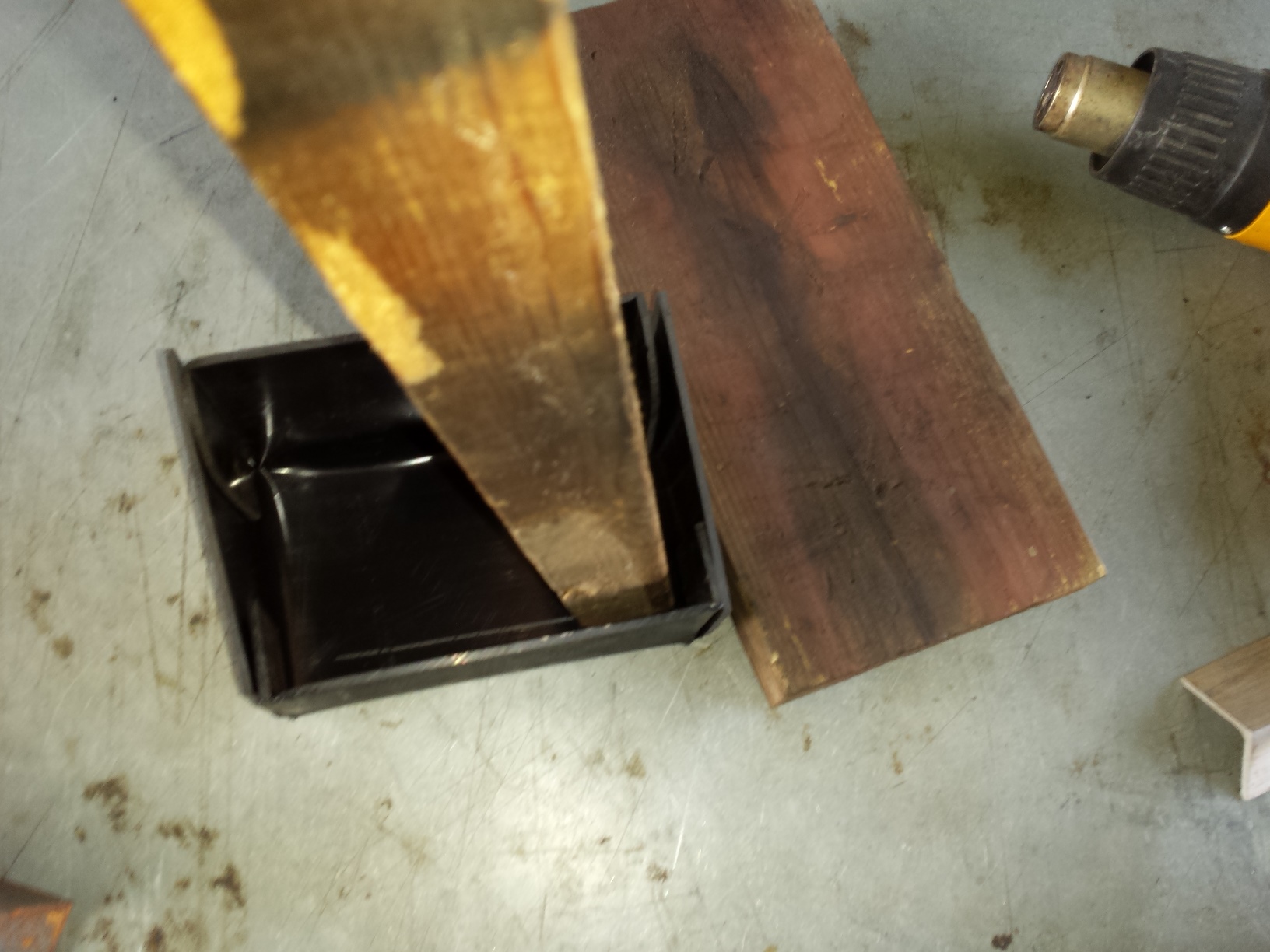
When it gets warm it will bend very easily. To get a really good square corner take a slab of wood or another piece of metal and press down on the corner and hold it for a minute as it cools.

<heat forming abs plastic>

<heat forming abs plastic>

<square corner abs plastic sheet>

After this I bent the tabs in for the sides. These tabs my not really be necessary but I like the security of having large bonding surfaces to hold parts like this together, especially in a high vibration environment like a motorcycle.

<build custom motorcycle battery box>

Bending the sides up to form the box takes a little more thought. If you have enough equipment and desire absolute perfection you should carefully clamp each corner to be folded and follow the procedures shown above. In the interest of time and since this motorcycle is going to be another deliberate neo-rat, I simply heated the plastic along the bend lines until it was bendable and then used two blocks of wood to form it to shape. Hey it works for me.

<custom chopper battery box>

<custom Honda chopper battery box>

Before moving on to the next step you will need to test the fit and make sure that your battery fits properly. At this point you can reheat the plastic and adjust things somewhat, once you glue everything together it’s not so easy

<custom chopper Shorai battery box>

When you glue it together be sure to use plenty of ABS cement. Do not use any other type of cement with ABS plastic.

<custom chopper plastic battery box>

One of the nicer things about working with ABS is that the cement is very thick and you can use it as a gap filler to seal off cracks and imperfections and then sand it down after it all dries.

<custom bobber plastic battery box>

<custom motorcycle plastic battery box>

Here is a quick shot of it in the frame with the bottom brace glued into place. At this point the battery box is pretty well done except for sanding and painting.

<custom rigid frame chopper,bobber,motorcycle abs battery box>

The next steps for Project Wammo is going to be a complete teardown to the bare frame to finish removing all the unwanted tabs & finish up the welding. Then it’ll go back together as a roller with new bearings, fork seals, brakes, tires, etc. Then it will be time to freshen up the engine & paint the sucker. Stick around & enjoy the fun.


Just a few more interesting things.

In my last post I showed you a nice old Harley service-car, now here’s the bones of one.

image

While we’re looking at basket cases check out this Mobylette.

image

image

There was actually a pretty good selection of offbeat European project bikes available.

image

image

image

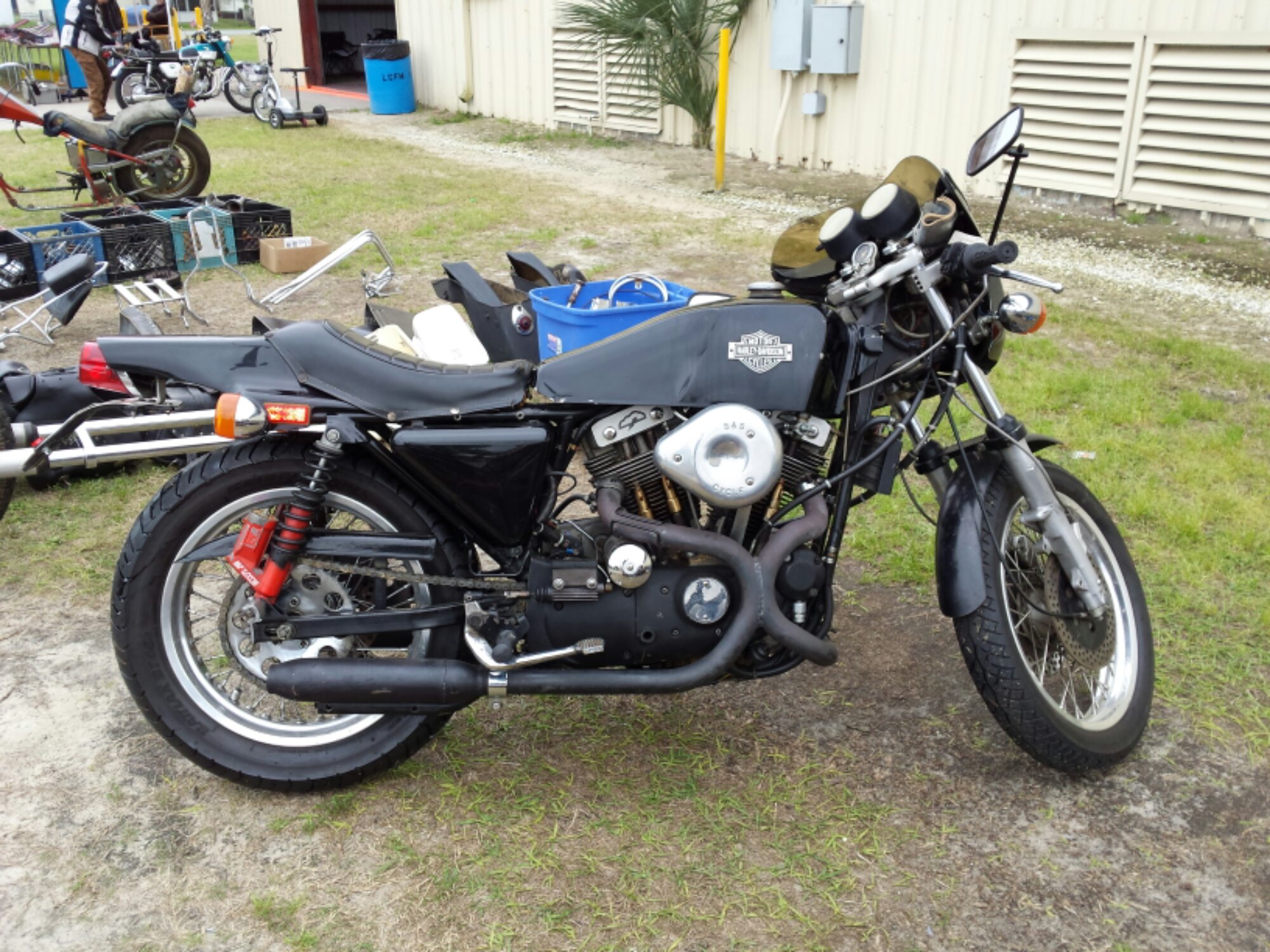
And my personal favorite Harley Davidson model, the XLCR.

image

image

It is been a long day but we’ve had a really good time. Good night to all.

All the coolest bloggers are WordPress motorcycle bloggers!

I finally had the privilege meeting one of my fellow WordPress motorcycle bloggers live in person.

image

Here I am with Jessie McKay who writes the blog twoheelin.wordpress.com
He is getting ready to do another cross country run to the Born Free show so go follow his blog to keep up the adventure.

Getting ready to go!

Hello everyone the van is all packed, motorcycle washed, the parts sorted and priced and I can’t wait get out of this cold place and get into some warm Florida sunshine.

Over the course of the weekend I will be experimenting with live blogging using the
Wordpress app on my phone. I will be posting random, reports, thoughts and
pictures as I spot interesting things. It may be messy and disoriented at
times, but there can be a great deal of fun in the unexpected. Since this will
be my first time attempting this be prepared for mistakes, bad grammar &
spelling, along with the possible WTF & SMH moments. Hopefully when it is
over we all will have had a great deal of fun. Be sure to check back frequently
this Friday – Sunday to catch all of the action.

Gords Garage Blog The February 2014 Website Of The Month

Gords Garage Blog has one of the best subtitles I have ever read, “I am not a professional and I try things at home.” The is probably one of the most mechanically inspirational blogs I follow. If you are into metal working and motorcycles you need to go check this guy out. At the time of this writing he is just putting the finishing touches on a fantastic looking CB160 cafe racer. Gord has a well equipped home shop including machine tools and welding equipment along with a lot of talent & imagination so you are sure to find some good ideas for your next project if you look. Click here to visit Gord’s Garage.


Google+

How to Get Better Fuel Mileage Part 1

A couple of weeks ago I promised to do an article about motorcycles and fuel economy, since it does seem to be popular subject people are searching for more information about. There are many things to consider, but perhaps the biggest single key to getting the most fuel economy is to start with the right motorcycle. For the sake of this article we are not going to be considering anything not capable of running at least 60 mph thereby completely eliminating all of the “moped” class machines. Although if you live in a city and do a lot of driving in areas with low speed limits you may still wish to consider one.

This is by no means meant to be a complete listing. Your mileage may vary etc. There may be many similar or equal machines to the ones that I have named below so don’t beat me up if I left out your favorite. Please note figures given are gleaned from EPA ratings, personal experience, and/or reliable motorcycle data websites, and apply only to well maintained factory stock machines.
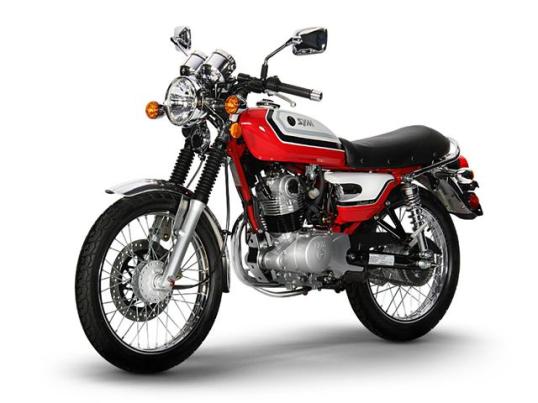
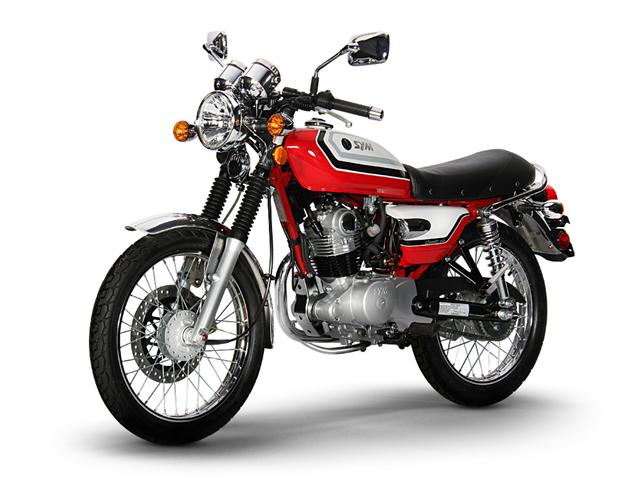
<Sym Wolf Classic 85 mpg>

Sym Wolf Classic 85 mpg

The smallest machine that I looked at for this article was the Sym Wolf 150, a great looking little machine. Light & nimble it is the smallest motorcycle I would consider for street duty, other than the CB125 that the Wolf is a direct descendant of. Rated at 85 mpg it has great fuel economy, but has a top speed of around 65 mph, and being a very small light machine without much load capacity, I’d recommend you stay off the freeway with this one.
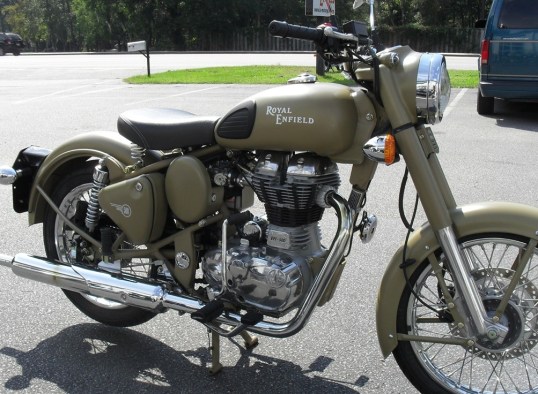
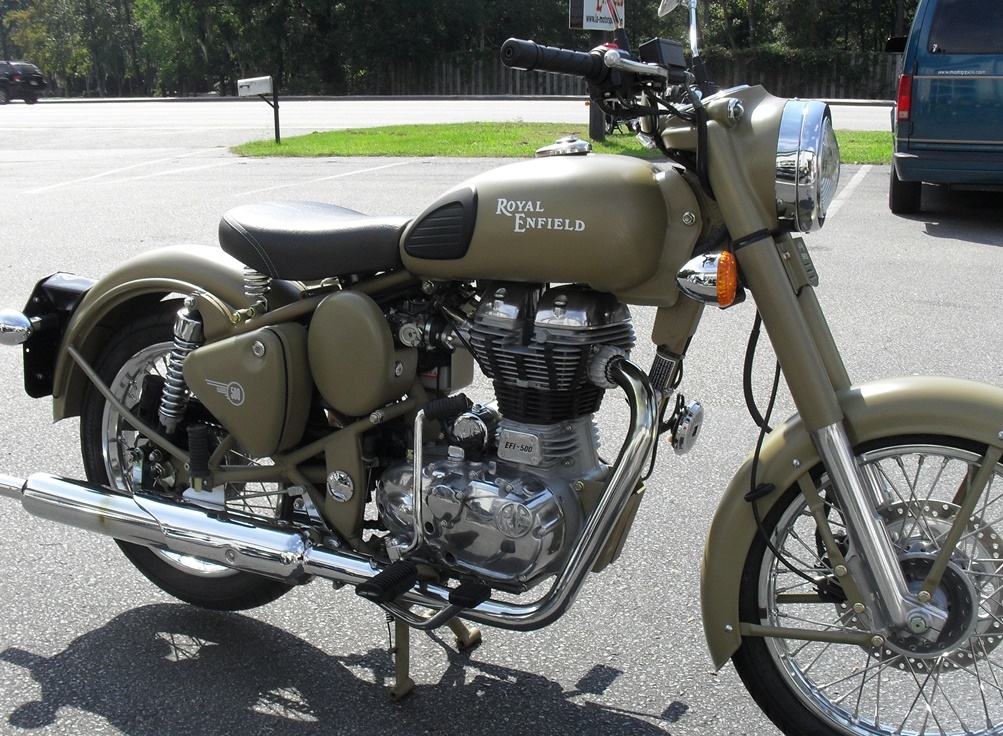
<Royal Enfield Classic 500 85mpg>

Royal Enfield Classic 500 85mpg

Surprisingly enough the next motorcycle up in the mpg sweepstakes is a heavy solid steel piece of spiritually British iron. Built in India for several decades, the Royal Enfield 500 has gradually evolved from a clunky unreliable relic, into a machine with a reasonably modern fuel injected engine slotted into a chassis that is still a relic, but in a good way. 27 hp combined with heavy construction isn’t going to win any drag races but the 85 mpg is astounding in a machine with enough torque for passenger hauling, and with an 80+ mph top speed you can still get on the freeway and go places. I probably wouldn’t keep it pegged WFO for hours on end but it is still capable of interstate travel at a relaxed pace.
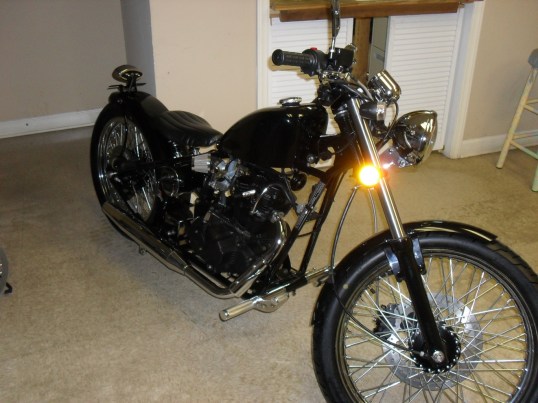
<CCW Tha Heist 80mpg>

CCW Tha Heist 80mpg

Next in the range are the 250 class retro & cruiser bikes such as the CCW’s Tha Misfit & Tha Heist, the evergreen Honda Rebel and Suzuki TU250 fit this group as well. These are decent little machines that are capable of up to 80 mpg. Extensive Freeway duty is a bit questionable on any of them but they are definitely a step up from the smaller Wolf. If you gotta travel the high speed roads you should probably look at the Japanese offerings first. The CCW bikes are great looking though and they do have a catalog of hop up parts to get more speed out of them but that will probably diminish fuel mileage.

A small step down in fuel economy but a huge step up in performance is the 250-300cc sport bikes such as the Kawasaki Ninja & Honda CBR. The baby Ninja can get just a tiny bit past the ton in bone stock condition even with a fat boy like me on it, and while I haven’t ridden the CBR250 yet, all the magazine testers put its top speed around 97 mph. The best part is that both of these bikes are as reliable as anvils, more than capable of traveling anywhere you want to go at any legal speed without ever breaking a sweat. Being fast enough to beat most cars at the stoplight drag races is also a very comforting safety feature as well. These bikes are capable of 70 mpg when ridden conservatively and still knock down over 55 mpg when you ride the snot out of them.
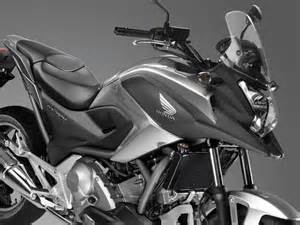
<Honda  NC700X 64mpg>

Honda NC700X 64mpg

I have consciously tried to avoid singling out any one machine for praise, especially one that I have not ridden yet, but the Honda NC 700 X is rated at a very good 64 mpg. This is a full size 700cc adventure touring type machine capable of cross country touring on any road of your choice. Compare that to a big scooter such as Honda’s own Forza with its streamlined bodywork and 300cc engine that only gets about 4 mpg more.

There is a huge range of motorcycles that slot into the 45-55 mpg range. Harley Sportsters, FXRs, etc., most cruisers, vintage bikes in the 350-850cc range. Practically every 600cc sportbike made by anyone can get 50 mpg+ and provide amazing performance. Even some of the 900-1000cc bikes can do 45 mpg. At this range the cars are starting to catch up mpg wise but these are incredibly slow & boring cars that get this kind of fuel mileage.

<kawasaki-ninja-zzr1400zx14>

It only gets 33-39 mpg but does anyone really care?

You don’t really drop below 45 mpg until you get into either hyper sport machines such as the ZX14 Ninja or the Hayabusa, or full dress touring motorcycles like the Gold Wings, K1600 BMW, & Electra-Glides. Even so most of these machines are still capable of 35-45 mpg averages. While they are not economical sounding in motorcycle terms, in the economy of scale against other forms of transport with the same intended mission they are still very reasonable. The big touring machines are incredibly luxurious and loaded down with more amenities today than anyone ever thought possible. To get a performance automobile capable of matching the speed of a box stock big bore sport bike will cost you at least $100,000 and it won’t get anywhere near 30 mpg.

<Electra Glide Ultra 42mpg>

Yes the biggest Harley is rated at 42 mpg combined. Impressive.

As I said at the beginning if fuel mileage is what you are after in a motorcycle, the best way to get it is simply to buy the right motorcycle, maintain it well and ride it in a careful and conservative manner, keeping your speed down as much as safely possible. I’ll come back in a few weeks and touch on some maintenance items that you need to be sure to keep up with to maximize fuel economy, and at a later date will write a post about modifications & driving techniques, to help you wring every last mile out of your dollar.
Happy New Year & A Quick Update

Just a couple of quick updates, I am still working on Project wAMMO but have been slowed down a little bit by life getting in the way, but tonight my favorite big brown van dropped off a nice little box from Dime City Cycles.
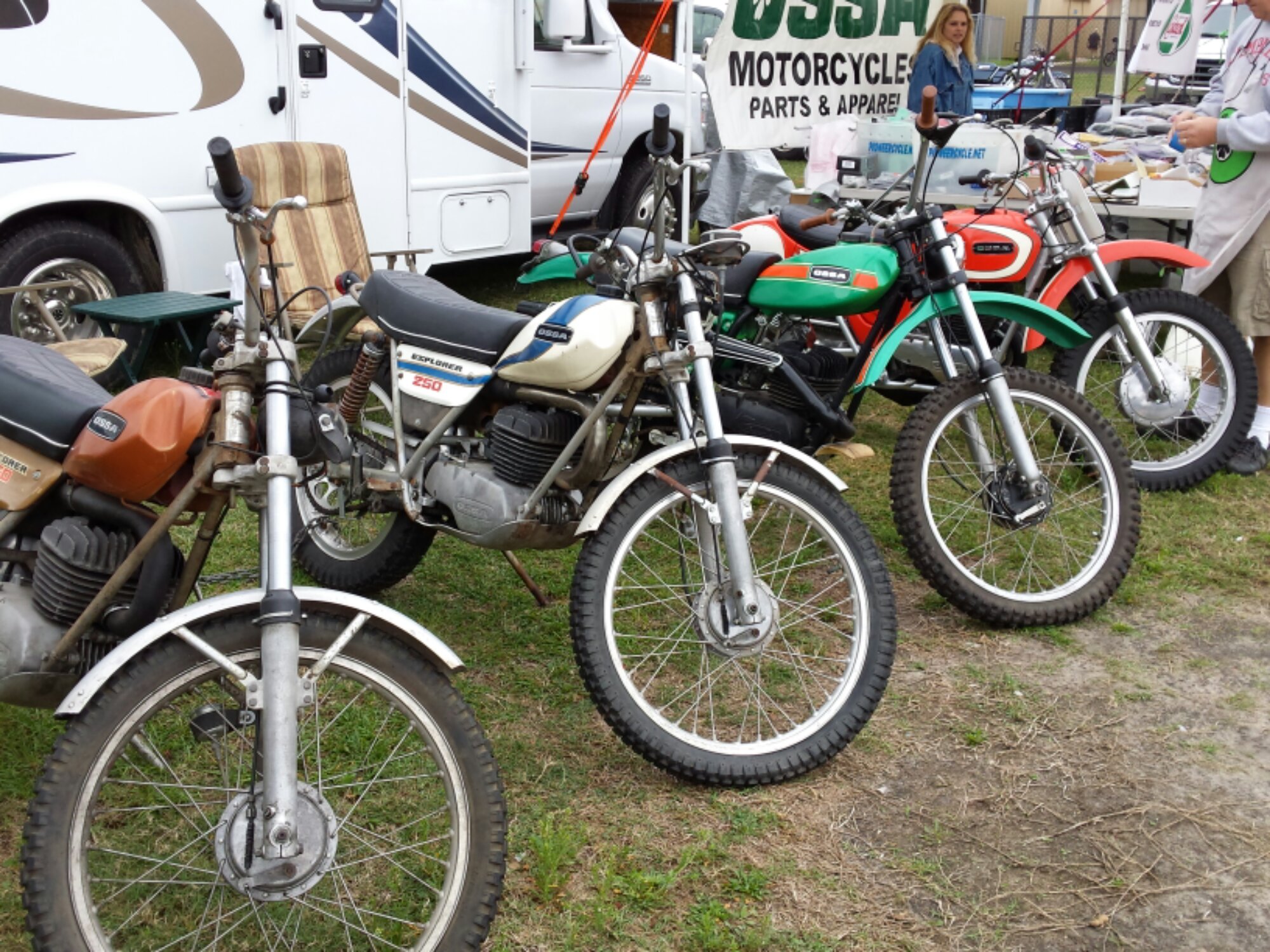
<Bates headlight & limp dick tail light>

Bates headlight & Sparto taillight

Hopefully I can get back to the shop this weekend.

Also over the next couple of weeks I’ll be adding a store page with some new & used parts & supplies for motorcycles. There may be some glitches at first so bear with me and give me a chance to get things sorted.

UPDATE; 1/1/17 store page removed

Peace Y’all